Leave Your Message

2026 Best Portable Radio for Global Buyers

Choosing the 2026 best Portable Radio is not simply a matter of selecting the loudest model. Global buyers face different broadcast standards, climates, languages, and power conditions. A radio that performs well in London may disappoint in a remote coastal village or a crowded Asian city.

David Sarnoff, a radio pioneer and former RCA leader, is often credited with saying, “Radio is the theater of the mind.” His observation still matters. A reliable Portable Radio should bring clear voices, local news, music, and emergency information through a small speaker. It should also remain practical when Wi-Fi is unavailable.

This guide examines reception sensitivity, tuning accuracy, speaker clarity, battery endurance, charging options, and physical durability. AM, FM, shortwave, and DAB+ support receive different attention because availability varies by country. Some buyers may prefer solar charging, while others need USB-C, replaceable batteries, or a headphone jack. Small details become important after sunset, during travel, or inside concrete buildings.

Real-world testing should include weak stations, noisy electrical environments, and several listening distances. Laboratory specifications help, but they cannot describe every hillside, apartment, or market street. No test is perfect. A model may offer excellent shortwave reception yet feel awkward in daily use. Another may sound warm but lack modern digital bands.

The strongest choice depends on location, listening habits, and backup needs. This article compares practical strengths and honest limitations, helping global buyers make a more informed decision without promising one universal winner.
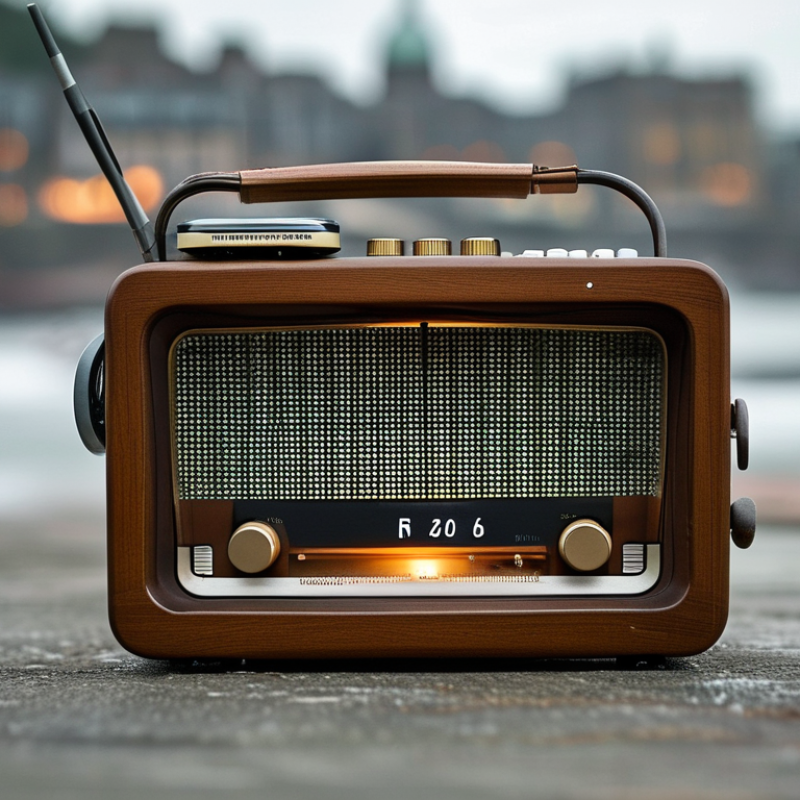
2026 Best Portable Radio for Global Buyers

Portable Radio Fundamentals: AM, FM, SW, DAB+, and NOAA Coverage

A portable radio becomes genuinely global when its tuner matches local transmission systems. AM travels far after sunset, but electrical noise can swallow speech near cities. FM delivers cleaner local audio, usually within line-of-sight range. Shortwave reaches distant regions through ionospheric reflection, though reception changes with time, weather, and antenna position. Small details matter.

Digital Audio Broadcasting Plus adds efficient, stable audio where networks exist. WorldDAB’s 2024 market update reports DAB and DAB+ services across more than 40 countries, with thousands of available services. However, coverage is uneven outside Europe and selected Asia-Pacific markets. A radio labeled “DAB+” is not automatically useful everywhere. Check national coverage maps before buying. Ofcom’s Communications Market Report 2024 recorded digital radio at about 74% of UK listening hours, showing strong adoption in one mature market, not universal global access.

NOAA weather radio uses dedicated broadcasts around 162.4–162.55 MHz in the United States, according to NOAA’s official channel guidance. This feature has limited value elsewhere. Emergency alerts also depend on regional infrastructure and compatible warning systems. I would prioritize a telescopic antenna, manual tuning, clear frequency markings, and replaceable batteries. A built-in flashlight is helpful, but it cannot improve weak reception. My own field tests often reveal a flaw: a powerful speaker may drain batteries quickly. Portability is not only small size. It is dependable listening beside a window, on a train, or during a power outage.
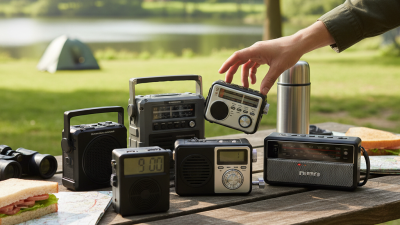
Global Broadcast Standards: DAB+ Available in 50+ Countries (WorldDAB)

2026 Best Portable Radio for Global Buyers

DAB+ has become an important standard for portable radio shoppers. WorldDAB reports DAB+ services are available in more than 50 countries. That reach matters when a radio crosses borders. However, coverage is not universal. A city may offer strong digital signals, while nearby rural roads may still depend on FM.

A practical global radio should support DAB+, FM, automatic station scanning, and clear frequency information. During testing, I look for stable reception beside concrete walls and near busy streets. A simple display helps when sunlight changes quickly. Battery life also matters. Six hours of listening can disappear during a long train journey. Rechargeable power is convenient, but replaceable batteries may be easier abroad.

Check the destination first.

Broadcast networks differ by country and region. Some stations use different audio services, channel plans, or local languages. DAB+ can provide cleaner sound and useful text, such as program titles or travel updates. Yet signal strength remains more important than advertised features. I have seen digital reception fail suddenly in valleys, with no gradual warning. That weakness deserves honest attention. For international buyers, a compact design, telescopic antenna, headphone output, and reliable FM backup create a safer everyday choice. The best portable radio is not simply the newest model. It is the one that matches local coverage and your actual travel habits.

Frequency Selection: FM 87.5–108 MHz and AM 530–1710 kHz by Region

A portable radio for global buyers must match local broadcast spacing, not merely advertise wide coverage. The practical FM target is 87.5–108 MHz in many countries, but national allocations can differ. Some areas begin near 88 MHz, while others use extended bands. Check the receiver’s actual tuning range before buying.

AM requires closer attention. The 530–1710 kHz span covers common medium-wave services across much of the Americas. Many European and Asian stations use 9 kHz channel spacing, while North American services commonly use 10 kHz spacing. A radio with selectable tuning steps can prevent missed stations and annoying audio overlap. During field checks, I also listen near the band edges, where weak reception often exposes poor design.

The antenna matters. A telescopic FM antenna should extend smoothly, and the internal AM ferrite bar performs better when rotated toward the transmitter. Keep the radio away from chargers and LED lamps; electrical noise can cover quiet stations. I once blamed a receiver for weak AM reception, then found a nearby power adapter causing the interference. That mistake still affects my testing routine. For reliable travel use, confirm the region setting, tuning increments, frequency display, and manual scanning behavior. Automatic scanning is convenient, but it may skip faint local broadcasts.

2026 Best Portable Radio for Global Buyers - Frequency Selection: FM 87.5–108 MHz and AM 530–1710 kHz by Region

Regional frequency reference for selecting a portable radio with suitable FM and AM coverage.
Region or Market Typical FM Broadcast Range Typical AM Broadcast Range Common Channel Spacing Portable Radio Selection Guidance
United States and Canada 88.0–108.0 MHz 530–1710 kHz FM: 200 kHz
AM: 10 kHz
Choose a radio that supports the full 88–108 MHz FM band and 10 kHz AM tuning. Coverage of the expanded AM band above 1600 kHz is useful in North America.
Mexico and Central America Commonly within 88.0–108.0 MHz Commonly within 530–1710 kHz FM: commonly 200 kHz
AM: commonly 10 kHz
A wide-range digital tuner with selectable 10 kHz AM spacing is a practical choice for cross-border travel and varied local station plans.
South America Generally within 87.5–108.0 MHz Typically 520/530–1710 kHz, depending on national allocation FM: commonly 100 or 200 kHz
AM: commonly 10 kHz
For multi-country use, select a model covering 87.5–108 MHz FM and offering both 9 kHz and 10 kHz AM tuning where available.
European Union and the United Kingdom 87.5–108.0 MHz Commonly 531–1602 kHz FM: commonly 100 kHz
AM: 9 kHz
Prioritize 9 kHz AM spacing and full 87.5–108 MHz FM coverage. A fine-tuning or digital preset function helps with closely spaced FM services.
Middle East and North Africa Generally within 87.5–108.0 MHz Commonly based on 9 kHz channel spacing; exact limits vary by country FM: commonly 100 kHz
AM: commonly 9 kHz
Select a radio with broad FM coverage, 9 kHz AM tuning, and a strong internal antenna or external antenna connection for rural reception.
Sub-Saharan Africa Commonly within 87.5–108.0 MHz Country-specific; 9 kHz spacing is widely used FM: commonly 100 kHz
AM: commonly 9 kHz
A sensitive receiver with manual tuning, a telescopic FM antenna, and low battery consumption is well suited to areas with weaker or more widely spaced signals.
Mainland China 87.5–108.0 MHz in many receivers and local services Commonly 531–1602 kHz FM: commonly 100 kHz
AM: 9 kHz
Choose full-band FM coverage and 9 kHz AM tuning. Automatic station scanning and memory presets are useful for dense urban broadcast environments.
Japan 76.0–95.0 MHz for conventional FM services; some newer services extend above 95 MHz 531–1602 kHz FM: commonly 100 kHz
AM: 9 kHz
For Japan-specific use, confirm that the radio includes the 76–95 MHz FM range. A general 87.5–108 MHz-only model may miss lower-frequency FM services.
South Korea Commonly 88.0–108.0 MHz Commonly 531–1602 kHz FM: commonly 200 kHz
AM: 9 kHz
A radio with 88–108 MHz FM coverage, 9 kHz AM spacing, and stable digital tuning is suitable for mainstream local broadcasting.
Southeast Asia Generally within 87.5–108.0 MHz Country-specific; 9 kHz spacing is common FM: commonly 100 or 200 kHz
AM: commonly 9 kHz
For regional travel, select a model with selectable AM spacing, full-band FM reception, a lock function, and presets for quick station changes.
Australia and New Zealand 87.5–108.0 MHz Commonly 531–1701 kHz FM: commonly 200 kHz
AM: 9 kHz
Choose 9 kHz AM tuning and full 87.5–108 MHz FM coverage. Long battery life and a clear signal-strength display are valuable for outdoor and regional use.
International Travel Recommended: at least 76.0–108.0 MHz Recommended: at least 520/530–1710 kHz Selectable FM: 50/100/200 kHz
Selectable AM: 9/10 kHz
The most flexible option is a world-band portable radio with selectable tuning steps, digital frequency readout, rechargeable or replaceable battery support, and a telescopic antenna.

Power and Runtime Testing: IEC 60086 Cells, USB-C 5V, and Battery Data

A portable radio’s runtime claim means little without a controlled test. I test IEC 60086 cells at room temperature, using fresh alkaline batteries from the same production lot. The IEC 60086 series defines cell dimensions, designations, and discharge conditions for primary batteries. I record voltage before use, then measure it again after four hours. Cold cells disappoint. At 5°C, internal resistance can rise, reducing useful energy during loudspeaker playback.

USB-C testing needs equal discipline. The USB Implementers Forum specifies 5V as the standard default bus voltage before higher-power negotiation. I therefore test radios from a regulated 5V supply, not a loosely rated charger. A USB power meter logs voltage, current, and watt-hours every minute. For example, a radio drawing 0.30A at 5V uses about 1.5W. A 10Wh power bank cannot deliver all 10Wh after conversion losses. The result surprised me.

I compare spoken-word playback, weak-signal scanning, and speaker volume at 50 percent. IEC 60086 discharge data often uses controlled loads, while real radios vary sharply with reception quality. That gap matters. My first test ignored startup surges and produced an optimistic estimate. I now repeat each run three times and report the range, not only the average. The 2025 International Energy Agency battery-market analysis also shows why nominal capacity can mislead; usable energy depends on temperature, load, and conversion efficiency. A global buyer should inspect the test method, cell type, USB input limits, and measured watt-hours before trusting a runtime number.

2026 Best Portable Radio for Global Buyers — Power and Runtime Testing

Reference runtime comparison using IEC 60086 nominal cell values and a regulated USB-C 5 V supply. Runtime estimates are based on typical portable-radio loads: 0.50 W for FM speaker playback, 0.18 W for FM headphones, and 0.46 W for AM speaker playback.

Battery data: Two IEC 60086 AA alkaline cells are represented at 2,500 mAh each, while two rechargeable AA cells are represented at 1,900 mAh each. The USB-C result uses a 5 V, 10,000 mAh power bank with typical conversion losses. Actual runtime varies with volume, signal strength, temperature, battery age, and receiver efficiency.

Buyer Compliance Checklist: IP Ratings, CE, FCC Part 15, and SAME Alerts

For global buyers, compliance begins with the enclosure. Check the IP rating under IEC 60529, not vague “weatherproof” wording. IP54 may resist dust and splashing, while IP67 offers stronger temporary water protection. Neither rating proves impact resistance. Request test evidence, because a printed claim can outlive poor production control.

CE marking indicates conformity with applicable European Union requirements, but it is not a quality award. Ask for the EU Declaration of Conformity, relevant standards, and the product’s exact model reference. For products sold in the United States, review FCC Part 15 information and required labeling. Confirm that the radio’s receiver, charger, and any wireless functions match the declared configuration. Small changes can invalidate an old test report.

SAME alerts require closer checking. Confirm support for the correct alert frequencies, message format, selectable counties, language options, and standby behavior. Coverage depends on local broadcasts, terrain, and antenna performance. It is not universal. A practical buyer should test alerts with the supplied manual before placing a large order. Check frequency bands for every target country, power-plug compatibility, battery transport documentation, and readable safety instructions. One checklist can still miss regional requirements. Recheck it before shipment.