How to Choose the Longest Range Walkie Talkie for Your Needs?
Choosing the right Longest Range Walkie Talkie can be challenging. With various options available, understanding your needs is essential. Industry reports indicate that the average range of consumer walkie talkies can vary significantly. Some models offer up to 50 miles, while others may only reach 2 miles under optimal conditions.
According to communication expert Dr. Sarah Thompson, “Selecting a walkie talkie often comes down to understanding your specific communication range needs and environment.” This insight highlights the importance of context when choosing a device. For instance, urban environments can limit range due to interference, while open fields allow for extended communication distances.
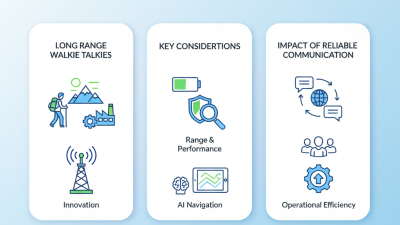
When evaluating the best Longest Range Walkie Talkie, consider factors such as battery life, durability, and weather resistance. These details can impact performance in real-world situations. Reflecting on your experiences and assessing your requirements can lead to a better choice.
Understanding Walkie Talkie Range: Factors That Affect Distance
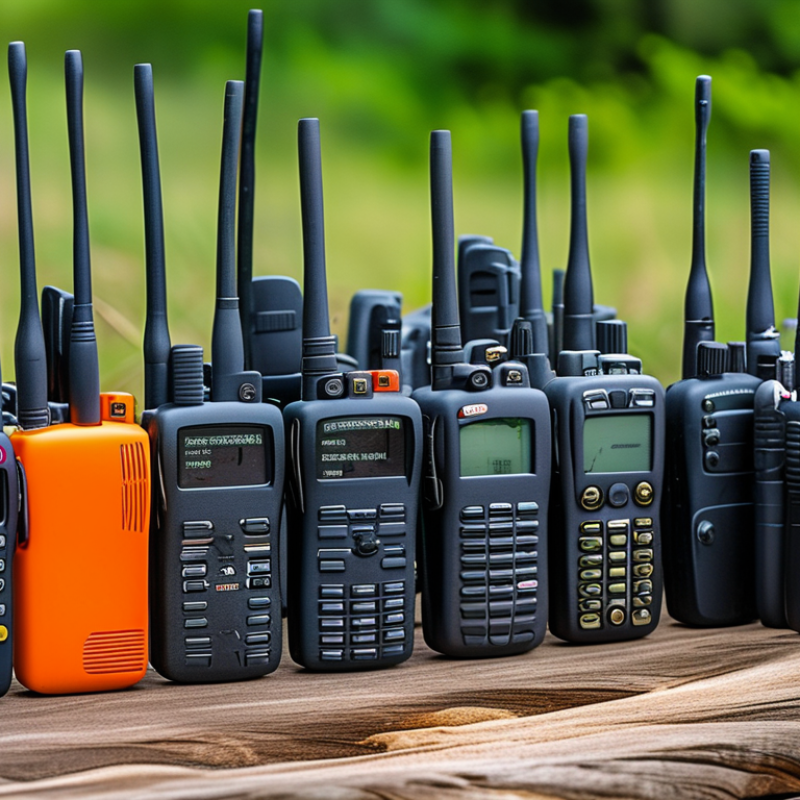
When choosing a walkie talkie, range is a critical factor. Walkie talkies operate on different frequencies, influencing distance and clarity. Generally, UHF (Ultra High Frequency) devices work better in urban environments. They penetrate obstacles such as buildings effectively. VHF (Very High Frequency) models, while advantageous in open areas, struggle in crowded spaces.
Several variables affect walkie talkie range. Power output is crucial; devices with 5 watts can transmit up to several miles in ideal conditions. Environmental factors play a role too. Hilly terrains and dense forests significantly reduce signal strength. According to a study by the Federal Communications Commission, range can be affected by weather conditions. Rain and storms disrupt communication signals.
For practical usage, consider these tips. Assess your environment before purchasing. For urban areas, opt for UHF units. When venturing into open areas, VHF may suffice. Always check local regulations. Some regions impose restrictions on power output. This can influence your choice.
Testing your equipment in various settings is essential. What works in one area may falter in another. Personal experiences can enhance understanding. Don’t solely rely on manufacturer claims. Practical usage often paints a more accurate picture.
How to Choose the Longest Range Walkie Talkie for Your Needs? - Understanding Walkie Talkie Range: Factors That Affect Distance
| Feature |
Description |
Impact on Range |
| Frequency Band |
The specific radio frequencies used for transmission. |
Higher frequencies tend to have shorter ranges. |
| Terrain |
The environment where the walkie talkies are used (open field vs. urban). |
Obstacles can significantly decrease the effective range. |
| Power Output |
Measured in watts, it indicates the strength of the radio signal. |
Higher power output usually means a longer range. |
| Antenna Quality |
The design and quality of the walkie talkie's antenna. |
Better antennas can improve signal reception and transmission. |
| Battery Life |
Duration that the walkie talkie can operate before needing a recharge. |
Longer-lasting batteries enable prolonged use without interruption. |
| Environmental Factors |
Weather conditions such as rain, fog, or wind. |
Adverse weather can disrupt radio signals and reduce effective range. |
| Interference |
Other electronic devices that operate on similar frequencies. |
Interference can hinder communication and decrease range. |
Types of Walkie Talkies: Comparing Analog and Digital Models
When choosing a walkie-talkie, understanding the differences between analog and digital models is essential. Analog walkie-talkies operate on traditional technology. They’re quite straightforward and cost-effective. However, they can suffer from interference and limited sound quality. In noisy environments, it becomes challenging to communicate clearly.
Digital models, on the other hand, provide enhanced features. They offer better sound clarity and more channels. This makes them suitable for busy environments, like construction sites or large events. Yet, digital models can be more complex to use. Some users may find the interface overwhelming. Understanding your specific needs is crucial.
Both types have their pros and cons. Analog devices may be easier for casual users, while digital models appeal to those needing advanced functions. Consider scenarios where you'll use them. This reflection helps in making a more informed decision that meets your requirements.
Frequency Bands: Choosing Between VHF and UHF Systems
When selecting a long-range walkie talkie, understanding frequency bands is crucial. Two primary options are VHF (Very High Frequency) and UHF (Ultra High Frequency). Each has unique characteristics that suit different environments and user needs.
VHF radios operate between 30 to 300 MHz. They excel in open areas with fewer obstacles. A report from the International Telecommunication Union indicates that VHF can provide up to 10-20 miles of communication range. However, VHF signals struggle to penetrate buildings and heavy foliage. This can lead to unreliable communication in urban or forested areas.
On the other hand, UHF radios operate within the 300 to 3,000 MHz range. They are more effective in urban settings due to their ability to penetrate structures. A study by the National Institute of Standards and Technology highlighted that UHF radios can maintain communication within multi-story buildings. The effective range is typically 1-5 miles but can vary based on terrain and obstructions. In situations where obstacles are prevalent, UHF may be a preferable choice. It's essential to assess your environment to determine which frequency band aligns with your communication needs.
Battery Life and Power Output: Key Specifications to Consider
Choosing the longest range walkie talkie requires a deep dive into battery life and power output. These aspects are crucial for ensuring your communication stays uninterrupted. Research indicates that walkie talkies with higher power output typically offer longer ranges, particularly up to 50 miles for mobile units. Yet, this range can drop significantly based on terrain and obstructions.
Battery life is another critical specification. Many walkie talkies come with rechargeable batteries, which generally have a lifespan of about 8 to 12 hours during active use. However, a report by the Consumer Electronics Association suggests that models with lower wattage may last longer on a single charge. That’s an important trade-off to think about.
Tip: If your use is sporadic, consider models with saving modes to extend battery life.
Power output also directly influences the clarity of your communication. While a 5-watt walkie talkie may suffice in open areas, you'll likely need 20 watts or more for dense woods or urban environments. Balancing power and battery life can often lead to tough decisions.
Tip: Test different models in your preferred environments before purchasing. A poorly chosen device might cause frustration and miscommunication.
Usage Scenarios: Identifying Your Specific Communication Needs
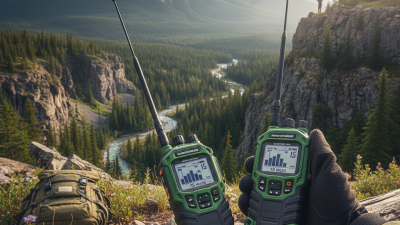
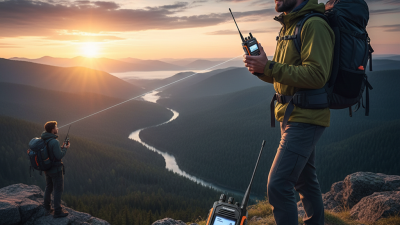
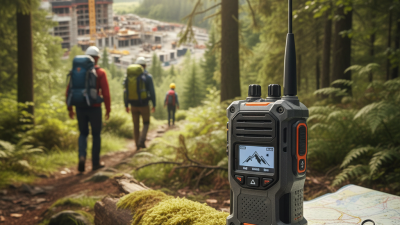
When selecting a walkie-talkie, consider your specific usage scenarios. Different situations require different communication capabilities. For example, hikers in remote areas need extended range and durability. A clear connection is essential for safety. Alternatively, event coordinators in crowded areas may prioritize a system with multiple channels over range alone.
Consider the environment where you will use these devices. Urban settings may present obstacles like buildings. In contrast, open fields allow for longer distances. You might need advanced features such as noise cancellation or privacy codes in bustling locations.
Think about battery life, especially on long outings. A short battery life could leave you out of touch when you need it most.
Reflect on whether you need hands-free communication. Many professionals find this feature invaluable. However, for occasional use, it could be unnecessary.
Prioritize your needs to identify the right balance of quality and functionality. A device that meets all your requirements is essential for efficient communication, but be prepared to compromise on some aspects.