How to Choose the Best Ham Radio for Your Needs?
Choosing the right ham radio can seem daunting. Many options exist, each with unique features. Understanding your needs is crucial. Ham and radio technology has evolved significantly. This evolution offers more choices, but also more confusion for newcomers.
Consider what you want to achieve with your ham radio. Is it for emergency communication, personal enjoyment, or joining local clubs? Reflecting on your goals helps narrow down your options. Some radios are compact and portable, while others offer advanced capabilities.
Research is essential in this process. Look for reputable sources and user reviews. Engaging with experienced ham radio users can provide valuable insights. They can share their experiences, both good and bad. Selecting the best ham radio is a journey. It calls for careful thought and a bit of experimentation.
Understanding the Different Types of Ham Radios Available
When selecting a ham radio, understanding the various types is essential. There are two primary categories: analog and digital radios.
Analog radios have a timeless appeal. They can be simpler to operate, especially for beginners. Digital radios offer advanced features, such as clearer audio and more channels. They can be more complex to set up, which may deter some users.
Another classification is based on power output.
Handheld radios are portable and easy to use. They are great for short-range communication. However, their battery life can be limiting.
Base stations, on the other hand, offer more power and better range. They require a constant power source but can provide clearer signals over long distances.
Consider your specific use case. If you plan on using the radio for emergency situations, durability is key. If geeky features excite you, look for digital models. Each type has its strengths and weaknesses. Picking the right one involves reflecting on your personal needs. Assessing real-world experiences and feedback can guide your choice. With so many options, it’s easy to feel overwhelmed. Just focus on what matters most to you.
Key Features to Consider When Choosing a Ham Radio
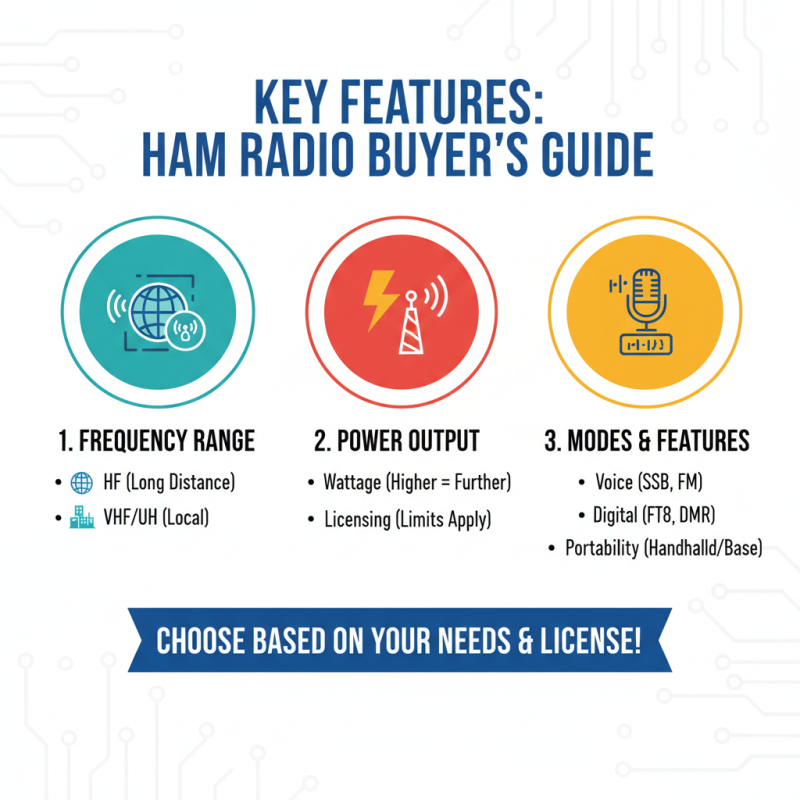
When choosing a ham radio, understanding key features is essential. The first consideration should be the frequency range. Different bands have specific uses. For example, HF (high frequency) radios are great for long-distance communication. In contrast, VHF (very high frequency) radios excel in local communications. Know your needs before making a choice.
Another key feature lies in the power output. Higher wattage typically means improved range but can also lead to greater power consumption. Think about where you’ll use the radio. If you’re in a remote area, a unit with more power might be necessary. Meanwhile, portability matters too. Some models are compact, perfect for those who need to travel. Balancing power and portability could present challenges.
Don’t overlook the importance of user-friendly controls. Many beginners feel overwhelmed by overly complicated interfaces. Look for models with intuitive layouts that facilitate quick adjustments. A good display is also valuable. Ensure you can read the screen easily in varying light conditions. Lastly, consider the availability of accessories. Investments in additional microphones, antennas, or batteries may enhance your experience.
Assessing Your Communication Needs and Operating Environment
Choosing the right ham radio starts with understanding your communication needs and operating environment. According to the ARRL, nearly 50% of amateur radio users cite emergency communication as their primary use. This need for reliable communication during crises shapes the type of equipment to consider. Whether you're in a densely populated area or a remote location, the coverage and range become crucial factors.
When operating in urban settings, interference is common. A study by the American Radio Relay League indicates that urban areas often have signal degradation of up to 40%. In contrast, rural environments may offer clearer signals but could necessitate more powerful radios to cover the distance. Assessing your environment helps determine factors like power output and antenna type, which influence not only clarity but also effective communication distance.
Reflecting on whether you need features like portability or advanced digital modes is essential. If you're off-grid often, a compact, battery-operated model may serve your needs better. Failing to match your radio choice with your typical scenarios can lead to frustration and inefficient operation. Users must consider personal preferences, local regulations, and community resources for potential troubleshooting support. Having the right tools means being prepared for any situation.
Ham Radio Communication Needs Assessment
Budgeting for Your Ham Radio Purchase: Costs and Accessories
When budgeting for a ham radio, understanding the costs is essential. A basic HF transceiver can range from $300 to $3,000. Beginners may find options near the lower end, while seasoned operators often invest in advanced models. According to the ARRL (American Radio Relay League), dedicated hams usually allocate about 10% of their budget for accessories.
Accessories can further impact your total expenditure. A quality antenna setup can cost between $50 and $500. This range reflects the difference between simple wire antennas and complex directional models. Other necessary tools, such as microphones or external speakers, also add to the budget. Some hams spend around $200 on these extras, enhancing their communication clarity.
It's also wise to consider ongoing costs. Licensing fees can be around $30 for the initial exam. Maintenance costs, including replacement parts or software updates, may arise later. A survey by QST magazine found that many hams overlook these expenses. They often focus solely on the initial purchase. Reflecting on these hidden costs will help you create a more accurate budget.
Comparing Popular Ham Radio Brands and Models for Your Needs
Choosing the best ham radio requires careful consideration of various brands and models. Each offers unique features and benefits tailored to different needs. Popular models range from handheld radios to base stations, catering to both beginners and experienced operators. Consider your communication requirements, such as range and frequency bands.
Tips: Think about your local landscape. If you live in a mountainous area, a radio with high power and a good antenna is essential.
Look for user reviews and community feedback. Reliable insights from other operators can guide your decision. Compare features like simplicity of use, battery life, and durability. Some models have more user-friendly interfaces than others. It’s worth noting that what works for one person may not be ideal for you.
Tips: Try before you buy. If possible, test out a model at a local club. This firsthand experience helps identify what feels comfortable.
Evaluate the technical support offered by manufacturers. A supportive community can make your learning process smoother. Remember, no radio is perfect. Reflect on your own needs and preferences to find the best fit for your ham radio journey.
How to Choose the Best Ham Radio for Your Needs?
| Model |
Frequency Range (MHz) |
Power Output (W) |
Modes Supported |
Weight (lbs) |
Price ($) |
| Model A |
1.8 - 30 |
100 |
SSB, CW, FM |
5 |
500 |
| Model B |
3.5 - 54 |
50 |
SSB, CW, AM |
4 |
300 |
| Model C |
144 - 148 |
20 |
FM, APRS |
2 |
150 |
| Model D |
50 - 54 |
10 |
FM, SSB |
3 |
200 |