How to Choose the Longest Range Walkie Talkie in 2026
Choosing the Longest Range Walkie Talkie in 2026 starts with a practical question: where will you use it? A manufacturer’s range claim may describe open, elevated terrain, not a wooded trail or a busy worksite. Range is conditional. Hills, walls, interference, antenna design, and battery condition can all affect how clearly two radios communicate. A large number on a box is useful, but it is not a field guarantee.
This guide explains how to compare radios by more than advertised distance. It covers coverage needs, power, antenna options, battery life, durability, and the differences between consumer and professional models. It also explains why radio compatibility and permitted frequencies matter; check current local requirements before buying or transmitting. On a cold morning, a weak battery can matter more than a headline specification. That detail is easy to overlook. I would treat any range figure as a starting point, then consider the terrain, obstructions, and real user reports. No single radio is best for every situation. The right choice balances dependable communication with cost, comfort, and the conditions you actually face.
Define Walkie-Talkie Range and the Factors That Affect It
Walkie-talkie range is the distance over which two radios can exchange clear, usable messages. It is not a fixed radius. A quoted maximum usually assumes a clear line of sight, with few obstacles and favorable conditions. That is the ideal case. In a real setting, a receiver may still detect a signal beyond the point where speech becomes difficult to understand.
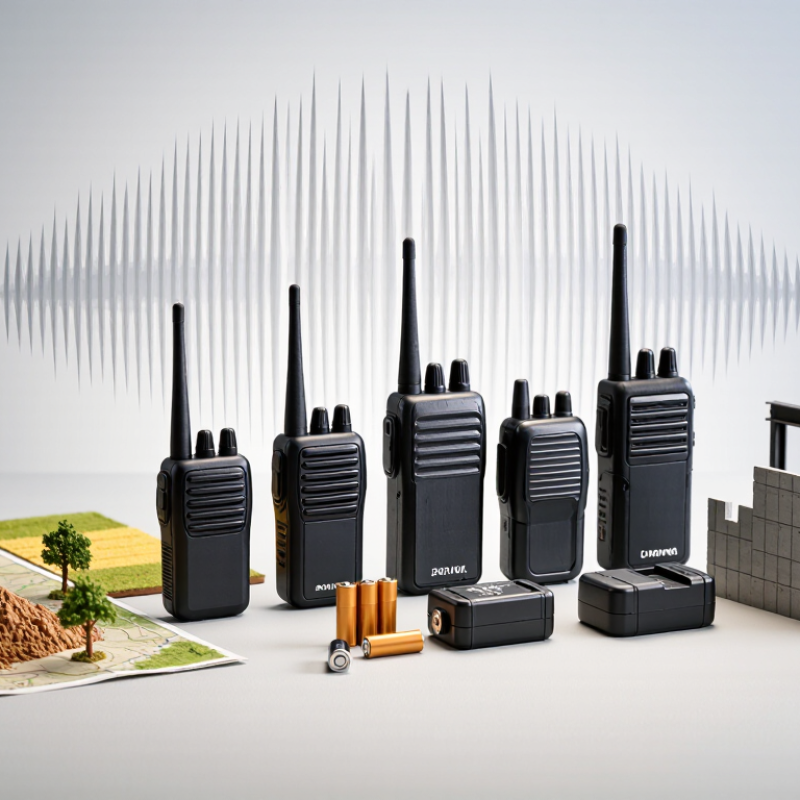
Terrain and obstructions matter greatly. A ridge, concrete wall, or row of dense trees can weaken or block a signal. Height helps: two people on open ground may communicate farther than people standing in a parking garage. Antenna design, radio output, frequency, and battery condition also affect performance. Nearby electrical equipment and other radio traffic can add interference. And estimates get messy. A small change in position can make a noticeable difference.
Treat advertised range as a reference, not a promise. For a practical comparison, test radios in the places you expect to use them: around buildings, along wooded paths, or across open fields. Note where voices become broken or unclear, not just where a signal is detected. Keep the radios at normal carrying height, and repeat the test with a partly depleted battery. It may feel less precise than a single distance figure, but it gives a more useful picture of everyday range.
Match Radio Type and Frequency to Your Terrain
Terrain should guide frequency choice more than advertised maximum range. For open fields, ridgelines, and rural roads, VHF may offer a practical advantage. In dense buildings or wooded valleys, UHF can be a better fit, though walls, foliage, and antenna placement still matter. ITU-R Recommendation P.1546-6 models terrestrial radio propagation from 30 MHz to 4 GHz over paths up to 1,000 km. Those figures describe a prediction method, not a handheld radio’s guaranteed reach. Real coverage can change within a few steps.
Match the radio type to how you will carry and use it. A compact handheld is convenient, but its short antenna and low position may limit reception behind a hill or inside a vehicle. A mobile radio with an externally mounted antenna can improve performance where permitted. ITU-R Recommendation P.833 examines how vegetation attenuates radio signals, with results depending on factors such as foliage depth and frequency. Trees are not a uniform wall. Wet leaves, a steep cut, or a metal-sided building can all change the link. Not guaranteed.
Before buying, test the route with the radio held where it will actually be used. Compare a wooded trail, a building interior, and an open stretch. Keep the antenna upright, and note where speech becomes unclear—not merely where a signal indicator drops. A map helps, but it is never the whole story.
Compare Power, Antennas, and Battery Life
A long-range walkie-talkie is not defined by power alone. Higher transmit power can help a signal travel farther, but hills, buildings, and even a user’s body can weaken it. Check the device’s permitted output for your region, then compare performance in the terrain where you will actually use it. A clear trail is different from a crowded warehouse. Test outdoors.
The antenna matters, too. A longer, well-positioned antenna may improve reception, while a bent or obstructed one can reduce it. Keep the radio upright during a test, and compare results from the same locations. Battery life is easy to overlook. Transmitting at high power, frequent check-ins, and cold weather can drain a battery faster than standby-time figures suggest. That matters. Look for a stated operating-time estimate, but treat it as a guide, not a promise. Carry a charged spare if your trip depends on reliable contact; I would not trust a single advertised range figure without a real-world test.
How to Choose the Longest Range Walkie Talkie in 2026 - Compare Power, Antennas, and Battery Life
| Radio Type (U.S.) |
Typical Handheld Transmit Power |
Antenna Considerations |
Illustrative Direct-Range Planning Estimate |
Typical Battery Capacity and Runtime |
Best Fit and Important Limits |
FRS
Family Radio Service |
Up to 2 W on channels 1–7 and 15–22; up to 0.5 W on channels 8–14. |
Integral antenna; users cannot upgrade it. Keep the radio upright and unobstructed, and hold it away from the body. |
Roughly 0.5–1 mile in built-up or wooded areas; about 1–3 miles in open, relatively flat terrain. |
Often supplied with rechargeable packs or AA cells. A broad planning estimate is about 8–18 hours of mixed use; actual runtime depends on battery type, transmit time, and settings. |
No individual license is required in the U.S. A simple option for casual use, but power and antenna options are limited. |
GMRS handheld
General Mobile Radio Service |
Handheld units are commonly rated up to 5 W; check the specific unit’s FCC authorization and operating instructions. |
Use only the antenna supplied or otherwise permitted for that certified radio. Antenna height and a clear path matter more than small changes in antenna length. |
Roughly 0.5–2 miles in built-up or wooded areas; about 2–5 miles in open, relatively flat terrain. |
Rechargeable packs commonly fall around 1,500–3,000 mAh. A broad planning estimate is about 6–14 hours of mixed use; high-power transmitting can shorten runtime. |
A U.S. GMRS license is required. Repeaters can extend coverage substantially, but require access to a compatible repeater and do not change direct radio-to-radio range. |
Amateur VHF/UHF handheld
Ham radio |
About 5 W is common for handheld models, though available power varies by radio and operating band. |
Many models support an interchangeable antenna. A suitable, compliant antenna and a higher operating position can help; use requires an amateur radio license. |
Roughly 0.5–3 miles in built-up or wooded areas; about 2–8 miles in open terrain with a clear path. Results vary greatly with frequency, antenna, and elevation. |
Rechargeable packs commonly fall around 1,800–3,200 mAh. A broad planning estimate is about 5–12 hours of mixed use; transmit power and listening time affect results. |
Offers flexible equipment and access to amateur repeaters when properly licensed. Repeater coverage is not the same as direct handheld-to-handheld range. |
Range figures are approximate planning estimates, not guaranteed specifications. They describe direct handheld-to-handheld communication and can change dramatically with terrain, buildings, vegetation, antenna position, interference, and the other radio’s location. Battery runtimes are broad estimates for mixed use, not standardized test results. Always follow the applicable radio-service rules and the device’s authorization.
Check 2026 Regulations and Compatibility
In 2026, check local regulations before comparing advertised range. Radio services and permitted settings vary by country. In the United States, FCC Part 95.567 sets FRS power limits: up to 2 watts ERP on channels 1–7 and 15–22, and 0.5 watts on channels 8–14. These are regulatory ceilings, not promises of distance. A ridge, concrete walls, or even a metal-sided vehicle can cut a signal sharply. That spec sheet is not a field test.
GMRS uses some frequencies shared with FRS, but its licensing and equipment rules differ. Check the radio’s approved service, exact channel frequencies, and channel spacing; matching labels alone may not ensure compatibility. Privacy codes only filter what the speaker plays. They do not create private channels. For a practical check, compare the manual’s frequency table with the rules published by your national regulator. Then test between the actual places you’ll use the radios, such as a parking lot and a building interior. I’d still allow extra margin; real terrain rarely behaves as neatly as a coverage map.
Test Real-World Coverage Before Choosing a Model
How to Choose the Longest Range Walkie Talkie in 2026
Test Real-World Coverage Before Choosing a Model
A quoted maximum range is not a dependable field result. Hills, wet trees, concrete walls, and even a parked truck can weaken a signal. Test candidate radios where you will actually use them. Mark a route with open ground, a wooded section, and indoor checkpoints. Keep one radio stationary, then walk with the other and record where speech becomes unclear. Try again with the radios at shoulder height, not held overhead. Small details matter.
Use the same route, channel, and speaking pace for every test. Record distance, terrain, and whether replies were readable; a signal bar alone can flatter performance.
The ITU-R P.1812-7 propagation method covers 30 MHz to 6 GHz and incorporates terrain and clutter in its path predictions. That is useful context, not a promise of walkie-talkie range: your actual antenna, surroundings, and radio settings still matter.
Test at busy and quiet times, too. Nearby radio activity can change what you hear. Be honest about weak spots. A neat test sheet can still miss a dead zone behind a stairwell or ridge, so repeat the route before choosing.