What is a Long Range Walkie Talkie and How Does It Work?
In the world of communication, "Long Range Walkie Talkies" stand out for their effectiveness. Experts like Dr. Emily Carter, a communications technology specialist, highlight their importance: "Long Range Walkie Talkies are crucial for reliable communication in remote areas." These devices function through radio waves, enabling users to stay connected over vast distances.
The technology behind Long Range Walkie Talkies may seem straightforward, but it requires in-depth knowledge. They operate on UHF or VHF frequencies, which impact their range and clarity. When the conditions are right, these walkie talkies can exceed several miles of communication. Users often appreciate their simplicity and durability, making them ideal for outdoor activities.
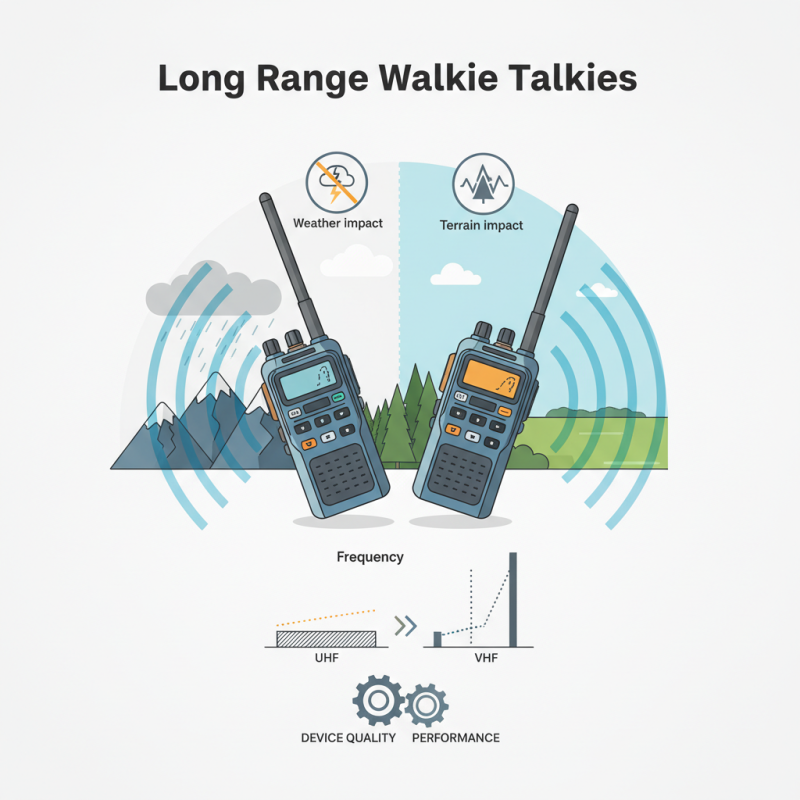
However, not all models deliver the same performance. Factors such as terrain, weather, and device quality can influence their effectiveness. It’s vital to choose wisely. As Dr. Carter notes, "Even minor variations can change the user experience." Understanding these nuances can greatly enhance operational reliability, ensuring safety and connection when it matters most.
Definition and Overview of Long Range Walkie Talkies
Long range walkie talkies offer reliable communication across vast distances, making them essential for various activities. These devices typically use UHF or VHF radio waves, which can transmit signals over several miles, depending on the environment and obstructions. According to industry reports, models can achieve ranges from 1 to 50 miles based on factors like terrain and weather conditions.
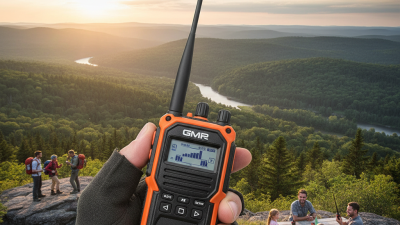
Many users seek long range walkie talkies for outdoor adventures, emergency situations, or industrial applications. Their durability and extended range make them appealing for hiking, camping, or construction sites. A report by the Consumer Technology Association notes that effective communication is critical in isolated areas, where cell service may fail. However, one must consider frequency limitations, as interference from buildings or hills can hinder performance.
While these devices provide a robust means of communication, challenges exist. Battery life may diminish with heavy use, and understanding radio protocols can be overwhelming for beginners. Users often encounter fluctuations in range and connectivity, leading to frustrating experiences. A thoughtful approach to choosing the right model and understanding its limitations can enhance the user experience significantly.
What is a Long Range Walkie Talkie and How Does It Work? - Definition and Overview of Long Range Walkie Talkies
| Feature |
Description |
| Range |
Typically up to 10 miles in open areas, depending on terrain and obstructions. |
| Frequency Bands |
Commonly operate on FRS, GMRS, or VHF/UHF bands. |
| Battery Life |
Varies between 8 to 20 hours depending on usage and model. |
| Durability |
Many models are built to be water-resistant and shockproof. |
| Privacy Codes |
Some feature privacy codes to reduce interference from other users. |
| Usage |
Ideal for outdoor activities, construction sites, and emergency situations. |
| Charging Options |
Can be charged via wall adapter, USB, or using rechargeable battery packs. |
Technical Specifications: Frequency Ranges and Communication Distances
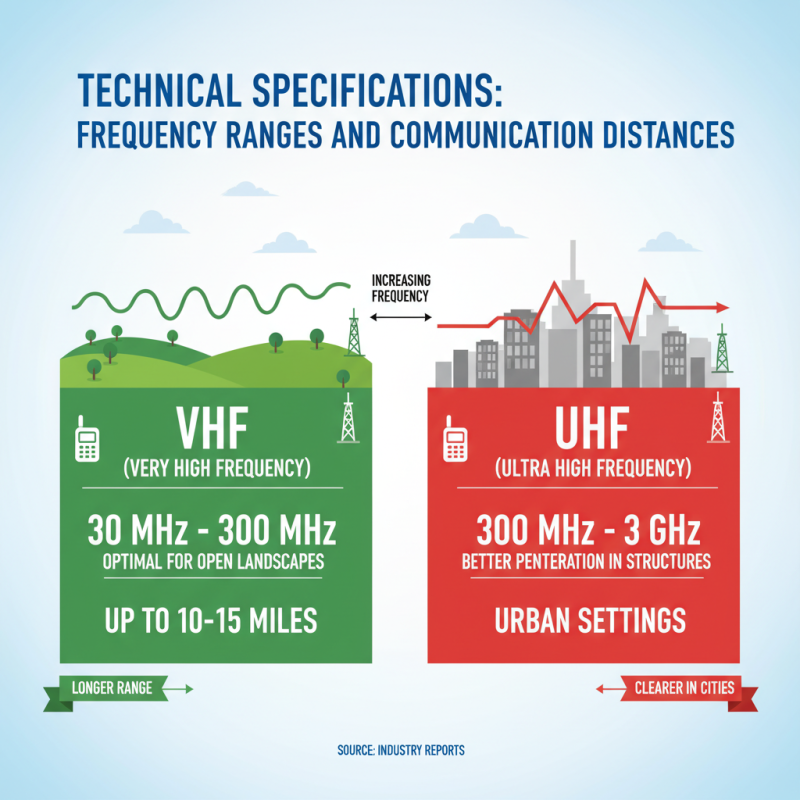
Long range walkie talkies operate on specific frequency ranges, primarily in the VHF (Very High Frequency) and UHF (Ultra High Frequency) bands. VHF typically ranges from 30 MHz to 300 MHz, while UHF spans from 300 MHz to 3 GHz. These frequencies significantly affect communication distances. VHF generally provides better range over open landscapes, reaching up to 10-15 miles under optimal conditions, according to industry reports. In contrast, UHF is more adept at penetrating structures, making it preferable in urban settings.
The effective communication distance also hinges on environmental factors. Obstacles like buildings and trees can diminish range. For example, reports suggest that UHF ranges can drop to 1-2 miles in densely populated areas. Additionally, battery strength impacts performance. Research indicates that varying output power levels—typically from 1 to 5 watts—can alter communication distances drastically. At higher power, users can attain clearer signals but at the expense of battery life.
In practical use, both frequency bands exhibit trade-offs. While VHF may lack the signal integrity in urban areas, UHF is susceptible to interference from other electronic devices. The choice between the two should consider specific needs and environments. Understanding these technical specifications can guide users in selecting the right walkie talkie for their communication requirements.
Types of Long Range Walkie Talkies: FRS, GMRS, and Others
Long range walkie talkies are essential for communication in remote areas. Understanding the different types is crucial for effective use. The Family Radio Service (FRS) operates on a shorter range than the General Mobile Radio Service (GMRS). FRS is limited to a range of about 2 miles in open areas. In contrast, GMRS can reach up to 5 miles or more, depending on terrain and antenna use. This difference is significant for various activities like hiking or camping.
Another option to consider is Multi-Use Radio Service (MURS). MURS offers more power than FRS. It allows for nearly 4 miles of range under ideal conditions. It doesn't require a license, making it a popular choice for casual users. However, MURS users should be mindful of the slight risk of interference with other users.
Tips: When choosing a walkie talkie, consider your usage needs. If you need longer distances, investing in GMRS might be wise. Keep in mind that using GMRS requires a license, which can be a hurdle for some users.
Do not overlook the environmental factors affecting range. Dense forests or urban areas can significantly lower transmission distances. Users should be prepared for such challenges. Testing your devices in different environments may offer insight into their performance limitations.
How Long Range Walkie Talkies Function: Modulation and Signal Transmission
Long-range walkie talkies operate using radio waves to transmit voice signals. These devices employ various modulation techniques to encode the audio before sending it out. One common method is Frequency Modulation (FM), which adjusts the frequency of the carrier wave. This allows clearer communication over long distances, reducing interference.
Signal transmission in long-range walkie talkies relies heavily on antenna design. Many devices have external antennas that enhance their range. The placement of these antennas can significantly affect performance. For example, a clear line of sight can extend the communication range. However, obstacles like buildings or mountains can create dead zones.
While these devices offer significant advantages, they aren't perfect. Signal degradation can occur due to environmental factors. Users might experience interruptions during critical communications. Moreover, the distance achieved can vary based on terrain and weather conditions. Effective use of long-range walkie talkies requires understanding these limitations. Each situation may call for adjustments to equipment and communication strategies.
Applications and Use Cases: Industries Benefiting from Long Range Communication
Long range walkie talkies are crucial in many industries. These devices provide seamless communication in large areas. Construction sites, for instance, benefit significantly. Workers can coordinate tasks while moving around. They enhance safety by allowing real-time updates. In emergencies, quick communication can save lives.
Another industry that relies on this technology is security. Security personnel use long range walkie talkies for effective monitoring. They can cover vast properties without losing connection. Instant communication helps address issues promptly. While the devices are reliable, users sometimes face interference or limited range in challenging terrains.
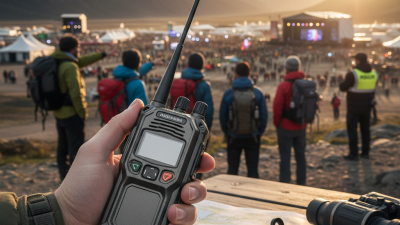
Outdoor events also leverage long range walkie talkies. From concerts to festivals, event staff can stay in touch. This ensures everything runs smoothly. However, battery life and ruggedness can be concerns in demanding environments. It’s essential to choose devices suited to the specific terrain and usage. The right walkie talkie can significantly impact efficiency and safety.
Long Range Walkie Talkie Applications in Various Industries