Discover the Longest Range Walkie Talkie for Your Needs?
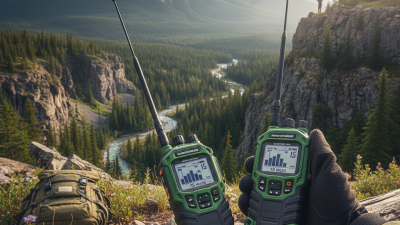
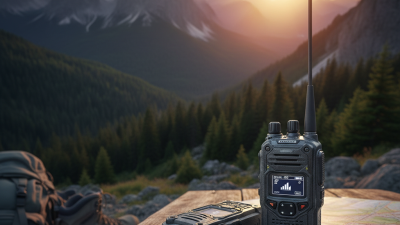
When it comes to outdoor adventures or emergency situations, having reliable communication is crucial. The Longest Range Walkie Talkie can make a significant difference, ensuring you stay connected over vast distances. These devices are not just toys; they are essential tools for many. Users appreciate their practicality in various environments, whether hiking through mountains or navigating busy urban areas.
Choosing the right walkie talkie involves understanding your needs. Different models offer varying ranges, battery life, and features. Knowing what you require can help you find the best option. Many users report mixed experiences. Some devices exceed expectations, while others fall short. This variation can be frustrating. However, researching and testing models can lead to finding a truly reliable Longest Range Walkie Talkie.
In the end, it’s essential to weigh options carefully. A walkie talkie is an investment in safety and convenience. While you may find impressive specifications, real-world performance matters most. This exploration may highlight both strengths and weaknesses, guiding you to the best choice.
Understanding Walkie Talkie Range: What Influences Distance?
When considering walkie talkie range, various factors come into play. The environment, terrain, and frequency type significantly affect performance. For instance, urban areas can decrease the signal due to buildings. Open spaces generally facilitate better communication. According to a report by the International Telecommunications Union, the range can differ by up to 60% based on these variables.
Frequency also plays a pivotal role. UHF walkie talkies typically offer better range over shorter distances. In contrast, VHF walkie talkies perform better in long-distance communication across open areas. However, many users overlook these details. They might assume all models have similar performance without considering these nuances.
Battery life and power output also impact communication distance. Higher power means longer range, but it drains the battery faster. A user might find themselves without a working device during essential moments. This highlights the need for users to evaluate their needs carefully. Balancing range requirements with battery life is essential for reliability in critical situations.
Types of Walkie Talkies: Selecting the Right Model for Your Needs
When selecting a walkie-talkie, understanding the types available is essential. There are analog and digital models, each serving different needs. Analog devices are simpler and often more affordable. They can be easier to use in basic situations. However, digital models offer clearer sound quality. They typically include advanced features like encryption and better battery management.
Consider range as a critical factor. Some walkie-talkies boast impressive ranges, ideal for outdoor adventures. Others may perform well in urban settings but struggle with distance. Pay attention to the environment where you'll use it. Obstacles like buildings and trees can significantly affect communication.
Reliability is another key aspect. Choose a model known for durability and performance under various conditions. Not all devices deliver consistent results. Testing different types can help identify what truly meets your needs. This exploration process allows for better-informed choices. Trust your instincts and learn from experiences while seeking the right walkie-talkie.
Longest Range Walkie Talkie Comparison
Top Features of Long-Range Walkie Talkies to Consider
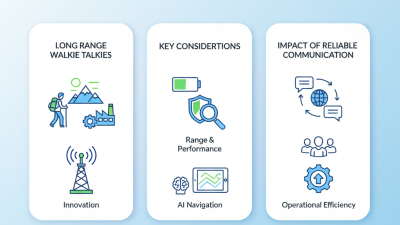
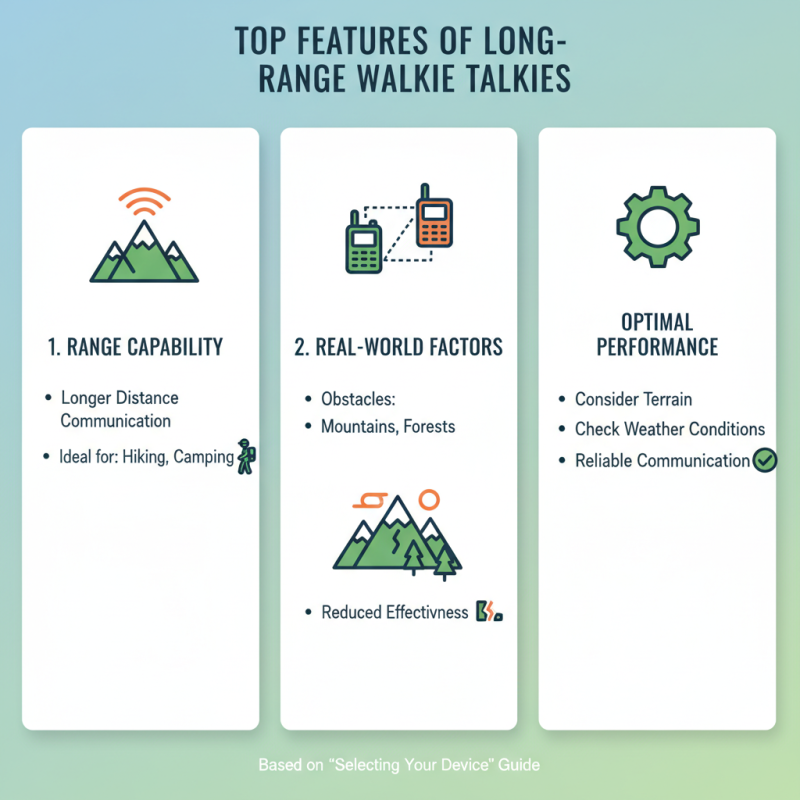
When selecting a long-range walkie talkie, several key features are essential for optimal performance. Range capability stands out prominently. Devices with longer range settings can communicate across vast areas. This is crucial for outdoor activities, such as hiking or camping. However, while longer ranges are appealing, real-world conditions can influence actual performance. Obstacles like mountains or thick forests may reduce effectiveness.
Battery life is another significant factor. A robust battery ensures reliability during extended use. Users often overlook this aspect, which can lead to frustrating experiences. A walkie talkie that drains quickly may not serve you well during crucial moments. Consider models that offer both long battery life and efficient power-saving modes.
Durability is vital, especially in rugged environments. Devices should be both water-resistant and shockproof. This feature ensures functionality in various weather conditions. Many users realize too late the importance of a reliable build. Poor construction leads to unexpected failures. Choosing a walkie talkie with a solid build fosters confidence in its reliability. Always assess your specific needs and experiences before making a purchase decision.
Comparative Analysis: Best Long-Range Walkie Talkies on the Market
When selecting a long-range walkie-talkie, various factors must be considered. Users often prioritize
range, battery life, and features.
Some walkie-talkies claim ranges of up to 50 miles, but real-world conditions often reduce this significantly.
Terrain, buildings, and weather can all affect performance. It's crucial to understand these limitations before making a purchase.
Tips: Always check user reviews. They provide insight into real-life performance.
Consider your environment. Will you be in a mountainous area or an urban setting? This may influence your choice.
Look for models with a good battery life. A long-range walkie-talkie is useless if it runs out of power quickly.
Many walkie-talkies come with added features like weather alerts or emergency buttons.
These can be beneficial during outdoor adventures. However, additional features may complicate usage for some. Remember that easier-to-use models may sacrifice advanced features.
Weigh your priorities before deciding.
Real-World Applications: Using Long-Range Walkie Talkies Effectively
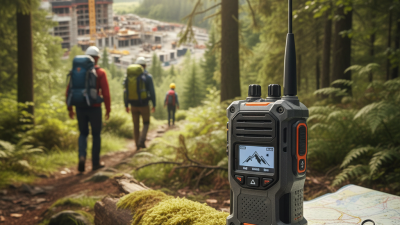
In remote areas, effective communication is crucial. Long-range walkie talkies excel in this role. They facilitate instant contact between team members, which aids in project coordination and safety. For instance, during hiking or camping trips, these devices keep adventurers connected. Imagine a scenario where a team member gets separated. A reliable communication line can make a significant difference in ensuring that everyone remains safe.
Real-world applications stretch beyond recreational use. In construction and security, long-range walkie talkies enhance productivity. Workers can relay information quickly without leaving their posts. Consider a construction site where numerous tasks happen simultaneously. The ability to communicate promptly helps prevent accidents. Still, it's vital to understand potential limitations. Factors like terrain and weather can affect signal strength. Users should consider these aspects for effective operations.
Training on the use of these devices is essential. A skilled team will know how to leverage their walkie talkies fully. Regular practice can reveal nuances in communication. Misunderstandings happen; learning from these moments is key. By actively reflecting on communication styles, users can improve their effectiveness. Ultimately, the real power of long-range walkie talkies lies in their proper application.
Discover the Longest Range Walkie Talkie for Your Needs?
| Model |
Range (Miles) |
Battery Life (Hours) |
Channels |
Weight (oz) |
Features |
| Model A |
30 |
18 |
22 |
10 |
VOX, Waterproof, Rechargeable |
| Model B |
25 |
16 |
16 |
12 |
Emergency Alert, LED Flashlight |
| Model C |
40 |
20 |
22 |
11 |
Bluetooth, High Power |
| Model D |
20 |
15 |
12 |
9 |
Compact, Noise Reduction |