What is the Military Alphabet and How is it Used?
The Military Alphabet, also known as the NATO phonetic alphabet, plays a crucial role in clear communication. It helps to eliminate misunderstandings in noisy environments or over unreliable communication channels. For instance, in a report by the International Association of Professional Communicators, it was highlighted that nearly 30% of miscommunications in military operations stem from similar-sounding words.
This phonetic alphabet assigns code words to letters, ensuring clarity. When someone says "Delta" instead of "D," the risk of confusion decreases significantly. According to the U.S. Department of Defense, consistent use of the Military Alphabet improves operational effectiveness, particularly in high-stress situations.
However, it’s important to recognize that not all personnel are trained adequately in its use. Some may falter when under pressure, leading to potential errors. This underscores the need for ongoing training and practice. Over time, this communication tool evolves, revealing areas for improvement.
What is the Military Alphabet?
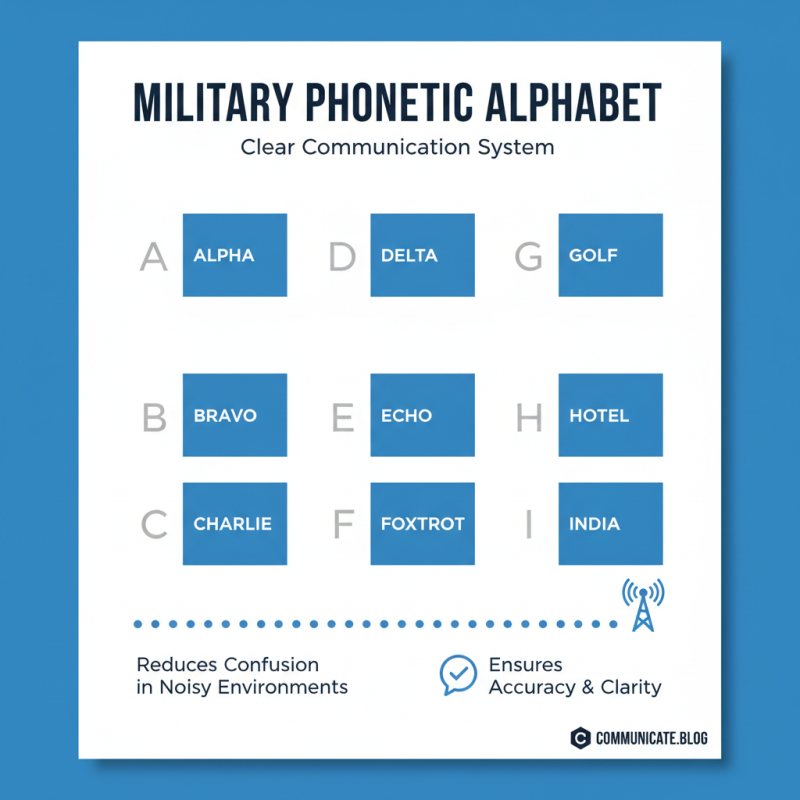
The military alphabet, also known as the phonetic alphabet, is a system used to ensure clear and accurate communication. Each letter of the English alphabet is represented by a unique word. For example, A is "Alpha," B is "Bravo," and C is "Charlie." This system reduces confusion, especially in noisy environments or when clarity is crucial.
Developed for military purposes, the alphabet has expanded to various fields like aviation and maritime communication. It helps prevent misunderstandings in critical situations. However, not everyone is familiar with it, leading to potential errors. Considering the importance of clarity, learning this alphabet could enhance daily interactions.
As with any system, the military alphabet isn't flawless. Variations exist in how individuals pronounce the words. This inconsistency can lead to occasional miscommunications. Practicing the phonetic alphabet can improve understanding. In a world where effective communication is vital, mastering this tool can make a significant difference.
History and Development of the Military Alphabet
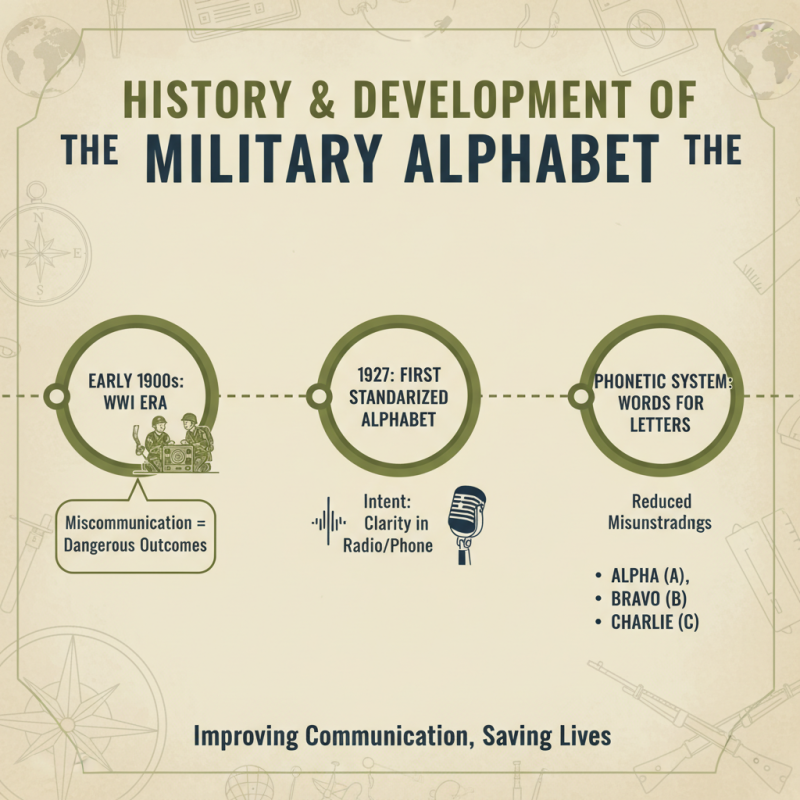
The military alphabet, also known as the phonetic alphabet, has a fascinating history. Its origins trace back to World War I when miscommunication often resulted in dangerous outcomes. The need for clarity led to the first standardized phonetic alphabet in 1927. The intent was to improve communication over radio and telephone. This system used specific words to represent each letter, reducing the chances of misunderstandings.
As time progressed, the United Nations and NATO adopted the military alphabet. The system has evolved but remained consistent in its purpose: to provide clear communication. For instance, “A” represents "Alfa," and “B” stands for "Bravo." This makes it easier to convey messages in noisy environments. Its importance extends beyond military use; aviation and maritime industries utilize it widely as well.
Tip: When using the military alphabet, pronounce each word clearly. Avoid rushing; clarity is key. It’s a common mistake to mumble or blend words, which can lead to confusion. Practice with friends or colleagues to enhance your proficiency. Remember, even the most seasoned communicators can trip over the basics. Regular practice can solidify your understanding.
Phonetic Alphabet vs. Military Alphabet: Key Differences
The military alphabet, also known as the NATO phonetic alphabet, is a communication tool. It uses standardized words to represent letters, ensuring clarity in spoken communication. For example, "Alpha" stands for "A," while "Bravo" represents "B." This system reduces confusion over letters that sound similar, like "M" and "N."
In contrast, a phonetic alphabet focuses on the sounds of individual letters and their pronunciations. Phonetic alphabets are used in linguistic studies and teaching languages. They capture the nuances of sounds across languages, helping learners understand pronunciation. The military alphabet, however, aims strictly for clear and effective communication. The specific codes help prevent errors during radio transmissions, especially in noisy environments.
While the phonetic alphabet provides a comprehensive understanding of sounds, the military alphabet excels in specific applications. Each has its strengths. One could argue that relying too heavily on the military alphabet might limit individuals' understanding of linguistic diversity. Focusing only on clarity can sometimes overlook the richness of language and its variations.
Usage of the Military Alphabet
Common Uses of the Military Alphabet in Communication
The Military Alphabet, often known as the NATO phonetic alphabet, is essential for clear communication. It replaces letters with words, ensuring accuracy in noisy environments. For instance, “A” becomes “Alfa” and “B” becomes “Bravo.” This system reduces misunderstandings during critical transmissions.
In aviation and military operations, the alphabet is indispensable. Pilots use it to confirm flight codes or coordinates. Emergency services also rely on it to convey complex information quickly. This practice prevents confusion that might arise from similar-sounding letters. Moreover, it fosters teamwork, as all personnel understand the terminology.
However, the Military Alphabet is not flawless. Amateur users may mispronounce or misuse terms. This can lead to errors in a tense situation where precision is vital. Furthermore, while it excels in clarity, not everyone is familiar with it. There is always room for improvement in how we teach and reinforce its usage across various fields. Effective training in this alphabet could enhance communication skills universally.
Understanding the Phonetic Representation of Each Letter
The military alphabet, also known as the phonetic alphabet, assigns unique words to each letter. This system improves clarity in communication, especially in noisy environments. For instance, “A” is represented by “Alpha,” and “B” by “Bravo.” This method reduces misunderstandings during critical operations, where precision is vital.
Research indicates that nearly 70% of communication errors arise from misheard letters. This alarming statistic underscores the importance of the phonetic alphabet in military and aviation contexts. The letters create a standardized approach, allowing teams to convey messages quickly and accurately. Each word was carefully chosen for its distinct sound, making it easier for individuals to recognize letters over radio or telephone.
Tips: Practice using the military alphabet when spelling out important information. For example, say "Charlie" instead of "C" for clarity. Familiarizing yourself with the entire alphabet can help avoid confusion. It’s also useful in everyday situations, like confirming names or addresses. Addressing potential errors in pronunciation can enhance communication effectiveness. This mindful approach fosters reliability in conveying essential messages.