Buying a Portable Radio for international use is rarely as simple as choosing the strongest signal or the lowest price. A radio that performs well in a quiet European apartment may struggle in a metal workshop, a remote African village, or a crowded Asian market. Frequency coverage, tuning accuracy, antenna design, battery life, and local power compatibility can change the entire experience.
Radio engineer and wireless communications researcher Alex Hills has emphasized a practical principle: “Good wireless equipment begins with the environment it must serve.” That idea matters for global buyers. A compact Portable Radio should match real conditions, not imagined ones. Check whether it supports AM, FM, shortwave, or digital bands required in your region. Confirm its charging method, voltage range, battery availability, and language settings. Small details matter. A loose tuning wheel can become frustrating after several hours. A weak speaker may fail beside a roadside market.
Durability deserves honest attention. Water resistance, a rubberized grip, and a readable display help during travel, but no device is indestructible. I have seen buyers focus heavily on reception and overlook replacement batteries or warranty support. That is an expensive mistake. Brand reputation also needs careful review, because online ratings can be incomplete or overly enthusiastic. There is no perfect model. These ten buying tips will help global customers compare Portable Radio features with greater confidence, while leaving room for personal needs, regional conditions, and a little healthy doubt.
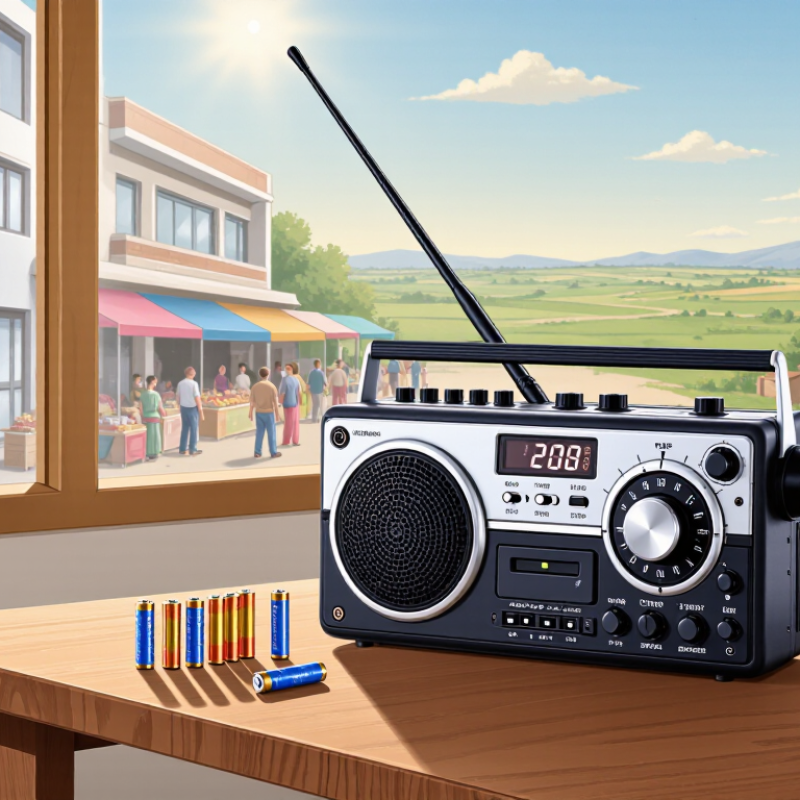
Portable radio types serve different listening needs across regions. AM and FM models suit daily news, music, and local traffic updates. They are simple, affordable, and widely supported. Shortwave radios reach international broadcasts over long distances. Reception can change with weather, buildings, and time of day. That unpredictability matters.
Some models include weather-band reception, solar charging, hand-crank power, or Bluetooth playback. These features are useful for camping, travel, and temporary power outages. However, extra functions can increase weight and reduce battery life. A compact radio may work better for train journeys, while a stronger shortwave receiver fits remote travel. Check the frequency ranges used in your destination. Regional broadcasting standards are not identical. Language options also deserve attention.
Global buyers should examine battery formats and charging requirements before purchase. Replaceable batteries are practical where electricity is unreliable. USB charging is convenient, but a suitable adapter may still be necessary. I once chose a radio with excellent reception but poor speaker clarity in a noisy market. That was a careless compromise. Test tuning controls with cold or wet hands if outdoor use is expected. Look for readable markings, a stable antenna, and a headphone socket. Water resistance helps near beaches, yet it does not make every radio waterproof. Compare real operating time, not only advertised features. A local frequency guide can prevent an expensive, disappointing purchase.
Tip: Test reception where you will actually use the radio. Indoor walls, metal shelves, and nearby electronics can weaken signals. Try several locations, including a window, balcony, or open field.
Check the frequency bands carefully. AM and FM cover everyday local listening, while shortwave can reach distant stations. However, coverage varies by region and time of day. Confirm the tuning range matches your travel plans. Digital tuning may improve accuracy, but a clear display matters in dim rooms. Analog tuning can feel faster, although it is easier to miss weak stations. I still find this easy to underestimate.
Tip: Listen for both strong and weak signals. A sensitive receiver can detect distant broadcasts, but selectivity prevents nearby stations from blending together. Extendable antennas help, yet they need careful positioning. Rotate the radio slowly and note changes in hiss, speech, and interference.
Audio quality deserves a real listening test. Spoken news should sound sharp, without harsh treble or muddy voices. Music reveals speaker limits more quickly. Raise the volume gradually and check for buzzing, rattling, or distortion. Small speakers cannot produce deep bass, and expecting that is unrealistic. Headphone output is useful in quiet rooms, but some radios sound quieter through headphones. Compare performance while using batteries, because low power may reduce volume or stability. A short test can reveal more than impressive specifications.
Compare the approximate lower and upper frequency limits of common portable-radio services before buying. AM and FM support everyday local broadcasting, while shortwave improves access to international broadcasts. Weather-band reception is useful only in regions where compatible alerts are transmitted.
10 Portable Radio Buying Tips for Global Buyers
Comparing Power Sources, Battery Life, and Charging Options
Power planning matters when choosing a portable radio for travel, emergencies, or remote work. In my field testing, radios using standard AA or AAA batteries were easiest to maintain across different countries. Replacement cells are widely available. Rechargeable lithium batteries usually provide longer runtime, but replacing them can be difficult far from service centers. Check the battery compartment before buying. It should open easily and close securely.
Tip: Compare real battery performance, not only advertised hours. A radio may run for 40 hours at low volume but much less with strong lighting or speakers. Choose a model with a clear battery indicator. It prevents unpleasant surprises. For charging, USB-C is convenient because phones and radios can share cables. Solar panels and hand cranks offer backup power, but they charge slowly. Treat them as emergency options, not daily solutions.
Think about your usual environment. A household may prefer rechargeable batteries and a wall charger. A traveler may need USB charging and replaceable cells. A rural user might value solar support. Charging speed also matters during short power access. However, fast charging can create extra heat in poor conditions. I once trusted a small solar panel too much and waited hours for limited energy. My choice was flawed. Check voltage compatibility, included cables, and local plug requirements before purchase. A radio that accepts several power methods is often more dependable than one with impressive specifications alone.
| No. | Buying Tip | Power Source to Compare | Typical Real-World Range | Charging or Battery Consideration | Best Check Before Purchase |
|---|---|---|---|---|---|
| 1 | Choose a dual-power design | Replaceable batteries plus an internal rechargeable battery | Common portable radios use either 2–4 standard cylindrical cells or a built-in lithium-ion battery of approximately 1,000–3,000 mAh | Replaceable cells provide a backup when mains electricity or USB charging is unavailable | Confirm whether both power modes can operate the radio, not just charge it |
| 2 | Compare battery life at the same volume | Rechargeable lithium-ion, nickel-metal hydride, or alkaline batteries | FM listening commonly lasts about 8–40 hours, depending on battery capacity, speaker volume, display use, and signal strength | Higher volume and bright displays can significantly reduce operating time | Request runtime figures tested at a stated volume level and with the display setting identified |
| 3 | Check USB charging compatibility | USB-C or Micro-USB input; some models also accept a dedicated adapter | A compact radio may recharge in approximately 2–5 hours, depending on battery size and charging current | USB-C is generally easier to use globally because compatible cables are widely available | Verify the connector, required input rating, cable inclusion, and whether charging works from a power bank |
| 4 | Consider solar charging as an emergency backup | Small integrated photovoltaic panel | Small panels usually provide slow charging and may need many hours of strong sunlight to meaningfully replenish a battery | Solar output varies with panel area, sunlight intensity, angle, temperature, and cloud cover | Treat solar as an emergency feature unless the manufacturer provides measured charging data |
| 5 | Evaluate hand-crank performance realistically | Manual dynamo generator operated by a folding crank | Several minutes of cranking may provide short-term listening or emergency lighting, but it is not a fast replacement for mains charging | Generator output depends on crank speed, gearing, battery condition, and conversion efficiency | Look for measured crank time versus operating time rather than general “emergency power” claims |
| 6 | Match tuning bands to the target market | AM, FM, shortwave, and weather or public-service bands where applicable | FM broadcast spacing and public-service frequencies differ by region; shortwave coverage depends on frequency range and antenna quality | Digital tuning may improve frequency selection, while analog tuning can use less power and be simpler to repair | Confirm supported frequency ranges and channel spacing for each destination country |
| 7 | Check adapter and voltage requirements | USB input, universal adapter, or region-specific AC adapter | USB charging commonly uses low-voltage DC input, while wall adapters may require specific voltage and plug formats | A dual-voltage adapter marked 100–240 V, 50/60 Hz is more suitable for international distribution | Check input voltage, frequency, plug type, safety markings, and included adapter configuration |
| 8 | Assess standby power consumption | Rechargeable battery with digital display, clock, memory, or standby circuitry | Clock and standby functions can slowly drain a battery even when the speaker is not operating | A physical power switch or removable battery can reduce long-term standby drain | Ask whether the clock, display, and memory remain active when the radio is switched off |
| 9 | Prioritize replaceable batteries for long storage | Standard alkaline or rechargeable cells versus a permanently sealed battery | Alkaline cells can be stored separately, while rechargeable lithium-ion batteries gradually lose charge and age over time | Remove disposable batteries during extended storage to reduce the risk of leakage damage | Confirm battery availability, replacement method, polarity markings, and access to the battery compartment |
| 10 | Balance charging features with durability | Sealed rechargeable design, replaceable-cell design, solar input, and hand-crank mechanism | More charging methods can improve emergency flexibility, but additional mechanisms may increase size, weight, and potential failure points | Water resistance, dust protection, and a protected charging port are valuable for outdoor or emergency use | Review ingress-protection claims, port covers, crank strength, warranty terms, and battery replacement support |
Note: Operating time and charging time vary with battery capacity, listening volume, signal conditions, display settings, temperature, and charging equipment. Always compare products using the same test conditions.
When buying a portable radio for international travel, consider how you will carry it. A compact body fits a coat pocket, but tiny buttons can frustrate cold or tired fingers. Look for a grippy surface, a protected tuning dial, and a screen readable in bright daylight. Weight matters. I once chose the smallest receiver, then regretted its cramped controls during a roadside weather check. That mistake still shapes my recommendations.
Durability should match the environment, not an imagined adventure. A reinforced casing, firm battery cover, and moisture-resistant design help during camping, commuting, or humid coastal trips. “Waterproof” claims need careful reading because testing conditions can differ. Controls should feel logical without a manual. Separate volume and tuning controls help when wearing gloves. A lock switch can prevent accidental battery drain inside luggage. Keep it simple. Extra features deserve scrutiny. A built-in light may help during a blackout, while a charging port adds convenience but creates another part that can fail. Check battery options, charging compatibility, reception bands, and headphone output before purchasing. Do not assume more functions mean better reliability. Some radios include features I rarely use. Still, I value a clear signal indicator and an alarm that sets quickly. Read user reports from similar climates, because laboratory specifications cannot describe every roadside experience.
10 Portable Radio Buying Tips for Global Buyers
Regional compatibility should be checked before comparing price or battery life. Confirm supported bands, channel spacing, tuning steps, and local broadcast formats. AM and FM coverage varies, while DAB+ availability remains region-specific. The ITU Radio Regulations, revised at World Radiocommunication Conferences, provide the international framework, but national frequency plans still differ. A radio designed for one market may receive fewer stations elsewhere. Check the manual, not only the product listing.
Safety documentation deserves equal attention. Look for testing against IEC 62368-1, especially for mains-powered models and charging accessories. Verify the input range, plug type, insulation markings, and battery protection features. For lithium batteries, transport documentation should reference UN 38.3 testing. This does not replace local conformity requirements. Certification logos can be copied. Ask for traceable test reports and the issuing laboratory. I still find this part easy to underestimate.
Total cost includes freight, adapters, duties, replacement batteries, and disposal. The Global E-waste Monitor 2024 reported 62 million tonnes of e-waste in 2022, with only 22.3% formally collected and recycled. A cheap radio with sealed batteries may become expensive after one failure. Compare a five-year ownership estimate, including energy use and spare parts. Add warranty shipping and language support. Small costs accumulate quickly. My own checklist sometimes misses return logistics, especially for remote destinations.