Top 10 Tips for Choosing the Best Two Way Radios for Your Needs
When it comes to effective communication, especially in situations where cell phone coverage is unreliable, Two-Way Radios have become an indispensable tool across various sectors. According to industry expert John Smith, a renowned communications specialist, "Choosing the right Two-Way Radios can significantly enhance operational efficiency and improve team coordination." With the plethora of options available on the market, selecting the best Two-Way Radios tailored to your specific needs can feel overwhelming.
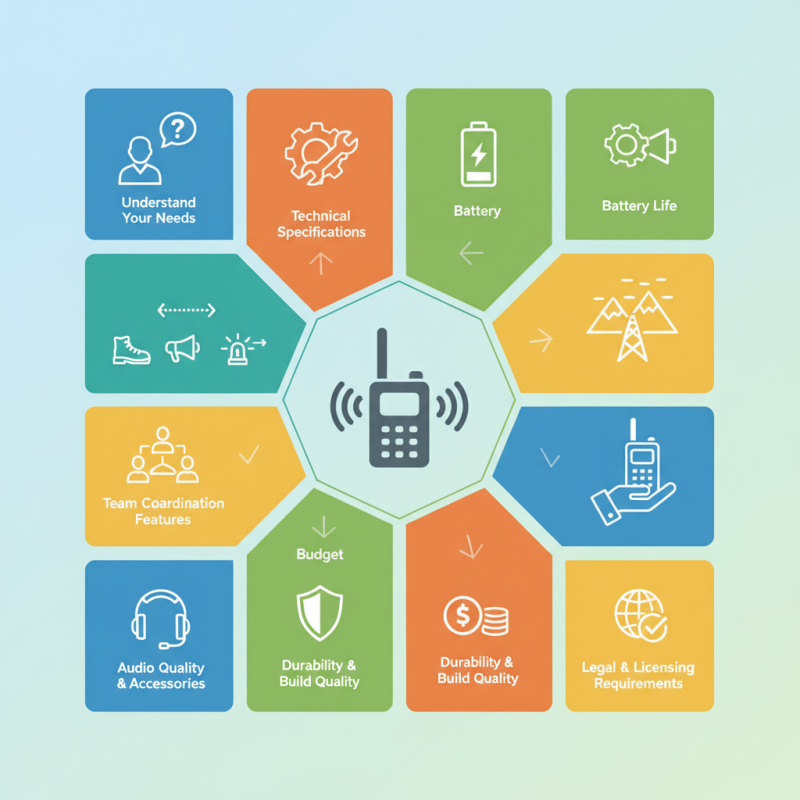
Understanding your communication requirements—be it for outdoor adventures, event management, or emergency services—is crucial in making an informed choice. Moreover, the technical specifications, battery life, range, and user-friendliness of the Two-Way Radios you consider play a pivotal role in ensuring they meet your expectations. In this guide, we will explore the top 10 tips that will help you navigate through the essential features and functionalities of Two-Way Radios, empowering you to make a smart purchasing decision that suits your unique demands. Whether you're a first-time buyer or looking to upgrade your current devices, these insights will equip you with the knowledge you need to optimize your communication experience.
Understanding Your Communication Needs for Two Way Radios
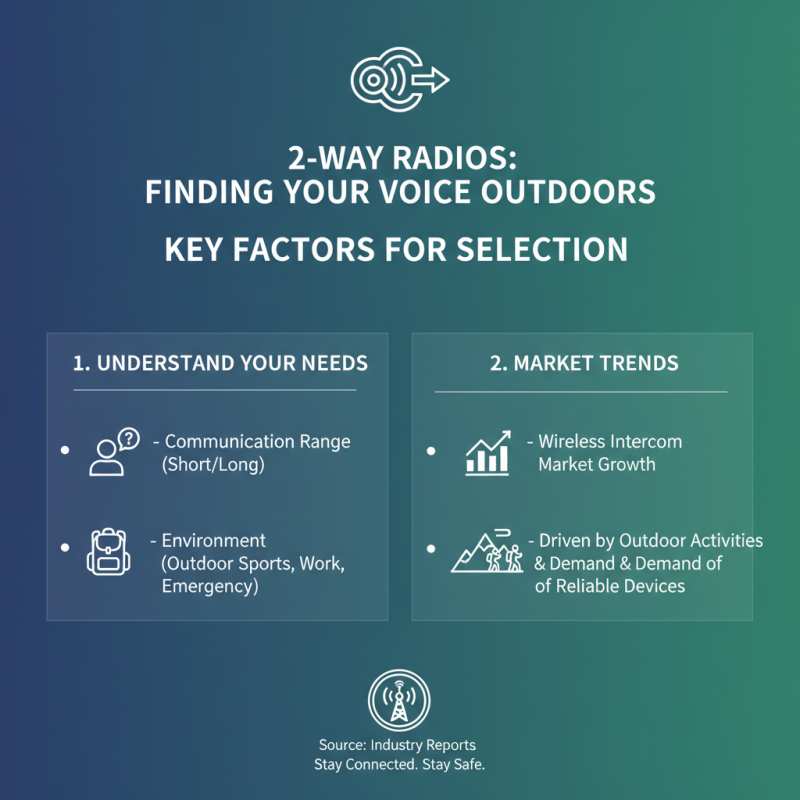
When it comes to selecting the best two-way radios, understanding your communication needs is paramount. The wireless intercom market has shown significant growth, notably influenced by various activities such as outdoor sports and the requirements for efficient communication in these environments. According to recent industry reports, the market is expanding due to an increased interest in outdoor activities, pushing users to seek reliable and durable communication devices tailored for such engagements.
To ensure you choose the right two-way radio for your needs, consider the following tips: first, assess the distance range required for your communication. Radios can differ vastly in their range capabilities, with some designed for short distances ideal for indoor use while others are built for outdoor use where longer distances are common. Secondly, look into battery life. Many modern radios feature 24-hour battery life, providing peace of mind during extended adventures. Always prioritize devices that offer sustainability to match your communication habits.
Lastly, examine the technology and features offered. With options such as Wi-Fi bands and unique noise cancellation capabilities emerging in the market, it's essential to select radios that align with your specific requirements. By understanding your communication needs, you'll be in a better position to make a well-informed choice that enhances your connectivity during crucial moments.
Key Features to Consider When Selecting Two Way Radios
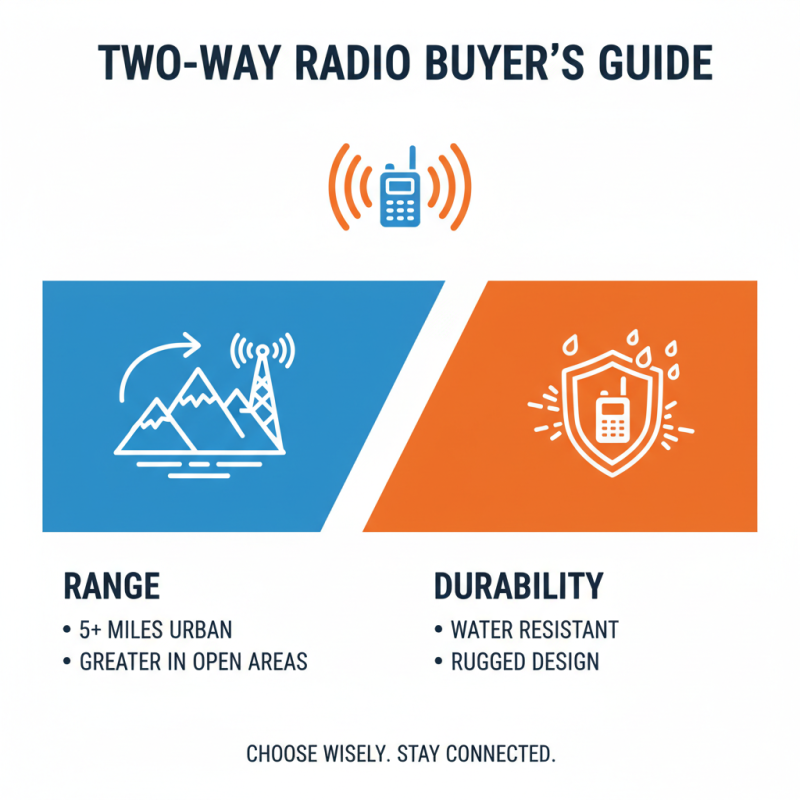
When selecting two-way radios, certain key features are paramount to ensure you meet your communication needs effectively. First and foremost, consider the range of the radios; many models on the market today have impressive ranges, often exceeding five miles in urban settings. However, in open areas, this range can increase significantly, making it vital to match your choice with the environment in which you'll be using them. Additionally, the durability of the radios plays a crucial role, especially for outdoor activities. Many modern walkie-talkies are built to withstand harsh conditions, offering water resistance and rugged designs that prevent damage in diverse scenarios.
Battery life is another essential feature, particularly for long excursions or emergency preparedness. A study highlights that users prefer radios with at least 12-24 hours of battery life, ensuring reliable communication without frequent recharging. Further, consider the usability features such as ease of operation and additional functionalities like built-in GPS, which can be invaluable for navigation during outdoor adventures. The best two-way radios available today also include options designed for specific activities, whether it’s for family outings, backcountry trips, or even professional use in aviation contexts. Evaluating these features carefully will lead to a selection that not only meets your needs but also enhances your outdoor experiences.
Evaluating Battery Life and Power Options in Two Way Radios
When choosing the best two-way radios for your needs,
evaluating battery life and power options is crucial.
According to recent industry reports, over 60% of users experience issues with battery longevity, especially during prolonged use.
Look for radios with rechargeable lithium-ion batteries, which typically offer longer life and faster charging times compared to traditional alkaline batteries.
Models with a battery life of 10-15 hours or more on a single charge will typically be the most reliable for extended communication needs.
Additionally, consider the radio’s power output, which is often expressed in watts.
Radios with higher wattage can communicate over greater distances and tend to be more effective in challenging environments.
For instance, a two-way radio with 5 watts can operate adequately over 5 miles in urban settings.
As a tip, opt for radios that offer multiple power settings to conserve battery life when full power is unnecessary.
Selecting a model that balances both battery efficiency and power can significantly enhance your user experience.
Furthermore, remember the charging options.
As per a recent survey, 45% of users prefer models that include both AC and vehicle charging solutions
for maximum flexibility. A two-way radio with universal charging compatibility
will ensure that you are never left without a way to power up, no matter your location.
Assessing Range and Signal Strength for Your Environment
When selecting the best two-way radios for your environment, assessing range and signal strength is crucial. These factors significantly influence communication reliability, especially in diverse geographical settings. According to a recent study focusing on ZigBee communication technologies, environmental variations can dramatically affect signal strength and latency, impacting overall performance. Radios designed for different terrains, such as urban landscapes or rural areas, must therefore undergo rigorous testing to ensure they meet the necessary range requirements.
Further emphasizing the importance of range, a comprehensive investigation of ultra-wideband (UWB) technologies has revealed that multipath effects in line-of-sight (LOS) and non-line-of-sight (NLOS) environments can significantly alter communication effectiveness. In practical terms, this means that two-way radios must be evaluated not only in ideal conditions but also in challenging environments where obstacles can disrupt signals. Ensuring that your chosen radios perform well in a variety of conditions will enhance reliability in critical situations, from outdoor adventures to emergency responses, where consistent communication is essential.
Signal Strength and Range Assessment of Two Way Radios
Comparing Brands and Models for Quality and Reliability
When it comes to selecting the best two-way radios, comparing different brands and models is crucial for ensuring quality and reliability. Key factors such as battery life, range, and durability should guide your decision-making process. Brands like Motorola, Kenwood, and Baofeng are often highlighted for their sturdy construction and long-lasting performance. It's worth looking into user reviews to gauge real-world reliability, as products that may appear high-quality on paper could fall short during actual use.
One valuable tip is to determine your primary usage needs. If you’re planning on using them in outdoor environments, opt for models that are weatherproof and have enhanced range capabilities. On the other hand, if you need radios for indoor use or short-distance communication, simpler models may serve you just as well. Additionally, consider the ease of use and features such as programmable channels and emergency functions, which can significantly enhance your experience in critical situations.
Another important aspect is battery type; some models offer rechargeable batteries, while others rely on AA or AAA batteries. Choose based on your preference for convenience and the frequency of usage. Always remember to compare warranties and after-sales services as well, as they can often make a significant difference in the long-term satisfaction with your purchase.