Leave Your Message

Top 10 Types of Long Range Walkie Talkies?

Choosing among the Top 10 Types of Long Range Walkie Talkies requires more than reading advertised distance figures. Real performance changes across forests, construction sites, mountain trails, and open farmland. A radio promising 30 miles may deliver only a few miles when buildings, hills, or heavy weather interrupt the signal.

Radio communications educator Gordon West offers a useful perspective: “Range is not a number alone; it is a relationship between power, terrain, antennas, and expectations.” This principle guides the comparison ahead. Each category will be examined through practical details, including transmission range, battery endurance, audio clarity, weather resistance, channel flexibility, and ease of use. The strongest choice is rarely the most expensive model. It is the one that matches the environment.

Some assumptions deserve doubt. Bigger antennas do not guarantee perfect communication. Higher power can improve reach, but it may also affect battery life and operating requirements. Check local rules before using specialized channels or higher-powered equipment. Legal limits matter.

Think beyond the box.

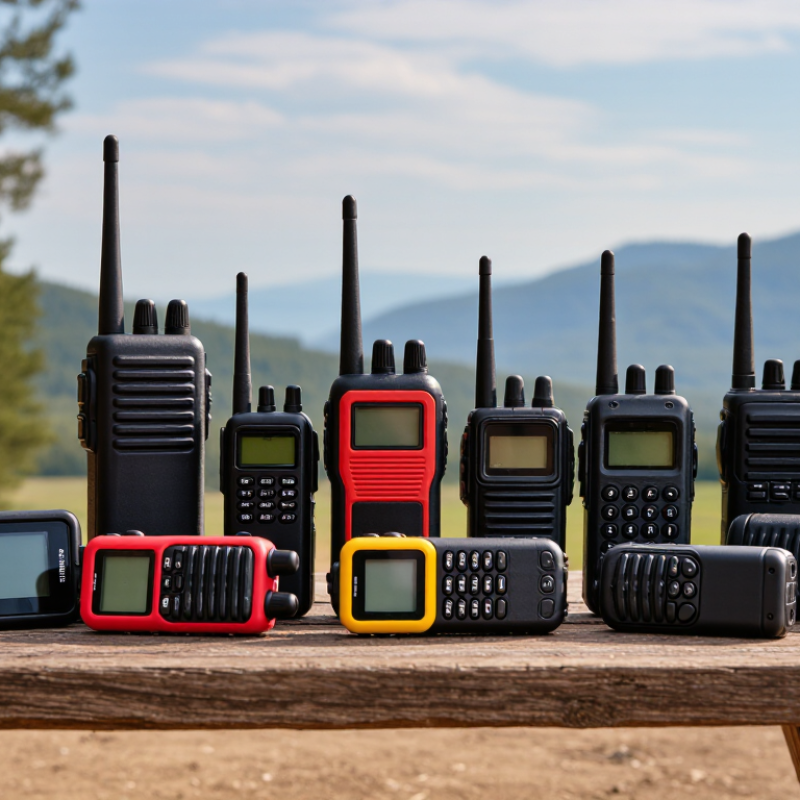
A construction supervisor may value loud audio and impact resistance. A hiker may prefer compact weight, emergency features, and reliable weather alerts. A family at a large outdoor event may prioritize simple controls and fast group communication. These needs create different winners. This guide compares ten major types of Long Range Walkie Talkies, explains where each performs best, and identifies compromises that product descriptions often hide. Real-world testing still matters. No chart can fully replace experience in the field.
Top 10 Types of Long Range Walkie Talkies?

What Defines a Long-Range Walkie-Talkie?

What Defines a Long-Range Walkie-Talkie?

A long-range walkie-talkie is not defined by one impressive distance printed on its box. Real range depends on transmitter power, antenna design, terrain, weather, and surrounding buildings. A unit may reach several miles across open farmland, yet struggle across a crowded city street. Hills, thick forests, and concrete walls can weaken signals quickly. Clear line of sight usually matters more than marketing claims.

Professional testing should include both open and obstructed locations. Check voice clarity, battery endurance, channel stability, and emergency communication features. Some models use higher power, while others rely on repeaters or specialized networks. These designs serve different needs, including hiking, construction, outdoor events, and remote travel. A long-range model should also feel practical in the hand. Heavy equipment becomes tiring after several hours.

Professional testing should include both open and obstructed locations.

Tips:

Test radios where you will actually use them. Stand behind buildings, walk around corners, and check reception inside a vehicle. Keep spare batteries protected from heat and moisture. Confirm that the radio operates on permitted frequencies in your region. I once trusted an advertised range and found the signal unreliable near a wooded ridge. That mistake changed my testing method. Range claims are useful, but they are not promises. A dependable choice balances distance, durability, battery life, and clear audio.
License-Free Radios for Everyday Communication

Top 10 Types of Long Range Walkie Talkies
License-Free Radios for Everyday Communication

License-free walkie talkies are useful for families, hikers, event crews, and small worksites. Common types include low-power personal radios, outdoor radios, weather-resistant units, and compact headset models. Some operate through region-specific services, such as family or personal mobile radio systems. Rules differ by country, so check the approved frequencies, power limits, and channel requirements before buying. “Long range” often means open ground, not a crowded apartment block.

In my experience, trees, concrete walls, hills, and weather reduce communication distance quickly. A radio that reaches several kilometers in a field may struggle between two buildings. Clear audio, simple controls, battery life, and charging options matter more than an impressive box claim. I prefer testing two units near the actual workplace. The result is rarely perfect. That is worth remembering. Some models also offer hands-free operation, emergency weather reception, or water resistance, but these features should match real daily needs.

Tips: Test range with a friend, not alone. Carry spare batteries or a charged power bank. Keep one channel available for routine messages. Use short, clear phrases near traffic or machinery. Read the manual carefully, especially its legal and safety information. A license-free radio is not automatically suitable for every country or situation. When privacy matters, assume ordinary radio traffic can be heard.

Top 10 Types of Long Range Walkie Talkies? - License-Free Radios for Everyday Communication

Type of Radio Typical Operating Band Maximum Common Power Limit Typical Open-Area Range License Status Best Everyday Uses Main Limitation
FRS Low-Power Channels 462–467 MHz 0.5 W transmitter power 0.5–1.5 miles / 0.8–2.4 km No individual license in the United States Family trips, neighborhoods, parks, and short-range coordination Buildings, hills, and trees can reduce range substantially
FRS High-Power Channels 462–467 MHz 2 W transmitter power on designated channels 1–3 miles / 1.6–4.8 km No individual license in the United States Camping, outdoor events, farms, and recreational activities Fixed antennas and shared channels limit performance in crowded areas
Analog PMR446 446.0–446.2 MHz 0.5 W effective radiated power 0.5–2 miles / 0.8–3.2 km License-exempt in many European countries when compliant Travel groups, hospitality, retail, and outdoor recreation Low power and shared spectrum limit long-distance coverage
Digital PMR446 446.0–446.2 MHz 0.5 W effective radiated power 0.5–2 miles / 0.8–3.2 km License-exempt in many European countries when compliant Clearer voice communication, group calling, and busy locations Digital radios from different systems may not interoperate
MURS VHF Radios 151–154 MHz 2 W transmitter power 1–5 miles / 1.6–8 km No individual license in the United States Rural properties, farms, small businesses, and outdoor work Available channels and compatible equipment are less common
UHF CB Radios 476–477 MHz 5 W transmitter power in Australia 1–10 miles / 1.6–16 km No individual user license under the Australian class license Road travel, farms, worksites, and outdoor activities Rules and channel allocations are country-specific
LPD433 Low-Power Radios 433.05–434.79 MHz Typically 10 mW effective radiated power 0.2–1 mile / 0.3–1.6 km License-exempt in selected European markets Short-distance personal communication and simple remote controls Lower power makes it unsuitable for dependable long-range use
Handheld CB Radios Approximately 26.965–27.405 MHz 4 W carrier power for AM in the United States 1–5 miles / 1.6–8 km No individual license in the United States Vehicle convoys, travel, emergency coordination, and rural communication Large antennas are normally needed for the best performance
433 MHz ISM Digital Radios 433.05–434.79 MHz Usually restricted by regional duty-cycle and power rules 0.5–2 miles / 0.8–3.2 km License-exempt only when the equipment meets local regulations Low-data messaging, sensors, and specialized short-range communication Not a universally standardized voice-radio service
915 MHz ISM Digital Radios 902–928 MHz in the United States Power depends on the approved technology and antenna configuration 0.5–3 miles / 0.8–4.8 km Generally license-exempt for compliant low-power devices in the United States Digital telemetry, location sharing, and specialized group communication Frequency rules differ widely outside the United States

Important: Actual range depends on terrain, elevation, buildings, vegetation, antenna design, interference, and weather. “License-free” means no individual operator license is normally required in the stated jurisdiction; local radio-equipment approval and operating rules still apply.

High-Power Radios for Extended Outdoor Coverage

Top 10 Types of Long Range Walkie Talkies?

High-power radios can extend outdoor coverage across forests, farms, construction sites, and mountain trails. However, maximum range depends on terrain, antenna height, weather, and surrounding buildings. A handheld radio may work well across open fields but struggle behind a rocky ridge. More power helps, but it cannot defeat every obstruction.

Common long-range types include high-power handheld radios, vehicle-mounted units, base-station radios, digital radios, analog radios, weather-resistant radios, emergency-ready radios, repeater-compatible radios, dual-band radios, and satellite-linked communication devices. Handheld models are practical for hiking teams. Vehicle units provide stronger antennas and steady power during long drives. Base stations suit farms, camps, and remote work areas. Digital models often improve voice clarity, while analog models may remain easier to maintain.

In real outdoor use, I check battery capacity before judging range. A bright display, physical controls, and a secure belt clip also matter when rain starts. Some radios advertise impressive distances, yet those figures usually assume flat, unobstructed land. That detail deserves skepticism. High-power equipment may drain batteries quickly, especially in cold weather. Carrying a spare battery is sensible, though I sometimes underestimate its weight. Users should also verify local frequency rules and equipment requirements before operating. Clear call procedures, tested channels, and an agreed meeting point can prevent confusion when voices become faint.

Professional Radios for Worksite and Emergency Use

Top 10 Types of Long Range Walkie Talkies?

For worksite and emergency teams, “long range” means dependable coverage, clear audio, and usable battery life. It is not a laboratory distance claim. The ten practical categories include analog VHF, analog UHF, digital VHF, digital UHF, repeater-ready, intrinsically safe, trunked, LTE push-to-talk, satellite push-to-talk, and hybrid dual-mode radios. VHF often suits open land. UHF usually performs better around walls, steel, and machinery. Digital models can improve edge-of-coverage audio, but they may fail abruptly. That matters. During outages, a simple analog fallback can outperform a sophisticated system.

MarketsandMarkets’ 2024 Two-Way Radio Market report estimates the sector near 9 billion dollars. It forecasts roughly 6% annual growth through 2029. This demand reflects public safety, construction, utilities, transport, and industrial operations. Buyers should verify measured coverage, not advertised range. Concrete, hills, rain, and machinery can change performance significantly. Field testing remains essential. Repeater-compatible radios extend coverage across large sites. Trunked systems manage multiple talk groups efficiently. LTE and satellite options add wide-area reach, but they depend on networks, subscriptions, or clear sky.

For hazardous locations, select equipment certified for the specific gas, dust, or chemical environment. NIOSH guidance emphasizes approved intrinsically safe equipment where ignition risks exist. Useful features include emergency alarms, lone-worker functions, GPS, encryption, glove-friendly controls, and replaceable batteries. ETSI EN 300 113 provides a useful technical reference. My practical reservation is simple: GPS can drain batteries quickly. Train users to report location, channel, and status clearly. Radio plans often fail through poor habits, not weak transmitters.

Specialized Long-Range Radios for Marine, Aviation, and Recreation

Long-range walkie-talkies vary widely by environment, antenna design, and operating rules. Marine VHF handhelds suit boats, kayaks, and coastal work. Channel 16 supports recognized distress and calling procedures, but users need proper training. Aviation VHF airband radios serve pilots and ground crews near approved airfields. They require careful frequency discipline. They are not general-purpose outdoor radios.

For recreation, VHF outdoor radios can improve coverage across forests and open trails. UHF recreational radios often perform better around buildings, campsites, and rocky valleys. Dual-band radios offer flexibility, but their controls can confuse beginners. Repeater-compatible models may extend communication where authorized infrastructure exists. Weather-alert receivers add value during changing conditions. Some emergency-oriented radios include location sharing or a loud beacon, though features vary greatly.

A tenth useful category is the rugged waterproof radio designed for mixed adventures. It may support scanning, hands-free operation, and replaceable antennas. Range claims look impressive. Real terrain is less cooperative. Trees, cliffs, rain, body position, and battery condition can reduce coverage sharply. Field testing usually matters more than packaging. I would carry a spare battery and test communication before leaving shore or a trailhead. Aviation users should monitor only approved channels and follow local procedures. Marine users also need waterproof ratings, floating designs, and clear audio in wind. The best radio is not always the strongest one; it is the model you can operate correctly under pressure.