Leave Your Message

China Top Ham Radios Suppliers for Global Buyers

China Top Ham Radios Suppliers for Global Buyers requires more than comparing prices and product photos. Ham Radios support emergency communication, technical learning, contesting, and reliable field operations. Buyers need suppliers that understand both radio performance and international compliance.

The global amateur radio community remains substantial, although its exact size is difficult to measure. The International Telecommunication Union’s Radio Regulations define the amateur service and its operating framework worldwide. In the United States, the Federal Communications Commission maintains public amateur license records, while the ARRL publishes operating guidance and technical resources for radio users. Commercial market studies, including Grand View Research’s amateur radio market analysis, also identify continued demand for handheld, mobile, and base-station equipment. However, market estimates use different methods. They should not be treated as perfect facts.

Supplier quality appears in small details. A dependable factory can provide test reports, component traceability, sample approvals, and clear warranty terms. It should explain output power, frequency coverage, receiver sensitivity, battery capacity, and charging performance without vague claims. Buyers should also request EMC evidence and check local type-approval requirements before importing or selling products. Rules differ by country.

Field experience matters.

A radio that performs well indoors may struggle near steel structures, crowded urban channels, or weak batteries. Some supplier listings look polished, yet their specifications may need independent verification. That assumption deserves checking. This guide examines leading Chinese Ham Radios suppliers through manufacturing capability, product consistency, documentation, communication support, and export experience. The goal is practical selection, not simply the lowest quotation.
China Top Ham Radios Suppliers for Global Buyers

What Ham Radios Are and Why Chinese Suppliers Matter

Ham radios are two-way radio devices used by licensed operators for self-training, technical experiments, and noncommercial communication. The ITU Radio Regulations define amateur service around these purposes, not casual broadcasting or commercial traffic. That distinction matters. A handheld unit may fit inside a jacket pocket, while a base station can connect to an outdoor antenna several meters above a roof. Operators still need to follow local frequency, power, and licensing rules.

Demand remains substantial. ARRL’s 2023 licensing analysis, based on FCC records, counted more than 779,000 amateur radio licensees in the United States. This broad user base supports steady demand for portable radios, antennas, batteries, and replacement components. Chinese suppliers matter because their manufacturing networks can provide flexible production, multiple frequency configurations, and lower minimum order quantities. For global buyers, that can simplify private-label development and spare-parts sourcing.

Price alone is not proof of quality. Some specifications look optimistic. Ask for measurement records, frequency stability results, battery-cycle data, and documented compliance before ordering. A reliable supplier should explain receiver sensitivity in plain language and provide sample units for field testing. In practice, a radio that survives rain, glove-covered buttons, and a long shift may outperform a cheaper model with impressive paper specifications. The market is not perfectly transparent, so buyers should compare test evidence with real operating conditions.

Main Types of Ham Radios Available from China

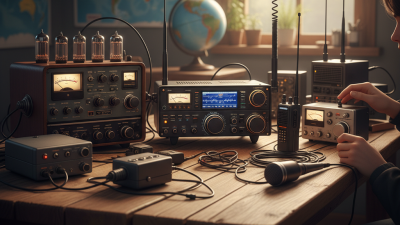
China’s ham radio suppliers serve several practical equipment categories.
Handheld radios remain popular for hiking, club events, and local repeater access. They usually cover VHF, UHF, or both bands, with removable batteries and compact antennas. Mobile radios provide higher power for vehicles, while base stations support fixed locations with larger antennas and better cooling.

Software-defined radios add another option.
They process signals through software, allowing broader experimentation across permitted amateur bands. However, SDR units may require stronger computer skills and careful configuration. A 2024 Research and Markets analysis estimates steady growth in the global amateur radio equipment sector, supported by emergency communication training and hobbyist use. The report also highlights demand for portable and digitally integrated devices.

Technical comparison matters more than advertised power. Buyers should check receiver sensitivity, adjacent-channel selectivity, duty-cycle limits, connector quality, and operating temperature. Field checks often reveal weak battery contacts or unclear manuals. That part is easy to underestimate. For vehicle radios, verify mounting space, ventilation, fuse protection, and microphone ergonomics. For imported equipment, confirm frequency programming, labeling, user documentation, and local authorization requirements. The International Telecommunication Union Radio Regulations define the amateur service, but national administrations control practical operating conditions. A lower-cost radio can be useful, yet poor filtering may create interference. That is not a minor flaw. Reliable Chinese suppliers should provide test data, production traceability, replacement parts, and consistent firmware documentation.

How to Evaluate China-Based Ham Radio Suppliers

China Top Ham Radios Suppliers for Global Buyers

How to Evaluate China-Based Ham Radio Suppliers

Evaluating a China-based ham radio supplier requires more than comparing prices. The supplier should provide clear test records, production details, and traceable component information. ARRL’s 2024 Amateur Radio by the Numbers report recorded more than 779,000 licensed operators in the United States at the end of 2023. That large user base increases demand for stable frequency control, durable connectors, and accurate technical documents.

Check whether the factory follows a documented quality system, such as ISO 9001, and ask for recent inspection evidence. Request measured results for output power, frequency stability, receiver sensitivity, and unwanted emissions. Independent laboratory testing is stronger than a supplier’s internal spreadsheet. Confirm supported bands and regional certification requirements before ordering. A supplier may quote impressive range figures, but range depends heavily on antennas, terrain, and interference. I have seen specifications look complete while omitting operating temperature. That omission matters.

Tips: Ask for three production samples, not one. Test them for several days. Compare serial numbers, manuals, packaging, and charging performance. Review the supplier’s defect rate, warranty process, and response time in writing. China’s 2023 National Quality Infrastructure development report emphasizes measurement traceability and standardized testing, useful principles for radio procurement. Still, paperwork is not proof of field reliability. A factory visit or third-party inspection can reveal inconsistent soldering, weak strain relief, or rushed final assembly. No checklist is perfect. Recheck the details.

China Top Ham Radios Suppliers for Global Buyers: How to Evaluate China-Based Ham Radio Suppliers

This buyer evaluation framework compares the most important supplier-selection dimensions for China-based ham radio sourcing. The percentages represent suggested decision weights, with product compliance, radio performance, quality consistency, and after-sales support receiving the highest priorities.

Quality, Certification, and Compatibility for Global Buyers

China Top Ham Radios Suppliers for Global Buyers

Chinese ham radio suppliers serve buyers across many markets, but quality varies between factories. Reliable sourcing begins with product evidence, not attractive photographs. Ask for sample units, production specifications, and recent test reports. Inspect solder joints, casing fit, display brightness, and connector strength. Small defects often appear after repeated use.

Certification must match the destination market. Buyers should verify applicable radio, electrical safety, and electromagnetic compatibility requirements before placing large orders. A certificate with an unclear scope is not enough. Check the issuing laboratory, test model, validity date, and matching product version. Supplier audits also matter. Review quality-control records, inspection procedures, and traceability for key components.

Compatibility requires practical testing. Confirm supported frequency ranges, channel spacing, output power, antenna connectors, battery voltage, charging standards, and local plug types. A radio may operate correctly in one region yet fail another market’s technical requirements. Manuals should include clear English instructions, safety information, and programming guidance. Firmware and software compatibility deserve attention too.

No supplier is flawless. Even careful buyers can miss a packaging weakness or confusing menu. That is why pre-shipment inspection remains valuable. Request pilot orders before committing to container quantities. Compare several samples under identical conditions, including weak-signal reception and extended transmission tests. Honest suppliers usually accept reasonable verification and explain limitations clearly. Suppliers that avoid technical questions deserve closer review.

China Top Ham Radios Suppliers for Global Buyers - Quality, Certification, and Compatibility for Global Buyers
Comparative supplier-capability guide for global buyers. Profiles are organized by commonly available OEM/ODM product capabilities rather than by company or brand name.
Supplier Capability Profile Typical Product Scope Common Frequency Coverage Typical RF Output Quality and Production Evidence Relevant Market Compliance Compatibility and Buyer Verification
Profile A
Portable VHF/UHF OEM
Handheld amateur radios for local communication, emergency-preparedness groups, and entry-level operators. Commonly configurable for 2 m and 70 cm amateur bands; exact transmit ranges must be confirmed against the model specification. Typically selectable between approximately 1 W and 5 W, depending on battery, thermal design, and regional version. ISO 9001 requested Production sample approval
Ask for incoming-material inspection, final RF testing, battery test records, and serial-number traceability.
CE/RED for EU versions RoHS
FCC authorization may be required for applicable U.S. versions; certification is model- and market-specific.
Check channel spacing, emission type, programmable limits, SMA connector type, battery voltage, charger plug, and local amateur-radio rules.
Profile B
Commercial-Grade VHF/UHF OEM
Rugged handheld and mobile radios designed for higher duty cycles, fleet deployment, and professional-looking enclosures. Often offered in VHF or UHF variants; amateur-band operation depends on the approved model configuration and local regulations. Handheld units commonly offer up to about 5 W; mobile units may be available in higher power classes, subject to authorization requirements. ISO 9001 requested AQL inspection
Request RF power, frequency error, sensitivity, audio, temperature, and drop/vibration test results.
CE/RED RoHS IP rating evidence
Do not rely on a generic certificate; verify that the certificate and test report identify the exact radio model.
Verify IP rating test scope, accessory pinout, programming cable, microphone connector, CTCSS/DCS support, and repeater offset settings.
Profile C
HF/VHF/UHF Station Equipment OEM
Base-station transceivers, desktop accessories, power supplies, antenna tuners, and amateur-radio communication packages. May include HF amateur bands together with VHF/UHF options; exact band plans and transmit permissions vary by country. HF equipment is commonly offered in the 50 W to 100 W class, while VHF/UHF power levels vary by design and jurisdiction. Factory RF calibration Burn-in testing
Request harmonic-spurious measurements, receiver sensitivity data, thermal test records, and power-supply test reports.
CE/RED where applicable RoHS
EMC, electrical-safety, and radio-equipment requirements should be checked for the destination market and product category.
Confirm mains voltage, plug type, antenna impedance, connector standard, tuner range, firmware language, and computer-control interface.
Profile D
Digital-Ready VHF/UHF OEM
Two-way radios with digital voice functions, data interfaces, programmable channels, and optional repeater-related features. Usually based on VHF or UHF hardware; digital mode, protocol, and interoperability must be confirmed before purchase. Commonly available in low-power handheld and higher-power mobile configurations; actual limits depend on the model and region. Firmware control Interface testing
Request protocol documentation, firmware version history, interoperability test results, and cybersecurity update policy.
CE/RED RoHS
Wireless and digital functions may trigger additional conformity, labeling, or data-protection requirements in some markets.
Verify digital protocol compatibility, encryption restrictions, GPS functions, USB/serial drivers, programming software language, and update access.
Profile E
Marine-Adjacent VHF OEM
VHF radios with marine-oriented accessories or enclosure features; buyers must distinguish marine equipment from amateur-radio equipment. Commonly aligned with marine VHF channel plans rather than amateur allocations; dual-purpose use is not automatically permitted. Portable and fixed-mount power classes vary; transmit power and channel access are controlled by applicable marine regulations. Ingress testing Salt-fog testing
Request environmental test reports, waterproofing scope, battery safety documentation, and charger protection data.
CE/RED where applicable RoHS
Marine type approval or additional national requirements may apply; ordinary amateur-radio conformity is not sufficient.
Confirm whether the unit is legally approved for marine use, supports the required channel plan, and has the correct distress and safety functions.
Profile F
Private-Label ODM Specialist
Custom enclosure, logo-free or buyer-branded packaging, localized manuals, accessories, and firmware configuration. Frequency range can be configured by market, but the buyer must ensure that the final transmit configuration is legal in each destination country. Output power is normally selected from an existing hardware platform; increasing power may affect certification and thermal performance. Pre-production sample Golden-sample control
Require bill of materials control, change-notification procedures, corrective-action records, and lot-level inspection.
CE/RED RoHS Market-specific labeling
The importer or brand owner may carry additional responsibilities for technical files, declarations, labels, and after-sales compliance.
Confirm minimum order quantity, tooling ownership, firmware source or escrow terms, spare-parts availability, packaging language, and warranty process.
Global buyer checklist: Before shipment, verify the exact model number on the Declaration of Conformity, test report, label, user manual, and commercial invoice. Confirm that the radio’s transmit bands, channel spacing, power level, emission type, and antenna system are legal in the destination country. CE, FCC, UKCA, RoHS, ISO 9001, and IP references are not interchangeable; each applies to a specific product, function, or compliance scope.

Ordering, Shipping, and After-Sales Support Considerations

For global buyers, ordering ham radios from China requires more than comparing unit prices. Ask suppliers for a clear pro forma invoice, model specifications, warranty terms, and production lead time. Verify frequency ranges, output power, packaging, and required conformity documents for your destination market. The International Trade Centre stresses accurate product classification because customs errors can delay shipments and increase landed costs. Small details matter. Request photos of serial labels and carton markings before payment.

Shipping choices should match order size and urgency. UNCTAD’s Review of Maritime Transport 2023 notes that maritime transport carries over 80% of global merchandise trade by volume, making sea freight economical for larger orders. Air freight suits samples or urgent replacements, but battery declarations and dimensional weight can raise costs. Confirm the Incoterm, insurance coverage, port charges, and responsibility for customs clearance. A spreadsheet helps, but it can still miss seasonal congestion or local handling fees.

After-sales support deserves written service levels. Zendesk’s Customer Experience Trends Report 2023 found that 73% of consumers would switch providers after multiple poor experiences. Require a response window, troubleshooting process, spare-parts availability, and a return address before ordering. A short video guide can reduce installation mistakes. However, remote diagnosis is imperfect; suppliers may blame setup conditions too quickly. Buyers should test a sample unit, record performance, and document every issue with photographs, dates, and test settings.