Top Ham Radios for Reliable Communication Worldwide?
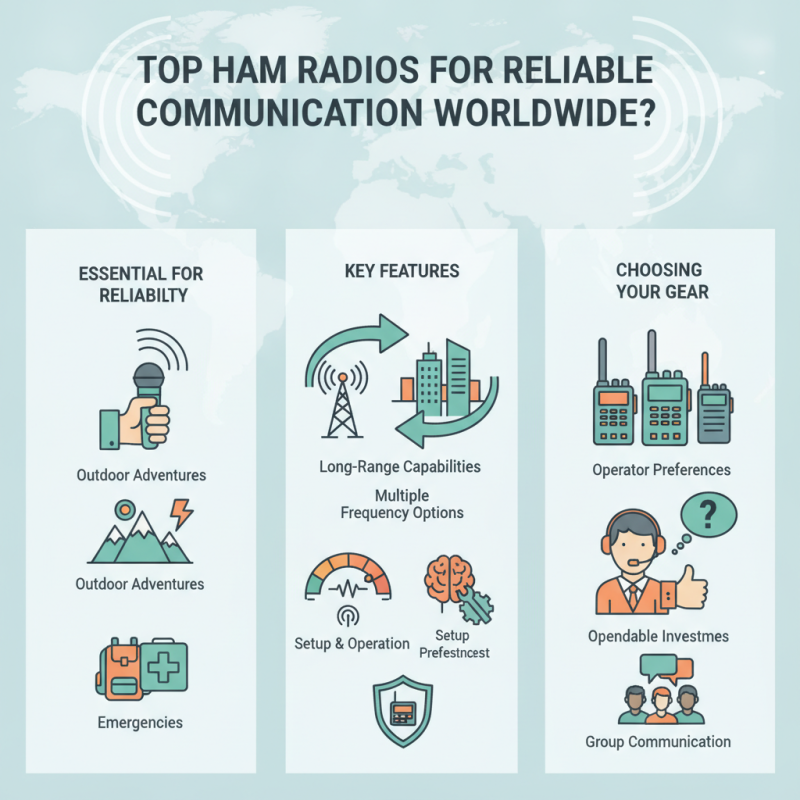
In today's fast-paced world, reliable communication is essential. Ham radios serve as a fantastic tool for reliable contact, whether in emergencies or outdoor adventures. These radios connect users, even in remote areas where traditional communication fails.
Many ham radios offer various features, such as long-range capabilities and multiple frequency options. Some users experience challenges with setup and operation. Each model has its strengths, yet no one-size-fits-all solution exists. Preferences vary widely among operators.
Investing in a dependable ham radio is wise for those seeking assurance in communication. Whether flying solo or joining a group, having the right gear can make all the difference. With so many options available, choosing the best model is vital for effective communication worldwide.
Overview of Ham Radio Communication and Its Importance
Ham radio communication serves as a vital link for individuals and organizations, especially during emergencies. According to the Federal Communications Commission (FCC), amateur radio operators play a critical role in public service. They often provide essential communication support when traditional systems fail. This ability is paramount in disaster scenarios, where quick and reliable communication is necessary.
Research from the National Oceanic and Atmospheric Administration (NOAA) highlights that ham radio operators have been instrumental during hurricanes and wildfires. Their skills in operating under challenging conditions ensure that vital messages reach those in need. However, the skill level among operators varies widely. Some face difficulties in leveraging technology effectively, which can hinder communication efforts.
The importance of training cannot be overstated. A survey from the American Radio Relay League (ARRL) found that 45% of operators wished they had received more formal training. This gap reveals an opportunity for improvement within the community. Encouraging consistent education can enhance overall effectiveness during critical times. As technology evolves, ongoing learning will remain essential for effective ham radio communication.
Key Features to Consider When Choosing a Ham Radio
When choosing a ham radio, several key features warrant attention. One critical factor is frequency range. The ability to communicate on various bands affects your reach. According to the American Radio Relay League (ARRL), radios with multi-band capabilities provide more versatility. You'll find that these devices can cover HF, VHF, and UHF bands. This ensures reliable communication in diverse environments.
Power output is another essential consideration. A higher wattage often translates to better communication distance. Many experts recommend radios with at least 10 watts for effective long-distance communication. However, you may also need a good antenna system to enhance performance. The Federal Communications Commission (FCC) emphasizes the importance of proper setup to avoid interference.
Durability is crucial too. Ham radios endure varied conditions, so ruggedness is a plus. Look for models that are weather-resistant and have robust construction. User feedback often highlights issues with fragile equipment in challenging situations. Therefore, researching reviews can provide insight into which models withstand the test of time. Remember to also consider features like digital capabilities for advanced data transmission, which can be vital during emergencies.
Top Ham Radio Models for Long-Distance Communication
When selecting ham radios for reliable long-distance communication, several factors come into play. Recent industry reports indicate that models with higher wattage can provide better signal strength. Radios that operate at 100 watts or more are often recommended for long-range use. This means that users can communicate clearly over vast distances, especially in emergency situations.
Additionally, ease of use plays a crucial role. Many users find that portable radios, which often weigh less than five pounds, are ideal for field operations. They can be transported easily and set up quickly. However, these portable models sometimes lack the features of larger counterparts. There may be fewer channels available, which can limit communication options. Despite these trade-offs, their versatility makes them a popular choice among enthusiasts.
Understanding the importance of antennas is also critical. Studies show that using a high-quality antenna can enhance transmission and reception significantly. Directional antennas, in particular, can boost signals in specific areas. However, they may require more setup time and technical knowledge. Finding the right balance between simplicity and functionality remains an ongoing challenge for users.
Comparative Analysis of Ham Radios for Different Environments
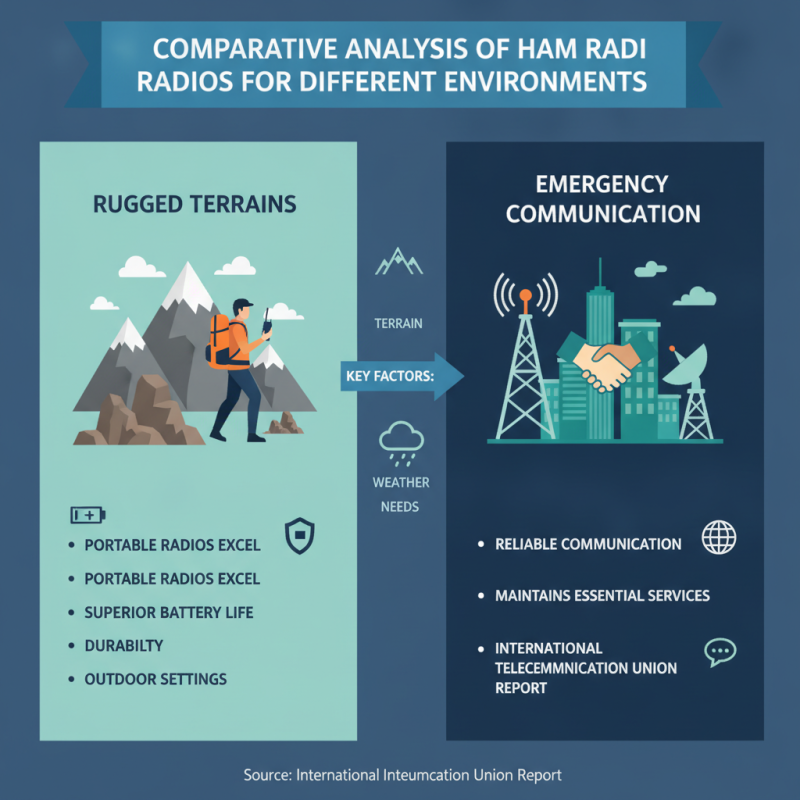
When choosing ham radios for diverse environments, several factors demand attention. The terrain, weather conditions, and specific communication needs significantly influence the selection. Research indicates that portable radios excel in rugged terrains. These models often have superior battery life and durability, essential for outdoor settings. A report from the International Telecommunication Union highlights that reliable communication can maintain essential services during emergencies.
In urban landscapes, mobile ham radios may perform better due to their advanced features. Many models now integrate with smartphones, improving functionality. Yet, the challenge remains in frequency congestion. A study by the Federal Communications Commission points out that shared frequencies can hinder clear communication in densely populated areas. It's crucial for users to know the best practices for frequency usage to avoid overlap and maintain effective communication.
Cost can also impact choices, especially for newcomers to ham radio. Some budget options can fall short in performance. Many users report difficulty with signal clarity in distant communications. Essential validations from user reviews indicate that investing in higher quality equipment often pays off in reliability. Staying informed about advancements and user experiences helps the ham radio community make smarter choices.
Tips for Operating Ham Radios Effectively Worldwide
When operating ham radios, understanding your equipment is crucial. Familiarize yourself with the settings and features of your radio. Practice tuning in to different frequencies. This allows for efficient communication during emergencies or casual conversations. Ensure all connections are secure to avoid disruptions in signal clarity.
Choosing the right antenna can greatly affect your reach. A good antenna enhances your ability to connect with others worldwide. However, remember that some locations may have restrictions on antenna placements. Respect local regulations while maximizing your transmission potential. Testing and adjusting your setup can lead to remarkable improvements in signal quality.
Maintain good operating procedures with clear communication. Speak slowly and clearly to avoid misunderstandings. Encourage others to do the same. Stay patient when conditions are difficult. Reflection on your previous conversations can provide insights for better communication in the future. Always be ready to adapt your strategy based on the environment and feedback from others.
Top Ham Radios for Reliable Communication Worldwide
| Model |
Frequency Range (MHz) |
Power Output (W) |
Weight (lbs) |
Price ($) |
| Model A |
1.8 - 30 |
100 |
5 |
500 |
| Model B |
50 - 54 |
50 |
4 |
300 |
| Model C |
144 - 148 |
50 |
2 |
250 |
| Model D |
430 - 450 |
5 |
1 |
200 |
| Model E |
1.8 - 29.7 |
100 |
6 |
550 |