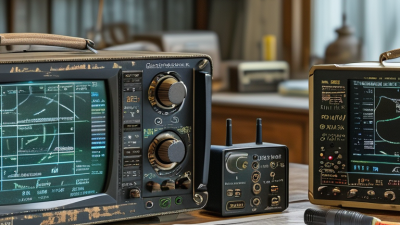
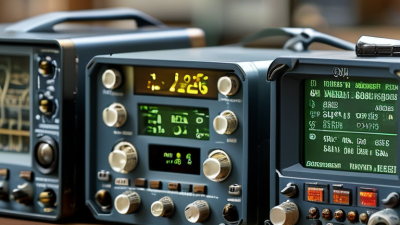
Choosing among today’s Ham Radios requires more than comparing wattage, screen size, or colorful product photographs. A dependable radio should match your license privileges, operating habits, antenna plans, and local communication needs. Gordon West, a longtime amateur-radio educator and author, said, “The best radio is the one you know how to use.” That advice remains practical. A complicated menu can become frustrating during a storm, field exercise, or late-night contact.
Buyers should examine receiver performance, frequency coverage, audio clarity, transmit stability, and control layout. Check whether the radio supports the bands and modes you genuinely plan to use. A compact handheld may suit neighborhood communication. A base station may offer stronger performance with a suitable antenna. Do not judge equipment by power alone. A modest radio with a well-installed antenna can outperform a powerful unit connected to poor coaxial cable.
Look closely at build quality, warranty support, replacement accessories, and manufacturer documentation. Turn the tuning knob. Press the buttons. Listen through headphones if possible. Small details matter, including readable labels and a bright display under sunlight. Online reviews can help, but they sometimes repeat specifications without real testing. I have learned that “feature-rich” does not always mean useful. Buyers should also confirm current regional rules and operate only within their authorization. The right choice is rarely the most expensive model. It is the radio you can configure confidently, maintain responsibly, and enjoy using months after the excitement of opening the box fades.
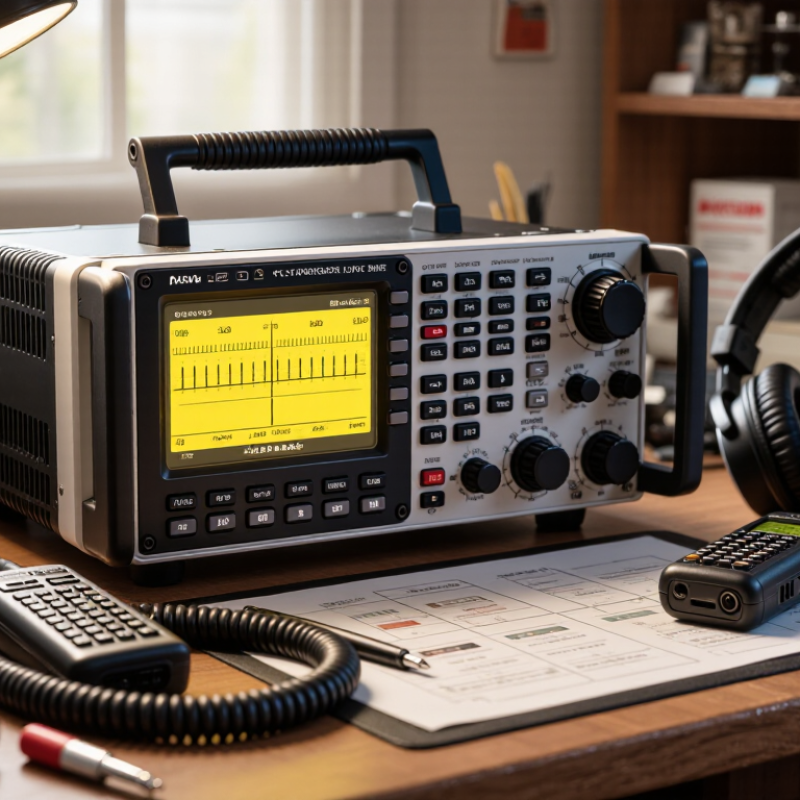
A ham radio is a two-way radio used by licensed operators for personal, technical, and community communication. The International Telecommunication Union defines amateur service as radio communication for self-training, technical investigation, and communication between enthusiasts. It is not ordinary broadcast radio. Operators transmit and receive on allocated frequency bands.
Inside the radio, a microphone changes speech into an electrical signal. The transmitter adds that signal to a radio-frequency carrier. An antenna then releases the energy as electromagnetic waves. The receiver reverses this process, filtering and converting the signal back into sound. Simple systems may reach nearby stations. Higher frequencies can travel farther through atmospheric reflection. Terrain still matters. A hill can defeat an otherwise powerful signal.
Buyers should inspect the transceiver’s frequency coverage, output control, receiver sensitivity, and antenna connection. A clear display helps during field use. A reliable power supply matters more than impressive numbers. The U.S. Federal Communications Commission’s Universal Licensing System listed over 700,000 amateur licenses in recent years, showing a substantial active community. Yet license totals do not guarantee local activity. A common beginner mistake is buying maximum power first. Better results often come from a properly tuned antenna and careful operating technique. I would also question manufacturer range claims, because weather, buildings, interference, and antenna height can change results dramatically.

Choosing a top ham radio is less about the longest feature list and more about practical daily use. Clear audio matters during weak-signal conversations or noisy field conditions. A sensitive receiver can reveal distant stations, but poor filtering may create confusing interference. Look for adjustable bandwidth, strong speaker output, and a simple squelch control. The controls should feel usable with cold fingers or low light. A bright screen is helpful, although excessive brightness can drain the battery quickly.
Tips: Test the radio before buying, if possible. Listen through headphones and check the controls without reading the manual. Battery life, charging options, and replacement battery availability deserve close attention. A removable antenna can make storage easier, while a durable chassis helps during outdoor activities. Weather resistance is useful, but marketing labels do not replace careful inspection of ports and seals.
Experienced operators also consider memory channels, scanning speed, and accessory compatibility. A reliable radio should store frequently used channels without complicated menus. Digital features may be valuable, yet they can add cost and learning time. I have found that a simpler interface often encourages more regular use. That is not universal. Some buyers may prefer advanced functions for experimentation. Confirm transmission permissions and local operating requirements before using any frequency. A radio that feels impressive in a shop may become frustrating after an hour of real operation.
Choosing between handheld, mobile, and base radios starts with where you will operate. A handheld model suits hiking, emergency kits, and short conversations around a campsite. It runs from a small battery and needs no vehicle installation. However, hills, buildings, and weak batteries can reduce its practical range. I have found that clear displays and sturdy controls matter more than impressive specifications. Keep it simple. Test it with the antenna upright.
A mobile radio suits drivers, trail volunteers, and anyone needing stronger coverage from a vehicle. It usually uses the vehicle’s electrical system and an external antenna. That setup can improve range and audio clarity. Check mounting space, cable routing, and safe access to controls before buying. A powerful unit is not automatically better. Poor installation can waste its advantages. Professional help may be useful for antenna placement and electrical protection.
Base models work well at home, in a workshop, or at a prepared communications desk. They offer comfortable controls, larger displays, and steady power from an approved supply. They are less convenient during travel. Choose one only if a fixed location matches your routine. Compare receiver sensitivity, audio quality, battery backup, weather alerts, and support documentation. Verify local licensing and operating rules. I still overvalue output power sometimes. Daily usability deserves more attention.
| Buying Dimension | Handheld Model | Mobile Model | Base Model | What Buyers Should Check |
|---|---|---|---|---|
| Typical RF Output | About 1–5 W | Commonly about 10–75 W, depending on band and model | Often about 25–100 W, depending on band and configuration | Higher power may improve reliability, but antenna quality and location usually matter more than power alone. |
| Power Source | Rechargeable battery; optional external battery or vehicle supply | Vehicle electrical system, usually 12 V DC | AC mains power; backup battery or power supply may be added | Confirm voltage, current draw, charging method, and backup-power compatibility. |
| Portability | Excellent; designed for handheld and outdoor use | Moderate; can be moved between vehicles but requires installation | Low; intended for a fixed operating position | Choose based on whether you operate while hiking, driving, or from one location. |
| Antenna Options | Short built-in or removable antenna; external antenna can improve performance | External vehicle-mounted antenna is normally required | Supports larger outdoor, attic, or directional antenna systems | Check connector type, antenna frequency coverage, mounting space, and cable routing. |
| Expected Communication Range | Often a few miles or less in ordinary terrain; repeaters can extend coverage | Typically better than a handheld because of greater power and a vehicle-mounted antenna | Usually the strongest local option when installed with an efficient, elevated antenna | Range varies greatly with terrain, antenna height, obstacles, frequency, and repeater access. |
| Operating Bands | Many models support VHF, UHF, or both | Commonly available for VHF, UHF, or multiple amateur bands | May support VHF/UHF, HF, or several bands in one station | Select bands according to local repeaters, intended activities, and license privileges. |
| Best Use Cases | Hiking, emergency kits, events, travel, and short-range communication | Daily commuting, road trips, vehicle convoys, and mobile emergency communication | Home stations, monitoring, scheduled nets, contesting, and long operating sessions | Prioritize the model that matches where and how often you will operate. |
| Ease of Installation | Minimal installation; configure the battery, antenna, and controls | Requires wiring, mounting, antenna installation, and possible cable routing | Requires a power supply, antenna system, grounding considerations, and workspace | Review installation instructions and ensure the antenna system is properly matched. |
| Battery Considerations | Battery life depends on capacity, receive time, transmit duty cycle, and output power | Vehicle battery and alternator capacity must support radio and accessories | Requires a stable power supply; backup power is useful during outages | Compare realistic operating time, not only the battery’s advertised capacity. |
| User Interface | Compact controls; smaller screens may be harder to read | Front-panel or remote-head controls; suited to operation while parked or driving safely | Larger display and controls; generally easier for extended operation | Look for readable displays, tactile controls, memory channels, and simple menu navigation. |
| Durability | Portable models may offer water resistance or impact protection, but specifications vary | Designed for vehicle vibration; installation quality affects reliability | Usually protected from weather indoors; the outdoor antenna system needs weatherproofing | Check the published ingress rating, temperature range, warranty, and replacement-part availability. |
| Typical Total Cost Factors | Radio, spare battery, charger, improved antenna, and programming cable | Radio, vehicle antenna, mount, coaxial cable, fuse, and installation materials | Radio, power supply, antenna, feed line, mast or support, grounding, and safety equipment | Budget for the complete station rather than the radio alone. |
| Licensing and Legal Checks | Amateur-radio authorization is generally required for transmitting | The operator must follow license privileges and vehicle-installation rules | Station setup must comply with local licensing, antenna, electrical, and safety requirements | Verify current regulations with the relevant national communications authority before transmitting. |
Note: Output power, operating bands, battery life, and communication range vary by equipment and installation. Range estimates are general guidelines, not guaranteed performance.
Choosing a top ham radio begins with licensing, not wattage. In the United States, transmitting requires an FCC amateur license, while receiving does not. The entry-level examination covers regulations, safety, operating practice, and basic electronics. FCC Universal Licensing System data has shown more than 750,000 active amateur licenses in recent years, proving that the service remains substantial, not merely nostalgic.
The equipment can stay simple. A new operator needs a transceiver, suitable antenna, coaxial cable, power supply, and a reliable SWR meter. Add headphones, a programming cable, and a paper logbook.
Check the antenna connection twice. A poorly installed antenna can waste power and damage equipment.
The ARRL Handbook emphasizes grounding, feed-line losses, and safe station construction, while FCC Part 97 requires responsible operation within authorized privileges. Local exam rules and frequency privileges differ outside the United States, so buyers should verify their national regulator’s current guidance.
I once underestimated the antenna. That was a mistake.
A modest radio with a carefully installed outdoor antenna may outperform a powerful radio connected to a poor indoor wire.
Buyers should also budget for connectors, mounting hardware, weatherproofing, and test instruments. Leave room for learning. The first purchase may not be the final one.
Cite: U.S. Federal Communications Commission, Universal Licensing System; FCC Part 97, Amateur Radio Service; ARRL, The ARRL Handbook.
Choosing a top ham radio starts with reliability, not feature count. In field use, a loose tuning knob matters more than a bright screen. FCC Universal Licensing System data recorded more than 780,000 active amateur licenses in recent 2024 data. That scale reflects varied user needs. Compare warranty length, repair access, connector strength, and operating temperature. Trust measured results over “professional grade.” Small details matter.
Performance depends on sensitivity, selectivity, frequency stability, and resistance to strong nearby signals. ARRL QST Product Review reports publish measurements for dynamic range, blocking, and receiver sensitivity. These expose differences hidden by advertised wattage. A 50-watt rating does not guarantee clearer contacts. Check duty-cycle guidance, heat-sink behavior, and current draw during transmission. For portable use, calculate battery runtime from amp-hours and realistic transmitting habits. I once overestimated runtime badly.
Value includes accessories, servicing, and learning time. ITU Radio Regulations emphasize interference control and technically appropriate operation. Clean emissions and stable frequency therefore have practical value. Ask whether calibration data, schematics, and firmware support remain available. A cheaper radio can become costly after a failed charger or unavailable battery. Independent tests help, but conditions are never perfect. Compare units using the same antenna, power supply, and distance. That comparison may reveal uncomfortable surprises.
A practical 100-point buying framework for comparing reliability, performance, and overall value.
Reliability and performance receive the highest weighting because consistent operation, receiver quality, transmit stability, and thermal management directly affect long-term use. Value includes price, included features, serviceability, and operating cost. These percentages are an editorial evaluation framework, not manufacturer or laboratory test results.