How to Choose the Best Portable Radios for Your Needs?
Choosing the best portable radios can feel overwhelming. With so many options available, it's important to know what fits your needs. Portable radios serve various functions. They can be your travel companion, a tool for emergencies, or simply a way to enjoy music outdoors.
When selecting a portable radio, consider its features. Look for sound quality, battery life, and connectivity options. Some radios offer Bluetooth, while others may only have AM/FM. Each feature impacts your experience. Avoid getting lost in choices. Focus on what matters to you.
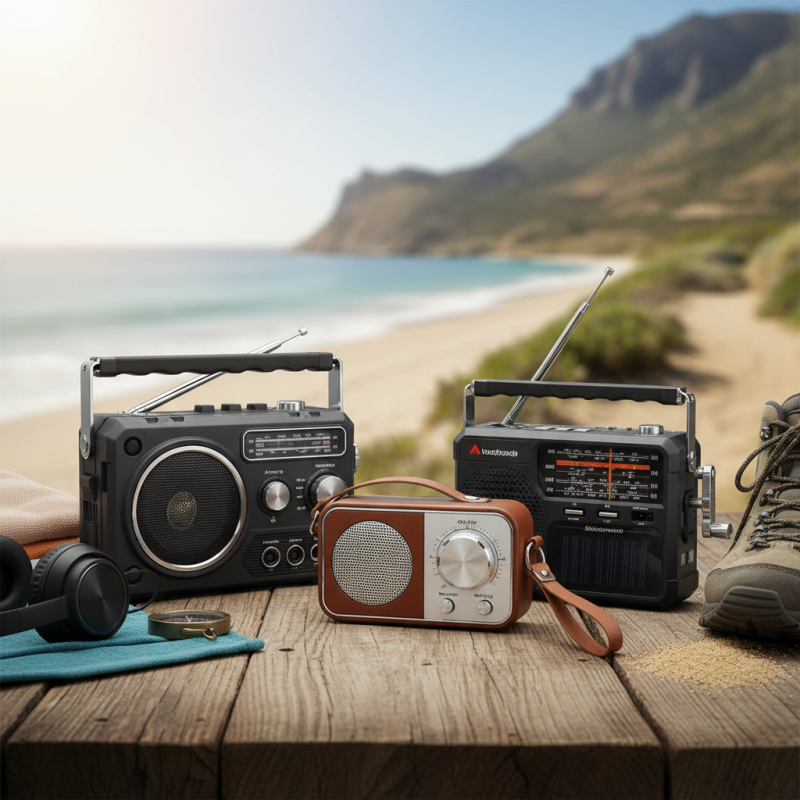
Think about where you will use these portable radios. Will it be at the beach or during a hike? Each scenario could require different features. It's vital to analyze real-world usage. Sometimes, you may think you need many features but later realize simplicity is key. Reflect on your priorities before making a purchase.
Understanding Your Radio Needs: What to Consider
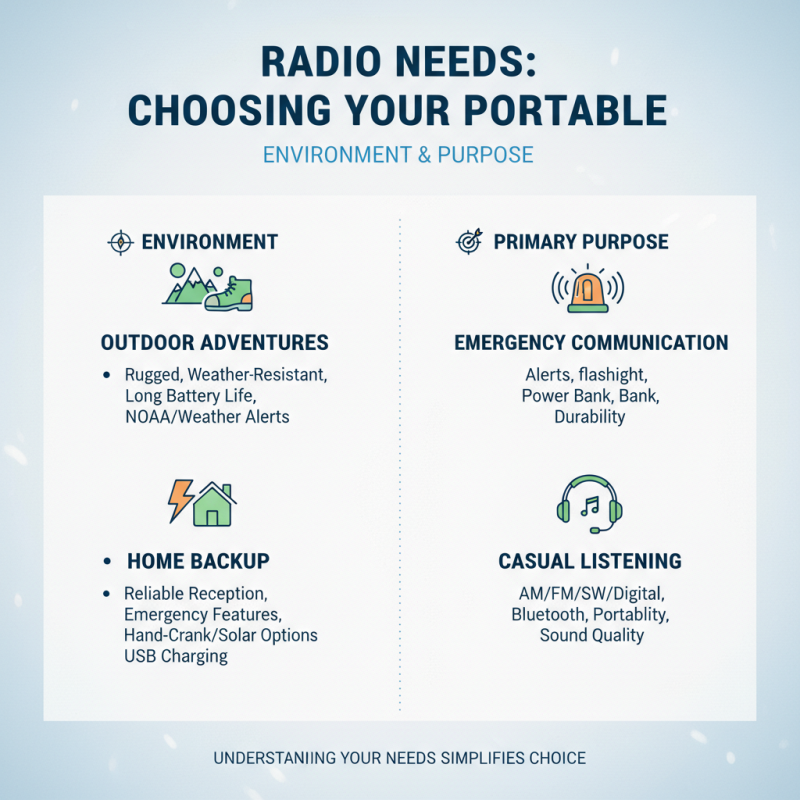
Choosing the right portable radio can be a daunting task. You need to consider your environment. Are you using it for outdoor adventures, or are you seeking a reliable backup at home? Think about the primary purpose. Knowing how you plan to use the radio helps narrow down your options.
Battery life is another crucial factor. Some models offer long-lasting power, while others may need frequent recharges. Consider portability as well. A lightweight radio is easier to carry but may compromise sound quality. Pay attention to features like Bluetooth connectivity. This can enhance your listening experience but may not be necessary for everyone.
Lastly, think about the kind of reception you need. If you're in a remote area, a radio with good tuning capabilities is essential. Each individual has unique requirements. What works for one person might not work for another. Reflect on your needs and preferences carefully before making a decision.
Types of Portable Radios: AM, FM, Digital, and More
When selecting a portable radio, understanding the types available is crucial.
AM and FM radios remain popular choices due to their simplicity and vast coverage.
AM radios work well for long-range broadcasts. They can reach far-off stations, ideal during emergencies.
However, sound quality can vary with AM signals due to interference.
Conversely, FM radios offer better sound quality and clarity. They are preferred for music and entertainment.
In fact, a recent industry report indicated that FM radio still accounts for about 60% of all radio listening in the U.S.
This popularity can be attributed to the appeal of local content and music variety.
Digital radios are gaining traction, offering features like digital audio broadcasting (DAB).
These radios provide crystal-clear sound and additional data like song titles and artist information.
Industry experts predict that digital radio usage will grow by 25% in the next five years.
Portable digital radios often include multiple bands, enhancing versatility.
However, these devices can be pricier and may require a learning curve for optimal use.
Ensuring that you choose a radio that meets your specific requirements is essential for the best experience.
Key Features to Look for in a Portable Radio
When choosing a portable radio, consider essential features that match your lifestyle.
Power source is crucial. Some radios use batteries, others have built-in rechargeable options.
Think about your usage. Will you be camping for days or just using it at home? Battery life matters greatly.
Next, examine the radio's tuning system. Digital tuners offer precise access to all stations.
However, analog models have their charm. They are often simpler and more intuitive. If you prefer clarity,
look for models with multiple band options. AM, FM, and shortwave can expand your listening experience, especially in remote areas.
Durability is another major factor.
Waterproof or weather-resistant radios are great for outdoor activities. These radios can withstand elements, prolonging their life.
Don't overlook size and weight either. A compact radio is easier to carry around but may sacrifice sound quality.
You might need to balance convenience with audio experience.
Consider how these features align with your expectations, and remember, every choice has its pros and cons.
Assessing Battery Life and Power Options
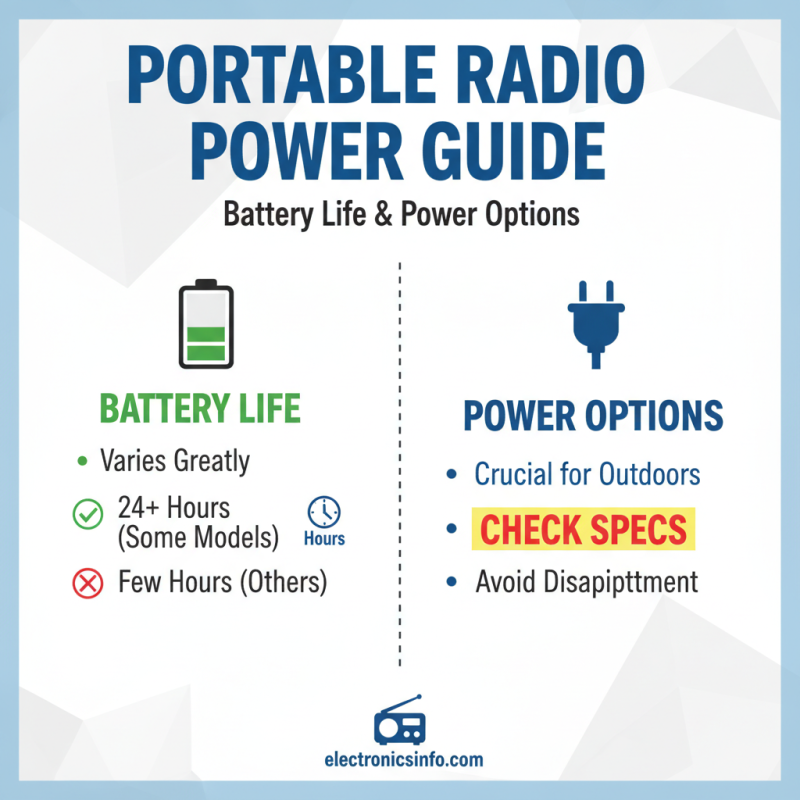
When choosing a portable radio, assessing battery life and power options is crucial. Battery life varies greatly among models. Some radios can last over 24 hours on a single charge. Others may fizzle out after just a few hours of use. Always check the specifications to avoid disappointment during outdoor activities.
Consider different power sources. Some radios use rechargeable batteries, while others may require standard alkaline batteries. Choosing a radio with multiple power options can add flexibility. For instance, a model that can run on both batteries and AC power is highly versatile. However, keep in mind that not all portable radios are equally reliable. Testing the radio before a trip can prevent unexpected issues later.
Think about your specific needs. If you plan to use the radio for long camping trips, opt for a model known for its long battery life. In contrast, if you often stay near power outlets, a radio with fewer battery concerns might suffice. Reflect on how often you'll use it. Your choice should match your lifestyle and usage patterns.
Budgeting: Finding the Best Value for Your Portable Radio
When budgeting for a portable radio, consider your primary needs. Decide if you require features like Bluetooth connectivity, weather alerts, or simple AM/FM functionality. The price range for portable radios can vary significantly. Some models offer advanced features at a premium, while others provide basic functionalities for less.
Analyze your usage scenarios. If you plan to use the radio outdoors, durability is essential. Waterproof and rugged designs may cost more, but they offer better reliability in harsh conditions. Spending slightly more upfront could save you from frequent replacements.
Don’t overlook customer reviews and expert opinions. Look for feedback on reliability and battery life. Sometimes, cheaper models may lead to frustrations. Investing in a well-reviewed option could enhance your experience. A small amount spent on research can prevent regret later.