China Top Long Range Walkie Talkies Suppliers
China has become a major sourcing base for Long Range Walkie Talkies used in construction, logistics, hospitality, security, and outdoor operations. Suppliers compete through higher-capacity batteries, digital voice clarity, stronger antennas, and weather-resistant housings. However, “long range” remains an incomplete promise. Mountains, concrete walls, forests, antenna height, and radio congestion can reduce practical coverage sharply.
Industry data supports sustained demand. Grand View Research estimated the global walkie-talkie market at approximately USD 5 billion in 2023, with continued growth expected through 2030. MarketsandMarkets also reported expanding demand for two-way radios across transportation, public safety, manufacturing, and commercial services. Their figures differ because market definitions vary. That difference deserves attention.
Dr. William Webb, a communications engineer and former Ofcom senior technologist, explains: “Coverage is a function of environment, not just transmitter power.” This principle should guide supplier evaluation. Reliable buyers should examine measured coverage, output power, receiver sensitivity, IP ratings, battery endurance, charging safety, and after-sales support. A device claiming 10 kilometers may deliver far less inside a warehouse or dense city block. Ask for test conditions.
The best China suppliers provide sample testing, clear technical sheets, firmware support, and documented quality controls. Certifications also matter, but certification alone does not prove field performance. This is where many comparisons become too optimistic. A careful shortlist should separate laboratory range from usable range, compare analog and digital models, and verify compatibility with the buyer’s operating environment. The strongest supplier is not always the one with the longest advertised distance.
China’s Long-Range Walkie-Talkie Supplier Landscape
China Top Long Range Walkie Talkies Suppliers
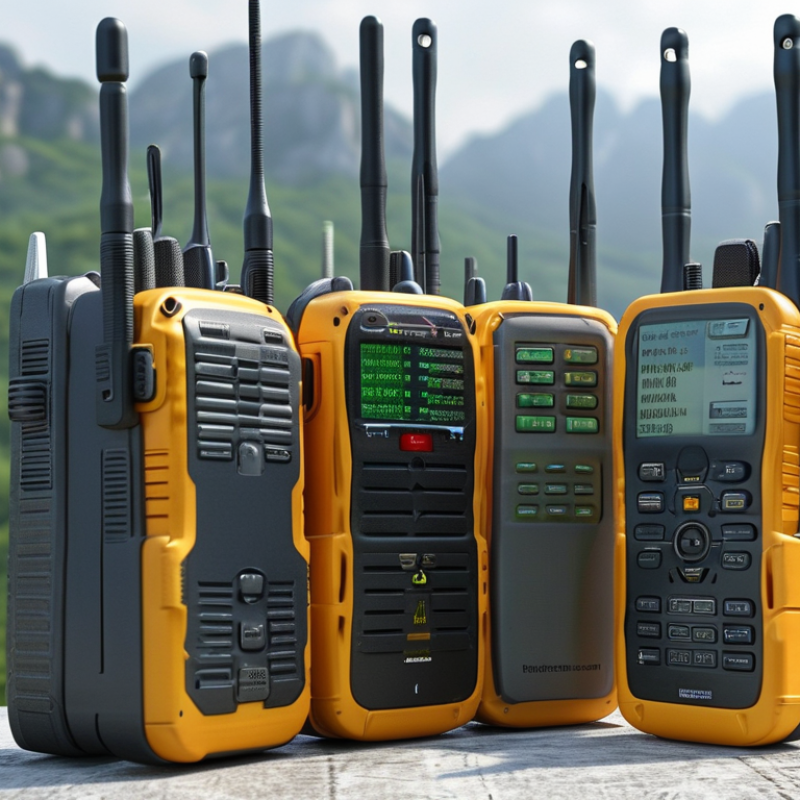
China’s long-range walkie-talkie supplier landscape includes manufacturers, OEM factories, and trading companies. Their capabilities can differ sharply. Some suppliers control circuit design and assembly, while others mainly coordinate production. Buyers should examine factory records, testing procedures, and export experience before choosing a partner.
Long-range performance depends on terrain, antenna quality, battery capacity, and local radio rules. A supplier should provide clear test conditions, not only an impressive distance claim. Ask for sample units, frequency details, charging-cycle data, and water-resistance evidence. In a warehouse, a reliable radio should remain clear between metal shelves and loading areas. Field testing matters more than a polished specification sheet. Some suppliers offer strong hardware but weak documentation. That gap deserves attention.
Tips:
Compare at least three suppliers. Request a factory video or independent audit. Check sample performance in buildings, open fields, and noisy work zones. Confirm spare batteries, repair support, packaging, and delivery schedules in writing. Do not judge quality by the lowest quotation alone. A cheaper unit may use a smaller battery or an unstable antenna. Also, review required certifications for your destination market. This step is easy to overlook, and the mistake can delay an otherwise ready shipment. Teams should record test results carefully, because memory becomes unreliable after several samples.
Key Technologies Behind Long-Range Communication
China Top Long Range Walkie Talkies Suppliers
Key Technologies Behind Long-Range Communication
Long-range communication begins with radio frequency design, not exaggerated distance claims. A capable handheld radio needs stable transmission power and a sensitive receiver. Its antenna must match the operating frequency precisely. Small errors can reduce coverage around concrete buildings, hills, and metal equipment. Practical tests should measure voice clarity, signal stability, and battery life in realistic terrain.
Digital modulation can improve audio quality when signals weaken. Error correction helps recover parts of a damaged transmission. However, digital performance is not unlimited. Once coverage ends, the audio may stop suddenly instead of fading gradually. Suppliers should explain this behavior clearly. Field engineers also examine channel spacing, receiver selectivity, thermal performance, and resistance to dust and rain.
A long-range radio is only as reliable as its power system. High-capacity batteries support extended shifts, but cold weather can reduce usable capacity. Antenna placement matters more than many buyers expect. Holding the radio against the body may block part of the signal. Responsible suppliers provide test data, compliance documents, and operating guidance for the destination market. Independent testing remains valuable. Specifications can look impressive, yet real communication may suffer inside warehouses, valleys, or crowded industrial sites.
China Top Long Range Walkie Talkies Suppliers - Key Technologies Behind Long-Range Communication
This chart shows the calculated free-space path loss over a 10-kilometer path at representative radio frequencies. Lower-frequency VHF signals generally experience less path loss than UHF signals, which can support longer range under comparable conditions. Real-world performance also depends on antenna height, terrain, transmit power, receiver sensitivity, obstacles, and local radio regulations.
Main Product Categories and Performance Features
China Top Long Range Walkie Talkies Suppliers
Main Product Categories and Performance Features
China’s long-range walkie talkie suppliers generally offer three categories: analog radios, digital radios, and cellular push-to-talk devices. Analog models remain practical for construction, events, and short-term field teams. Digital models provide clearer voice, stronger privacy controls, and better spectrum efficiency. Cellular units extend coverage through mobile networks, but they depend on network availability and service plans.
According to MarketsandMarkets’ 2023 Two-Way Radio Market report, the sector was projected to grow from about USD 9.1 billion in 2023 to USD 13.8 billion by 2028. This growth reflects demand for reliable communication in logistics, public facilities, manufacturing, and outdoor operations. Key performance features include output power, receiver sensitivity, antenna design, battery capacity, waterproof protection, and GPS support. A 2,000–3,000 mAh battery may support a full shift, but heavy transmission and weak signals reduce runtime.
Real range is more complicated. A supplier’s advertised 20-kilometer distance may fall sharply behind concrete walls, hills, or dense buildings. Terrain matters more than packaging claims. Buyers should request test conditions, measured receiver sensitivity, and battery results under repeated transmission. The IP rating also needs careful review; water resistance is not always submersion protection. According to Grand View Research’s walkie talkie market analysis, digitalization remains a major growth driver, yet basic analog equipment still suits cost-sensitive users. Some specifications are easy to overstate. Independent testing is still necessary.
How to Evaluate Chinese Walkie-Talkie Suppliers
China Top Long Range Walkie Talkies Suppliers: How to Evaluate Chinese Walkie-Talkie Suppliers
China remains a major sourcing base for professional two-way radios. Grand View Research valued the global walkie-talkie market at about USD 2.1 billion in 2023. Its 2024 report also projects continued growth through 2030. This expansion increases supplier choices, but not every factory offers equal engineering control. Evaluate the manufacturer, not only the catalogue.
Request test reports for output power, receiver sensitivity, frequency stability, and battery endurance. Check whether measurements come from an accredited laboratory. For professional radios, review relevant ETSI standards and local frequency requirements before ordering. IEC 60529 testing can verify the claimed IP rating. Battery documentation should identify the cell supplier, protection circuit, and IEC 62133-2 compliance. Small details matter.
Factory evidence matters more than polished websites. Ask for ISO 9001 records, production-flow photos, calibration logs, and serial-number traceability. Order samples from different batches. Test them inside concrete buildings, on hills, and near electrical equipment. Measure real communication distance, not advertised distance. A 10-kilometre claim may depend on clear terrain and tall antennas. It can disappoint users quickly.
MarketsandMarkets identifies reliability, coverage, and battery performance as important purchasing factors in its professional two-way radio research. Still, reports cannot replace hands-on inspection. A supplier may pass one sample test and fail later. That is an uncomfortable possibility. Include pre-shipment inspection, spare-part terms, firmware control, and response-time targets in the contract. Price alone is weak evidence.
Manufacturing, Certification, and Export Capabilities
China Top Long Range Walkie Talkies Suppliers
Reliable suppliers begin with controlled manufacturing, not attractive product photos. Experienced factories use incoming inspections for chips, antennas, batteries, and injection-molded housings. Production teams should record soldering temperatures, software versions, and radio-frequency test results. A sample unit may work well, yet inconsistent assembly can reduce range in real conditions. That weakness deserves honest attention.
Professional suppliers test transmitter power, frequency stability, receiver sensitivity, audio clarity, and battery endurance. They may also check drop resistance, water protection, and charging temperature. An ISO 9001 system can support traceability, but certification alone does not guarantee every shipment. Buyers should review recent audit records, calibration dates, and corrective-action reports. Small details matter.
Export capability depends on the destination market. Suppliers should identify the correct legal frequency bands before production. Products for the European market may require applicable CE and RED compliance evidence. Products for the United States may require relevant FCC authorization. RoHS documentation, user manuals, labels, and battery transport papers may also be necessary. Customs invoices and packing lists must match the actual goods. Mistakes happen. A careful supplier admits them, corrects the documents, and improves the process instead of hiding delays.