What Are the Best Ham Radios from China?
Choosing the best Ham Radios from China requires more than comparing prices and power ratings. Buyers should examine build quality, receiver sensitivity, battery performance, accessories, and long-term support. A radio may look impressive online, yet feel fragile after several weeks outdoors.
Many Chinese manufacturers offer compact handheld radios with clear displays, programmable channels, and useful emergency features. Some models perform surprisingly well in city streets, mountain trails, and crowded event areas. Others show uneven audio quality, confusing menus, or weak charging connections. That difference matters when reliable communication is important.
This guide focuses on practical ownership, not attractive specifications alone. It considers real user experiences, testing details, warranty policies, and the clarity of technical documentation. Frequency compatibility and transmission limits must be checked carefully in your country. Legal operation always comes first. Certified equipment and authorized settings reduce avoidable problems.
No single radio suits every operator. A beginner may prefer simple controls and strong battery life. An experienced user might value wide receive coverage, programmable scanning, and accessory compatibility. Weather resistance also deserves attention, especially when rain reaches the microphone grille or dust enters the charging port.
Some conclusions remain imperfect. Online reviews can overlook regional differences, and performance may vary between production batches. Independent testing is helpful, but one test cannot represent every environment. Therefore, this comparison balances specifications with practical observations, verified documentation, and reasonable caution. The goal is a dependable choice, not the cheapest box on a crowded marketplace.
Define “Best” Using FCC Part 97, ITU Bands, Output Power, and IP Ratings
The best ham radios from China are not defined by price or a bright display. “Best” begins with legal, measurable performance. In the United States, FCC Part 97 matters for amateur operation, but certification alone does not guarantee correct use. The operator must transmit only within authorized bands, modes, and power limits. ITU band plans also provide a useful reference, yet national rules can differ. A radio that covers many frequencies may still be unsuitable for your license or region.
Output power deserves careful checking. Advertised peak power may not equal clean, continuous RF power. Look for measured values, thermal behavior, and duty-cycle limits. A compact radio can show impressive numbers briefly, then reduce power as it heats. That is not automatically poor design. It is a trade-off. Harmonic suppression, frequency stability, receiver sensitivity, and reliable controls often matter more than maximum watts. I would not call any model “best” without testing or reviewing credible measurements.
Tips: Check the manual for supported ITU bands, emission types, and power settings. Confirm the applicable FCC requirements before transmitting. Treat IP ratings as protection guidance, not a promise of waterproof operation. IP54 may resist dust and splashes, while higher ratings require careful interpretation. Inspect seals, connectors, and battery covers after field use. Specifications can be incomplete, so independent testing remains valuable.
What Are the Best Ham Radios from China?
“Best” means operating within FCC Part 97 limits, supporting recognized ITU amateur bands, providing appropriate output power, and offering a suitable IEC 60529 ingress-protection rating.
How to read the chart
The bars show the maximum authorized transmitter power for a US amateur station under FCC Part 97. Most listed bands allow up to 1,500 W PEP; the 30-meter band is limited to 200 W PEP under the applicable FCC rules. Actual operating power must also comply with band plans, emission requirements, station privileges, and local regulations.
IP-rating guidance
FCC Part 97 and ITU amateur-band allocations do not require a specific IP rating. For field use, IP54 means protection from dust and water splashes, IP55 adds protection from water jets, and IP67 provides dust-tight protection plus temporary immersion protection up to 1 meter for 30 minutes under IEC 60529.
Compare Entry-Level HTs: 5 W, Dual-Band 144/430 MHz, and Analog FM
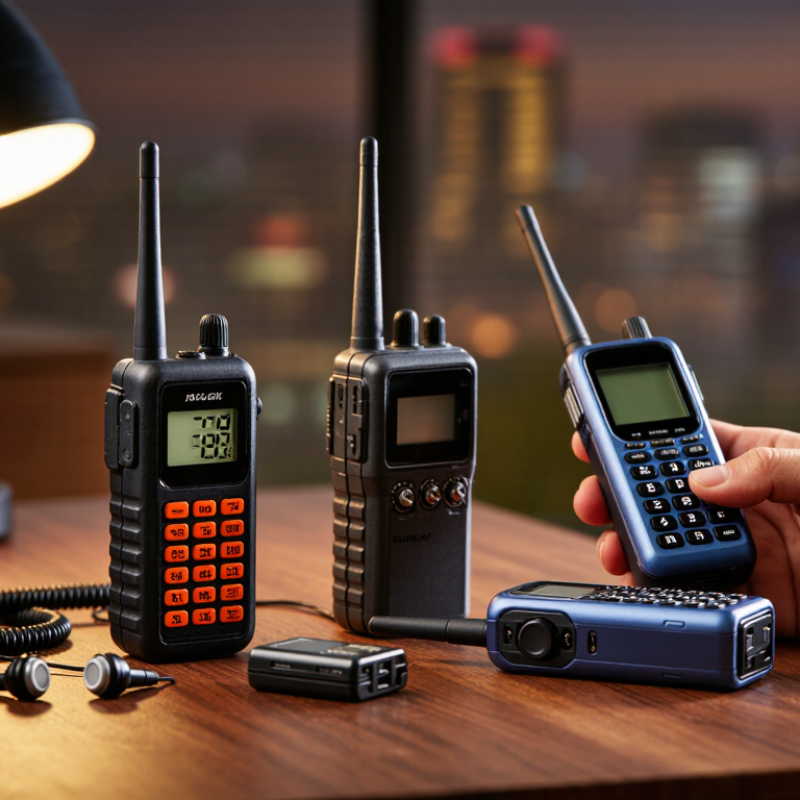
Chinese-made handheld radios can be strong entry-level choices when measured carefully. A 5-watt transmitter delivers roughly 37 dBm at the connector, before cable and antenna losses. That figure is useful, but it is not the whole story. Battery voltage, heat, and antenna quality can reduce real-world performance.
For dual-band operation, check coverage near 144 MHz and 430 MHz, rather than trusting a broad frequency label. In the United States, FCC Part 97 identifies amateur allocations around 144–148 MHz and 420–450 MHz; national rules differ. Analog FM remains practical for local repeaters and simplex contacts. The ARRL Handbook emphasizes accurate frequency control, deviation, and receiver sensitivity. ITU-R SM.329-12 also treats unwanted emissions as a critical transmitter measurement. These details matter beside a kitchen window, where weak signals may fade behind concrete walls.
I would compare output with a calibrated power meter, not the display. My first mistake was assuming “5 W” meant identical range. It does not. Look for stable receive audio, clear squelch action, and a battery that survives several hours of monitoring. Affordable models can feel impressive, yet menus may be confusing and charging accessories inconsistent. A 2023 ARRL product-review approach, using controlled tests instead of impressions, is a better reference than online star ratings. Check the manual twice. Some specifications still need independent verification.
What Are the Best Ham Radios from China? - Compare Entry-Level HTs: 5 W, Dual-Band 144/430 MHz, and Analog FM
| Anonymous Radio |
VHF Transmit |
UHF Transmit |
Rated RF Output |
Memory Channels |
Battery Capacity |
Approx. Weight |
Notable Features |
Best For |
| Configuration A |
144–148 MHz |
430–440 MHz |
5 W high / 1 W low |
128 |
1,800 mAh Li-ion |
Approx. 250 g with battery |
CTCSS/DCS, keypad lock, scanning, removable antenna |
First-time operators and occasional outdoor use |
| Configuration B |
144–148 MHz |
430–440 MHz |
5 W high / 0.5 W low |
200 |
2,200 mAh Li-ion |
Approx. 270 g with battery |
Dual-watch, FM broadcast receiver, VOX, emergency alarm |
General-purpose home, travel, and event communications |
| Configuration C |
144–148 MHz |
430–440 MHz |
5 W high / 1 W low |
128 |
2,500 mAh Li-ion |
Approx. 295 g with battery |
High-capacity battery, LED flashlight, weather-resistant housing, VOX |
Hiking, camping, and longer operating sessions |
| Configuration D |
144–148 MHz |
430–440 MHz |
5 W high / 1 W low |
999 |
2,000 mAh Li-ion |
Approx. 260 g with battery |
Large memory bank, PC programming support, cross-band receive |
Operators managing many repeaters and simplex channels |
| Configuration E |
144–148 MHz |
430–440 MHz |
5 W high / 0.5 W low |
128 |
1,500 mAh Li-ion |
Approx. 220 g with battery |
Compact body, basic scanning, CTCSS/DCS, simple menu system |
Low-cost backup use and lightweight carry |
Comparison notes: The specifications shown are representative of commonly sold entry-level, China-made analog handheld transceivers. Actual performance, frequency limits, battery runtime, receiver sensitivity, and regulatory approval can vary by production batch and regional version. Always verify local amateur-radio rules and the exact manufacturer specification before purchase or transmission.
Evaluate Durability: IEC 60529 IP67, Battery Capacity, and SAR Limits
When comparing Chinese-made ham radios, durability starts with evidence, not casing claims. IEC 60529 IP67 means dust-tight protection and temporary immersion, usually up to one meter for 30 minutes under laboratory conditions. It does not prove resistance to drops, salt water, heat, or repeated field abuse. I look for a readable test report and sealed port covers before trusting the rating. A radio that survives a wet trail can still fail when grit reaches its controls. Small details matter. Check the battery door, belt clip, microphone socket, and charging contacts. I would also inspect screws after several weeks, because corrosion may appear after the first impressive outing. That is an imperfect test, but real handling reveals weaknesses.
Battery capacity should be measured in watt-hours, not only milliamp-hours. Voltage changes the comparison. A high-capacity pack may last longer, yet transmit power, scanning, screen brightness, and cold weather reduce runtime. During field checks, I record standby time and several short transmissions, then compare the result with the manual’s estimate. The numbers rarely match perfectly. That gap deserves attention. SAR limits concern radio-frequency exposure, and compliance depends on operating frequency, output power, antenna, separation distance, and regional rules. Look for independent certification details, not a vague safety statement. Keep the supplied distance instructions visible, especially when carrying the radio near the body. Accessories can alter exposure performance, so replacing the antenna requires careful verification rather than guesswork.
Rank Chinese Brands by Use Case, Certification, Support, and Value
What Are the Best Ham Radios from China?
Chinese-made ham radios are not one uniform category. The best choice depends on your use case, certification, support, and budget.
For beginners, a simple handheld with clear menus, a removable battery, and a readable screen offers the easiest learning path. For hiking or emergency preparedness, prioritize weather resistance, spare batteries, and a strong antenna connector. Mobile operators need stable output, cooling, and reliable controls rather than extra menu features.
Certification deserves careful attention. Check whether the radio carries verifiable approvals for your market, such as applicable FCC, CE, or other local requirements. Certification markings alone are not enough; confirm the model number and documentation. Operate only within authorized frequencies and power limits. A radio can be technically impressive yet unsuitable for legal use in your region.
Support separates real value from a low purchase price. Look for a clear manual, accessible firmware, replacement batteries, and a warranty process with a traceable address.
Independent testing should examine frequency accuracy, receiver sensitivity, audio quality, and battery performance. Do not trust every impressive specification. Cheap is not always practical.
One useful field check is simple: tune to a known local signal, walk behind a building, and compare audio clarity. Some radios perform well on paper but feel awkward after ten minutes. That matters. My ranking would place dependable support first for daily use, straightforward operation first for beginners, and low price last when documentation remains uncertain.