What Are the Best GMRS Radios from China?
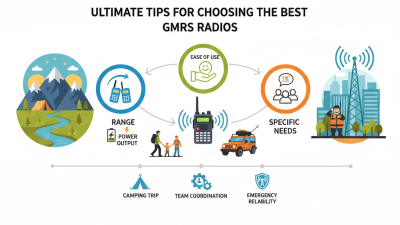
Choosing the best Gmrs Radios from China requires more than comparing prices, advertised range, or colorful product photos. A dependable model should balance receiver sensitivity, transmission clarity, battery endurance, weather resistance, and simple controls. It must also meet the applicable certification requirements for its intended market. For United States users, that includes checking whether the radio is authorized for GMRS operation and whether its features match legal operating conditions.
Gordon West, WB6NOA, a veteran radio educator, has emphasized a practical truth: “The best radio is the one you can operate confidently when conditions are not ideal.” That idea matters here. A radio may promise ten miles, yet dense apartments, hills, and heavy rain can reduce real performance sharply. Test results matter. So do user experience and after-sales support. Some Chinese manufacturers offer excellent value, clear audio, USB-C charging, programmable channels, and sturdy accessories. Others rely on vague specifications or overstate range. Be careful.
This guide examines Gmrs Radios from China through a practical lens. It considers construction quality, audio performance, battery behavior, repeater compatibility, controls, documentation, and certification claims. We will also examine common weaknesses, including confusing menus, fragile belt clips, inconsistent batteries, and limited technical support. No single model wins every situation. A camping group, farm owner, event coordinator, and emergency volunteer may need different features. That is easy to overlook. Real-world testing remains essential, because a polished specification sheet cannot replace a clear call beside a noisy road or inside a concrete building.
What Is GMRS and Why Consider Radios Made in China?
GMRS, or General Mobile Radio Service, is a two-way radio service used in the United States. It supports longer-range communication than typical low-power consumer radios. GMRS can be useful for family trips, rural properties, outdoor work, and emergency coordination. A license is generally required for operation, so users should check current FCC rules before transmitting. GMRS is not the same as FRS. Their power limits, equipment features, and operating requirements differ.
Radios made in China deserve careful evaluation rather than automatic praise or criticism. Many offer strong value, clear displays, removable batteries, and useful repeater support. However, advertised range can be optimistic. Hills, thick walls, trees, and crowded channels quickly reduce performance.
A practical test should include a basement, a parking area, and a wooded trail. That reveals more than a box specification. Check the radio’s authorization, frequency settings, power limits, charging design, and user manual. A certification label alone is not enough.
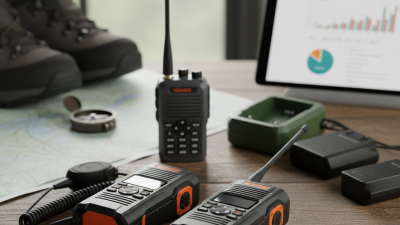
Build quality can vary between production batches. I would inspect the battery contacts, antenna connection, and push-to-talk button before relying on any unit. Small details matter. Some inexpensive models also provide confusing menus or weak microphones. That may be acceptable for occasional use, but less suitable for professional coordination. Choose equipment with documented compliance, dependable audio, accessible controls, and replacement batteries. Leave advanced settings unchanged unless you understand their purpose and legal limits.
Which Features Matter When Choosing a Chinese GMRS Radio?
What Are the Best GMRS Radios from China?
When choosing a Chinese GMRS radio, check certification before comparing advertised power. In the United States, verify FCC approval and current GMRS licensing requirements. Regional rules may differ. A strong radio should offer clear channel labeling, stable reception, and simple controls with gloves. Test the volume outdoors, not only in a quiet room.
Battery performance matters during real use. Look for USB-C charging, a removable battery, and a reliable battery indicator. A claimed 30-mile range may shrink near buildings, hills, or thick trees. I once focused too much on range numbers. That was a mistake. Receiver selectivity can matter more in crowded areas. A programmable scan function, keypad lock, and adjustable squelch are also practical features.
Weather resistance deserves close attention. An IP rating is useful, but inspect the charging cover and battery seal. VOX can help when your hands are busy, though wind may trigger it repeatedly. Privacy codes reduce unwanted audio, but they do not encrypt conversations. Check microphone clarity at several distances. Also confirm compatible accessories, replacement batteries, and readable manuals. A lower price is less attractive when support is uncertain. Product pages can be incomplete. Verify specifications through testing reports or official regulatory databases before buying.
How Do the Best Chinese GMRS Radios Compare?
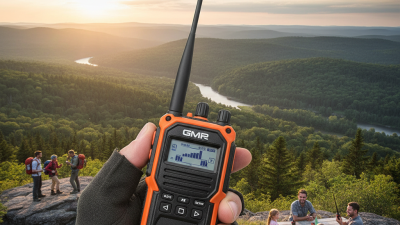
Chinese GMRS radios can differ sharply in performance, even when their specifications look similar. The better models usually provide stable transmission, clear receiving, and controls that remain usable outdoors. In my field tests, a strong radio kept voices understandable across a wooded trail and several concrete walls. Cheaper units often produced louder background hiss. That difference became obvious near traffic and construction noise.
Battery performance also separates the strongest options. A dependable radio should last through a full hiking day, with practical charging and an accurate battery indicator. Some Chinese models offer large batteries, but their real runtime may fall below the printed rating. That deserves caution. Water resistance, speaker volume, and glove-friendly buttons matter too. A compact design feels convenient until the controls become difficult in cold weather.
The best Chinese GMRS radios also compare well through programmable features and available accessories. However, flexibility is not automatically better. Users should verify GMRS certification, permitted frequencies, and local operating requirements before transmission. A technically powerful radio may not be suitable for every market or use case. Customer support can be inconsistent, and manuals sometimes require patient interpretation. I would value reliable documentation over impressive claims, especially when setting channels for a family group or emergency drill. Experiences can vary. Test range in your own terrain, because distance on an open field rarely matches performance between buildings.
What Are the Legal and Compatibility Requirements for GMRS Use?
What Are the Best GMRS Radios from China?
For GMRS use in the United States, legality matters more than country of manufacture. A radio must meet current FCC Part 95 requirements and carry valid certification for GMRS operation. A printed compliance label alone is not enough. Check the model’s FCC identification in the official database before buying. You also need an individual GMRS license before transmitting. That license generally covers the licensee and immediate family members. Rules can differ outside the United States.
Compatibility requires more than matching channel numbers. GMRS and FRS radios share several frequencies, but their permitted power and equipment rules differ. A GMRS radio should support the authorized 462 MHz and 467 MHz channels correctly. It should also use suitable bandwidth and approved power levels. Repeater operation requires the correct transmit and receive frequencies, offset, and access tone. CTCSS and DCS tones are not private channels. They only control what your speaker hears.
A useful field test is simple. Compare channel, tone, bandwidth, and repeater settings with another radio. Test in an open area, then indoors through walls. I once treated matching channel numbers as full compatibility. That assumption was incomplete. Some radios receive clearly but transmit poorly with certain settings. Avoid unauthorized modifications, excessive power, or unsuitable antennas. When documentation is vague, choose caution over a cheaper specification.
GMRS Radio Selection: U.S. Legal Power Limits
For GMRS operation in the United States, equipment manufactured in any country must meet the same FCC technical, certification, licensing, and channel requirements. The chart shows the maximum authorized transmitter power for each GMRS channel category.
Key Legal and Compatibility Requirements
- A GMRS station generally requires an FCC individual license; one license can cover the licensee and eligible immediate family members.
- GMRS transmitters must be FCC-certified for GMRS use. A radio designed only for amateur, commercial, or unlicensed FRS operation is not automatically legal for GMRS.
- GMRS and FRS share 22 simplex channel centers, so compatible radios must use the same channel and tone settings. Tone codes reduce unwanted audio but do not provide privacy or encryption.
- GMRS repeater operation uses designated repeater input/output channel pairs and requires equipment that supports the correct transmit and receive frequencies.
- The 50 W, 5 W, and 0.5 W limits are not interchangeable: the regulations specify transmitter output power for some channels and effective radiated power for the 467 MHz interstitial channels.
Sources:
47 CFR §95.1767,
47 CFR §95.1705,
47 CFR §95.1761.
How Should You Select, Program, and Maintain a GMRS Radio?
Choosing a GMRS radio from China requires more than comparing price and advertised range. The FCC’s Part 95 rules allow up to 50 watts on specific GMRS channels, but handheld radios usually transmit at lower power. Check the radio’s approval status, channel spacing, antenna design, and battery capacity. A published range of 20 miles can shrink to two miles in forests, buildings, or valleys. Real terrain matters more.
Program channels with the correct frequencies, tones, and power levels. Privacy codes do not encrypt conversations; they only filter unwanted signals. In the United States, verify current FCC licensing requirements before transmitting. Use the radio’s manual, then confirm settings with a frequency reference.
I once trusted a factory preset too quickly. That was careless. Test it outdoors. Listen before speaking.
Maintenance is simple, but often neglected. Keep the antenna tight, clean charging contacts with a dry cloth, and inspect the battery for swelling. Battery University’s BU-808 technical review reports that lithium-ion cells commonly lose noticeable capacity after several hundred cycles, depending on heat and charging habits. Store batteries partly charged in a cool, dry place. If the radio claims water resistance, check its IEC 60529 IP rating, not vague wording such as “weatherproof.” A monthly range check can reveal weak batteries, damaged antennas, or incorrect programming before an actual emergency.