Leave Your Message

How to Choose the Best GMRS Radios for Your Needs?

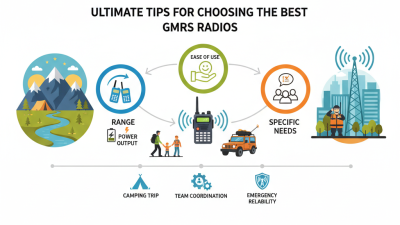
Choosing the best Gmrs Radios starts with an honest question: where will you use them? A wooded campsite, a concrete warehouse, and a neighborhood street create very different signal paths. The FCC’s GMRS information explains the service’s operating framework, while its equipment rules make clear that radio type and certification matter. Check those details before comparing features.

Range claims need a reality check. NOAA reports that its Weather Radio All Hazards network uses more than 1,000 transmitters and reaches over 95 percent of the U.S. population. That figure describes a dedicated warning network, not the coverage a handheld GMRS radio can promise. For a useful technical lens, wireless researcher Theodore S. Rappaport’s work on radio propagation shows why terrain, buildings, and antenna placement affect real-world coverage. In plain terms, the tallest number on a box cannot predict your trail’s dead spots.

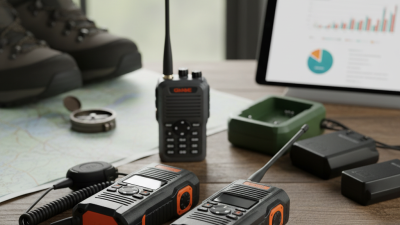
Think about what your hands will actually do: turn a stiff knob in gloves, read a dim screen at dusk, or clip the unit to a backpack strap. Battery type, weather resistance, channel controls, audio clarity, and charging options may matter more than extra features. A small test helps. Try radios in the places you plan to use them, and note where voices fade. It is easy to overvalue advertised range. I have, too. The best choice is usually the one you can operate comfortably and trust in your routine—not the one with the longest claim.
How to Choose the Best GMRS Radios for Your Needs?

Understanding GMRS Radios and Their Common Uses

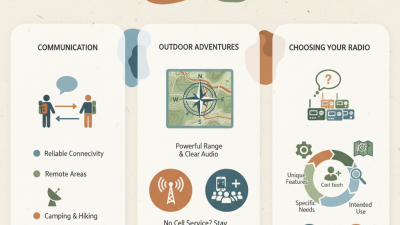
GMRS radios are two-way handheld radios designed for direct communication over designated channels. They can connect family members at a campground, hikers on nearby trails, or staff coordinating across a large property. No cellular signal is needed. Range, however, depends on terrain, buildings, antenna height, and radio setup; a wooded ridge can interrupt contact sooner than an open field.

The FCC’s Personal Radio Services rules distinguish GMRS from other personal radio services and set its operating requirements. For a broader view of demand, Grand View Research valued the global two-way radio market at about $9.78 billion in 2023 and projected 7.4% annual growth through 2030. That estimate covers more than GMRS, so it should not be read as a GMRS sales figure. Still, it reflects continuing interest in direct radio communication.

Common uses are practical, not dramatic: keeping a group together at a fair, checking in between vehicles, or coordinating chores around a rural property. FEMA’s 2023 National Household Survey reported that 51% of people had taken at least three preparedness actions. A radio can support a household communication plan, but it is not a substitute for one.

I used to think “long range” meant dependable range everywhere. It doesn’t. Test radios in the places you actually plan to use them, and agree on a simple check-in routine.
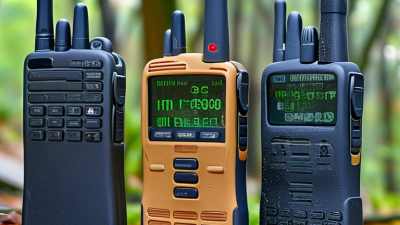
Determining Your Coverage, User, and Budget Requirements

Choosing the best GMRS radio starts with the places you need to reach. A clear, open trail is very different from a basement, warehouse, or neighborhood with dense buildings. Terrain changes everything. Treat advertised range as a best-case estimate, not a promise. If possible, borrow or test a radio along your usual route, noting where voices become faint or break up. A vehicle-mounted radio may suit longer trips, while handheld units are easier to carry between rooms or campsites.

Think about who will use the radios and how often. For a family outing, simple controls, readable screens, and clear audio may matter more than extra channels. For a work crew, check battery life, charging options, and whether everyone can operate the same settings. More power does not guarantee better communication through hills or walls. It may be tempting to buy the most powerful option, but comfort and reliable operation often matter more. Check the licensing and equipment rules that apply where you live before purchasing or transmitting.

Tips: Set a realistic budget that includes spare batteries, chargers, and earpieces if needed. Compare total cost, not just the price of one radio. Ask how long a full battery lasts during actual use, since frequent transmitting drains it faster. Keep a small notebook during a test: record the location, distance, and audio quality. The results may be imperfect, but they are more useful than guessing from a package claim.

Comparing Power, Channels, Range, and Key Features

Choosing a GMRS radio starts with matching transmit power to the places you actually use it. Higher power can improve communication, especially across open ground, but it also uses more battery. For a day hike, a lower-power setting may be enough. For a group spread across a large property, extra output can help. More power helps, but it cannot overcome every hill.

Channel count matters less than usable channel options. Check whether the radio offers privacy codes, clear channel labels, and repeater access if you expect to use a compatible repeater. These codes reduce unwanted chatter; they do not make conversations private. Follow local licensing and equipment rules. A simple keypad is often easier to manage with cold hands than a crowded menu.

Range claims deserve a cautious look. Buildings, trees, hills, and antenna placement can shrink real-world coverage sharply. I find range charts a little too neat; test radios in the locations where your group will travel. A weather-resistant case, a readable screen, a sturdy belt clip, and a replaceable battery may matter more than an impressive advertised range. Consider charging options, too. A radio is not useful when its battery is flat.

Choosing a Radio Type, Antenna, and Essential Accessories

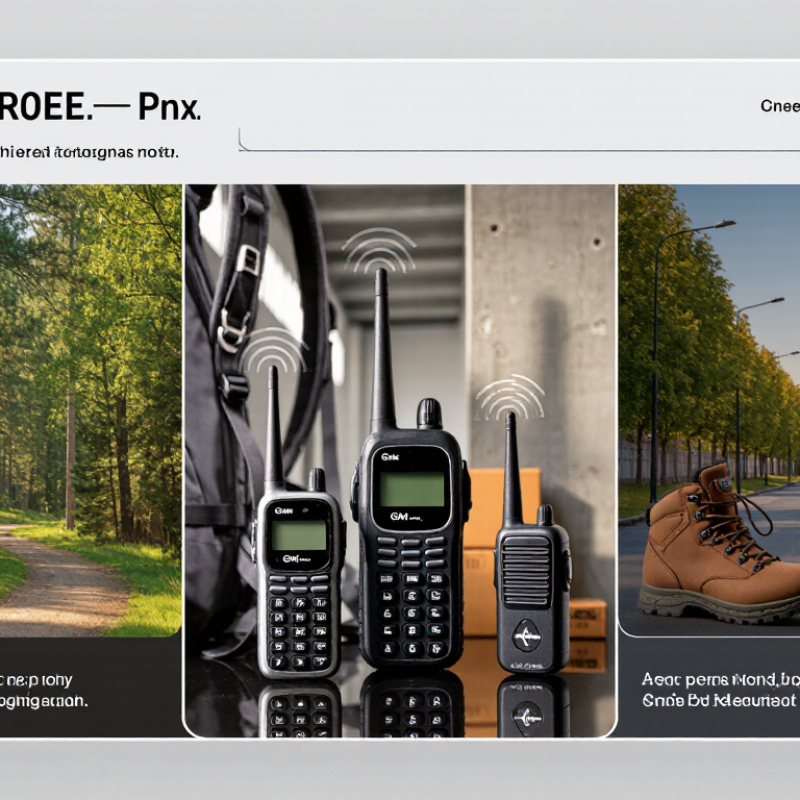
Choosing a radio type starts with the job. Handheld units are easy to carry on hikes or around a worksite; mobile radios suit vehicles, where a roof-mounted antenna can improve reception. A base radio can serve a fixed home or command point, but needs a suitable power supply and antenna placement. Don’t choose by advertised range alone. ITU-R Recommendation P.1546-6 models terrestrial coverage using frequency, antenna height, and terrain, underscoring why hills, buildings, and trees can change real-world performance. A clear line of sight matters.

Antenna fit is just as important as radio type. Use an antenna designed for the GMRS frequency range, and check its connector and mounting options before buying. A vehicle antenna mounted high on the roof usually has a better view than one hidden inside the cabin. For handheld use, a flexible antenna is less awkward in a backpack, though it may not perform like a well-positioned vehicle antenna. Keep the radio’s approved antenna configuration in mind, and verify applicable local requirements.

Pack practical accessories, not every accessory. A spare charged battery, a secure belt clip, and a weather-resistant case help during long days outdoors. In a vehicle, add a proper mount and power lead; loose equipment can distract the driver. Test the setup between your actual locations before relying on it. I still tend to overpack cables. It’s not always useful. Consider writing down dead spots and battery life after each trip; small notes can reveal which setup works best for your terrain.

How to Choose the Best GMRS Radios for Your Needs? - Choosing a Radio Type, Antenna, and Essential Accessories

Decision area Option or feature Best suited for What to look for Practical considerations
Radio type Handheld portable Hiking, events, family activities, and users who need a radio they can carry Comfortable controls, a clear display, rechargeable battery, and a suitable charging option Compact size is convenient, but battery life and the short antenna can limit performance compared with a properly installed vehicle antenna.
Radio type Mobile vehicle radio Drivers, work vehicles, and groups that need reliable communication while traveling Vehicle power connection, microphone usability, mounting options, and compatibility with an external antenna A correctly mounted antenna with a clear position on the vehicle often matters more than simply choosing a radio with a higher power rating.
Radio type Base or fixed station A home, workshop, or fixed operating location Power supply requirements, accessible controls, and support for an outdoor antenna installation A higher, unobstructed antenna location can improve coverage. Follow applicable installation, equipment, and antenna-height rules.
Radio capability Repeater-capable operation Users seeking to communicate over a wider area when a compatible GMRS repeater is available Support for GMRS repeater channels, transmit/receive offsets, and any required access tones A repeater can extend coverage, but access depends on its location, configuration, availability, and local terrain.
Antenna Attached handheld antenna Portable use where simplicity and compact size are priorities Antenna designed for the radio and GMRS frequencies Keep the antenna upright and avoid covering it during transmission. Use only antennas permitted for the radio’s certified configuration.
Antenna Vehicle-mounted antenna Mobile operation where improved antenna placement is important GMRS-compatible frequency coverage, a suitable mount, and an appropriate coaxial cable A secure mount and clear position help. Check antenna and radio compatibility, and follow vehicle and equipment instructions.
Antenna Outdoor fixed antenna Home or fixed-site coverage GMRS frequency suitability, weather resistance, a compatible feed line, and a safe mounting plan Place it as high and clear of obstructions as practical while observing applicable antenna-height and safety requirements.
Essential accessory Spare battery or charging solution Portable users and long shifts away from a power source A compatible spare battery, charging cradle, or approved vehicle charger Confirm compatibility with the radio and follow the manufacturer’s charging and storage guidance.
Essential accessory Speaker microphone or earpiece Vehicle use, noisy settings, or situations where the radio should stay clipped in place Correct connector and compatibility with the radio Check that the accessory allows clear listening and safe, convenient operation in the intended setting.
Essential accessory Mounting hardware and cable Vehicle and fixed-station installations A stable mount, compatible connectors, and cable suited to the installation Route and secure cables safely; keep connections protected and follow installation instructions.
Before buying Licensing and equipment compliance All GMRS users in the United States Check current FCC licensing requirements and confirm the radio is authorized for GMRS use GMRS generally requires an FCC license for operation. Follow current FCC rules for station identification, channels, power, and equipment.
Range expectations Terrain and antenna placement Every user comparing advertised coverage claims Realistic performance for the landscape, buildings, and antenna locations where the radio will be used GMRS uses UHF frequencies, and practical range varies with terrain, obstructions, antenna height, and radio installation. No single range figure applies to every situation.

Evaluating Durability, Ease of Use, and Overall Value

How to Choose the Best GMRS Radios for Your Needs?

Durability, ease of use, and value matter more than a long feature list. Start with the places you’ll use the radio: a dusty trail, a damp campsite, or a busy worksite. IEC 60529 defines the IP ratings used to describe dust and water protection. For example, an IP67 rating indicates dust-tight protection and a specified immersion test of up to one meter for 30 minutes. It does not promise survival in every real-world mishap. Check the test documentation for the exact model, and compare drop-test details rather than trusting “rugged” alone.

Ease of use shows up when conditions get awkward. Can you find the push-to-talk button with gloves on? Is the screen readable in bright sun? A simple menu can be more useful than extra settings you rarely touch. For value, compare the complete kit: radio, battery, charger, and any replacement battery costs. Check advertised battery life against its stated test conditions; frequent transmitting can shorten actual runtime. A spreadsheet helps, though it cannot capture every frustrating button press.

Tips: Test the controls before buying, and check whether the radio feels secure in your hand. Read the manual’s water and drop limits. A higher rating may be worthwhile, but only if it matches your use. One detail is easy to overlook: charging convenience can matter more than another feature.