Leave Your Message

Why Are GMRS Frequencies Important for Buyers?

Choosing a GMRS radio involves more than comparing advertised range, battery size, or antenna design. Gmrs Frequencies determine how the radio communicates, which channels it can access, and how clearly it may perform in real conditions. A family at a crowded campsite may hear interference from nearby users. A warehouse team may need dependable coverage through concrete walls. These situations make frequency knowledge practical, not merely technical.

Buyers should understand that GMRS channels operate within regulated radio spectrum. Equipment must support approved frequencies and meet the requirements of the relevant communications authority. In the United States, users may also need a GMRS license. Rules can differ by country, so checking official guidance remains essential. A responsible retailer should provide clear specifications, certification details, and operating instructions. Marketing claims deserve careful review.

Range is often overstated.

A radio advertised for thirty miles may achieve far less in forests, neighborhoods, or valleys. Higher power can help, but it cannot remove every physical obstacle. Antenna placement, terrain, weather, and channel congestion also matter. Experienced buyers compare these factors before choosing a model. They inspect the manual, verify channel compatibility, and test communication in realistic locations.

Even careful research has limits. Two radios with similar specifications may perform differently in practice. That uncertainty is worth acknowledging. Understanding Gmrs Frequencies helps buyers ask better questions, avoid unsuitable equipment, and select communication tools with realistic expectations. Reliable purchasing begins with technical clarity, not impressive packaging.

Why Are GMRS Frequencies Important for Buyers?

What GMRS Frequencies Are and How They Work

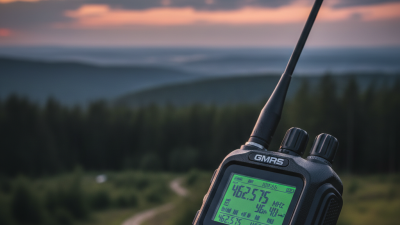
GMRS frequencies are radio channels reserved for short-distance two-way communication. Under FCC 47 CFR Part 95, GMRS operates around 462 MHz and 467 MHz. The FCC frequency tables identify seven shared 462 MHz channels, seven low-power 467 MHz interstitial channels, and eight repeater pairs. A channel number is not a frequency. Check the actual frequency before buying equipment.

GMRS radios send voice through narrowband FM signals. On a simplex channel, both radios transmit and receive on the same frequency. A repeater uses two frequencies: one receives around 467 MHz, then retransmits around 462 MHz. This can improve coverage when buildings, hills, or tree lines block direct signals. FCC technical tables permit up to 50 watts on designated main channels, while 467 MHz interstitial channels have a 5-watt limit. More power does not always mean clearer audio. Antenna height and terrain often matter more.

Tips: Test at the real location. Stand inside a vehicle, behind a wall, and near a slope. Listen for noise before judging range. Confirm the radio supports the needed repeater offset and tone settings. I still verify every channel manually; preset labels can be confusing. Buyers should also review current FCC rules, because channel availability and equipment limits may change. A frequency chart from a recognized regulator is more dependable than a store’s marketing claim.
How GMRS Frequencies Differ from Other Radio Services

Why Are GMRS Frequencies Important for Buyers?

GMRS frequencies operate mainly around 462 and 467 MHz in the United States. These channels support short-range family and outdoor communication. Buyers should examine more than advertised distance. Terrain, building materials, antenna height, and battery condition often matter more. A handheld radio may work across a neighborhood, yet struggle inside a concrete warehouse. That difference is easy to miss.

GMRS differs from FRS, MURS, CB, and amateur radio services. FRS shares several channels with GMRS but generally uses lower power and fixed antennas. MURS operates in the VHF range, which can behave differently around vegetation and open land. CB uses much lower frequencies and often requires larger antennas. Amateur radio provides broader technical flexibility, but its operating rules and equipment requirements are different. GMRS also supports repeater use, allowing compatible signals to travel farther through an installed system. The radio must support the correct channel structure.

I once assumed every radio using the same channel number would communicate equally well. That assumption was wrong. Channel names can hide differences in power, bandwidth, and transmission direction. Buyers should check technical specifications and local regulatory requirements before purchasing. In the United States, GMRS operation requires an FCC license for eligible users. Simple testing helps too. Try the radio indoors, outdoors, and near common obstacles. Listen for clear voices, delayed audio, and unexpected interference. Real conditions reveal more than a package label.

Why Frequency Choice Matters for GMRS Buyers

Frequency choice matters for GMRS buyers because it affects range, compatibility, and everyday reliability. GMRS radios commonly use channels near 462 and 467 MHz. Some channels support higher power, while others suit local communication needs. A frequency that works across an open field may weaken near concrete walls or dense trees. Range claims can also feel optimistic. Terrain usually decides more than the product box.

Buyers should check channel spacing, power limits, and repeater compatibility before purchasing. A repeater-capable radio may improve coverage across hills, farms, or large properties. However, repeater use requires compatible settings and access. Privacy codes can reduce unwanted audio, but they do not make conversations private. This detail is easy to overlook. It deserves careful attention.

Tips: Test the radio where you will use it. Try a basement, driveway, wooded path, and upper floor. Compare clear voice quality, battery performance, and connection stability. Keep a short note of each result. Local frequency rules can differ, so verify current requirements from an official communications authority. A cheaper radio may seem sufficient, yet poor reception can become frustrating during travel or emergencies. I would also avoid choosing a frequency only because it sounds popular. Real surroundings matter more.

Why Are GMRS Frequencies Important for Buyers? - Why Frequency Choice Matters for GMRS Buyers

Channel Transmit / Receive Frequency Frequency Role Typical Buyer Use Why the Choice Matters
1 462.5625 MHz 462 MHz interstitial channel Short-range group communication Useful for local coordination, but more susceptible to congestion in busy areas.
2 462.5875 MHz 462 MHz interstitial channel Family outings and nearby vehicles A practical direct-radio option when nearby users are already active on other channels.
3 462.6125 MHz 462 MHz interstitial channel Neighborhood and campsite communication Suitable for simple simplex communication without a repeater.
4 462.6375 MHz 462 MHz interstitial channel Outdoor activities and event teams Helps separate a group from users on adjacent channel numbers.
5 462.6625 MHz 462 MHz interstitial channel Short-distance property communication Good for direct communication when range demands are modest.
6 462.6875 MHz 462 MHz interstitial channel Travel groups and recreational use Provides another selectable channel for avoiding local interference.
7 462.7125 MHz 462 MHz interstitial channel Local voice communication Channel availability can improve reliability when common channels are crowded.
8 467.5625 MHz 467 MHz interstitial channel Very short-range communication Lower permitted power makes this channel better suited to close-range use.
9 467.5875 MHz 467 MHz interstitial channel Indoor or nearby communication Best considered when the group needs a short-range alternative to busier channels.
10 467.6125 MHz 467 MHz interstitial channel Close-proximity team use Power and coverage expectations should be checked before selecting it for larger areas.
11 467.6375 MHz 467 MHz interstitial channel Short-range activity coordination Can reduce conflicts when direct communication is needed at close distances.
12 467.6625 MHz 467 MHz interstitial channel Indoor events and small work areas A reasonable choice when the required coverage area is limited.
13 467.6875 MHz 467 MHz interstitial channel Nearby users and temporary teams Provides channel flexibility but is not intended as a long-range high-power option.
14 467.7125 MHz 467 MHz interstitial channel Short-range personal communication Useful as an additional low-power channel for nearby radios.
15 462.5500 MHz output / 467.5500 MHz input Primary GMRS channel and repeater pair Longer-range simplex or repeater operation A key channel for buyers who want compatibility with GMRS repeaters.
16 462.5750 MHz output / 467.5750 MHz input Primary GMRS channel and repeater pair Vehicle-to-vehicle and repeater communication Supports higher-power GMRS equipment where permitted and may extend coverage through a repeater.
17 462.6000 MHz output / 467.6000 MHz input Primary GMRS channel and repeater pair Outdoor groups and rural communication A suitable choice for buyers prioritizing repeater access and broader coverage.
18 462.6250 MHz output / 467.6250 MHz input Primary GMRS channel and repeater pair Property, farm, and trail communication Offers direct or repeater operation depending on the radio and local frequency plan.
19 462.6500 MHz output / 467.6500 MHz input Primary GMRS channel and repeater pair Outdoor recreation and work crews Useful when buyers need a full-power-capable GMRS channel and repeater compatibility.
20 462.6750 MHz output / 467.6750 MHz input Primary GMRS channel and repeater pair Longer-distance group communication Channel capability matters more here because repeater use can significantly improve practical range.
21 462.7000 MHz output / 467.7000 MHz input Primary GMRS channel and repeater pair Rural travel and field operations A strong option for buyers comparing radios with programmable repeater functions.
22 462.7250 MHz output / 467.7250 MHz input Primary GMRS channel and repeater pair General-purpose GMRS communication Provides another primary channel for direct communication or repeater use.

Buyer note: GMRS operation in the United States requires an FCC GMRS license. Actual range depends on terrain, antenna height, buildings, interference, and equipment configuration. Always use FCC-certified equipment and follow the applicable power, bandwidth, and repeater requirements.

GMRS Licensing, Range, and Equipment Compatibility

GMRS matters because licensing affects both legal use and practical performance. In the United States, the FCC requires one GMRS license for an individual and the licensee’s immediate family. The authorization lasts ten years, according to FCC Part 95 guidance. GMRS main channels may use up to 50 watts transmitter power, while certain interstitial channels are limited to 5 watts. More power helps, but it does not defeat hills, concrete walls, or dense trees.

Range claims need careful reading. The FCC does not promise a fixed GMRS distance. In real conditions, a handheld radio may cover only a few miles, while elevated antennas and repeaters can extend coverage considerably. The National Institute of Standards and Technology notes that building materials and urban structures can cause serious radio-signal loss. A clear parking lot is not the same as a crowded neighborhood. My first range estimate would probably be too optimistic.

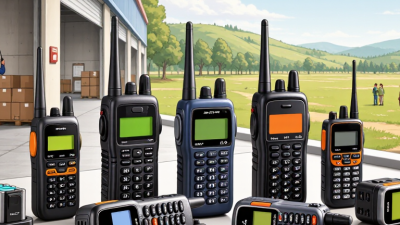
Equipment compatibility is equally important. Many consumer radios share channels with FRS, but GMRS-capable equipment may offer higher power, removable antennas, or repeater access. Buyers should check channel spacing, power limits, privacy-code behavior, and connector standards. A matching tone does not guarantee communication quality. The FCC’s Part 95 rules also distinguish FRS and GMRS operating requirements, so a product’s label deserves more attention than its advertised distance. Examine the manual before purchase.

How to Choose the Right GMRS Frequencies for Your Needs

Why Are GMRS Frequencies Important for Buyers?

How to Choose the Right GMRS Frequencies for Your Needs

Choosing the right GMRS frequencies starts with your surroundings, not the radio’s advertised range. GMRS operates around the 462 MHz and 467 MHz bands, where buildings, hills, trees, and weather can affect performance. A clear channel at home may become noisy at a campsite or crowded event. Test several channels before relying on one.

For short-distance communication, a shared simplex channel may work well between family members, vehicles, or nearby buildings. If you need broader coverage, choose equipment that supports approved repeater channels in your area. Repeaters can extend communication across hills and larger properties, but they require compatible settings and local access. Check the channel spacing, transmit power, and tone settings carefully. Tones reduce unwanted audio, but they do not create private conversations.

A practical field test matters more than a printed range claim. Walk behind a concrete wall, drive around the property, and compare clear voice quality. Keep notes. I once assumed the strongest signal would sound best, but electrical noise changed the result. That mistake is worth remembering. Avoid selecting a frequency only because it sounds popular; local traffic may make it frustrating. Before operating, confirm current licensing and frequency rules for your country or region. Rules can change, and a setting that is acceptable in one place may not be allowed elsewhere.